
Scirtothrips inermis
Scirtothrips inermis
Description
How to identify
Scirtothrips inermis is a small insect species belonging to the order Thysanoptera and the family Thripidae. Adult individuals measure approximately 1–1.2 mm in length.
The body coloration is typically pale yellow to brownish. A key characteristic distinguishing this species is the lack of prominent bristles or setae on the body, which is implied by the species name.
Larval stages are physically similar to adults but are smaller, wingless, and exhibit high agility, often hiding within leaf axils or dense foliage clusters.
The life cycle encompasses eggs, larvae, propupae, pupae, and adults. Developmental speed is highly dependent on ambient temperature, thriving in warm environments.
These insects are particularly common in protected cultivation systems, where stable environmental conditions favor their rapid multiplication and overwintering.
What it damages
Scirtothrips inermis is a polyphagous pest known to cause significant economic damage to ornamental plants, citrus trees, and vegetable crops within greenhouse facilities.
The primary injury occurs as both larvae and adults feed on cell sap from young, tender plant tissues, particularly developing buds and growing tips.
By piercing and sucking plant cells, the pest causes visible tissue destruction, resulting in stunting, malformation, and severe loss of plant vigor.
Continuous feeding prevents normal flower development and foliage expansion, significantly reducing the marketability of ornamental products.
Without intervention, heavy infestations lead to widespread tissue necrosis, yellowing of the leaves, and eventual loss of the infected plant parts.
Signs of infestation
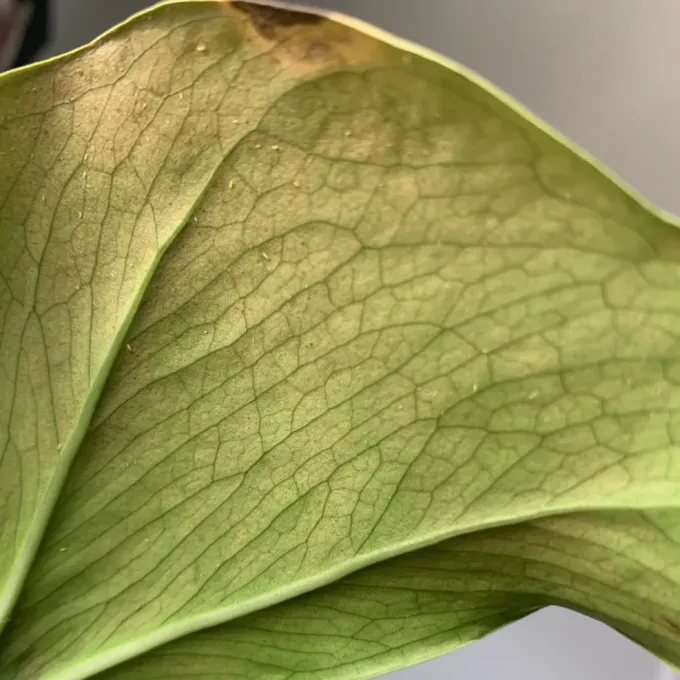
A classic diagnostic sign of an infestation is the appearance of silvery or whitish streaks on the surface of the leaves, caused by the depletion of chlorophyll.
Small black fecal specks are commonly found on the underside of leaves, acting as a clear indicator of the presence and activity of a thrips colony.
Damaged flowers often show deformed petals with brownish spots, and in many cases, the buds fail to open due to excessive feeding damage.
The foliage may appear curled, distorted, or wrinkled, as the destruction of specific cell clusters inhibits the uniform growth of the leaf tissue.
Monitoring using yellow sticky traps is the most reliable method for detecting early adult flight and estimating the density of the pest population.
Control measures
Effective pest management relies on integrating monitoring, physical hygiene, and targeted chemical or biological intervention strategies.
Chemical control involving systemic insecticides is often required; however, products must be rotated to prevent the development of resistant populations.
Phytosanitary practices, such as removing weeds around the greenhouse and inspecting incoming plant materials, are crucial for preventing re-infestation.
Biological control agents, specifically predatory mites such as Amblyseius species, provide a sustainable alternative for suppressing larval populations.
Maintaining optimal greenhouse humidity and temperature can also help manage the pest, as high temperatures often accelerate the reproductive rate of thrips.
Taxonomy
- Latin name
- Scirtothrips inermis
- Order
- Thrips
- Family
- Thripidae
- EPPO code
- SCITIN
Discussion
No discussions yet — be the first.