
Sciopithes obscurus
Sciopithes obscurus
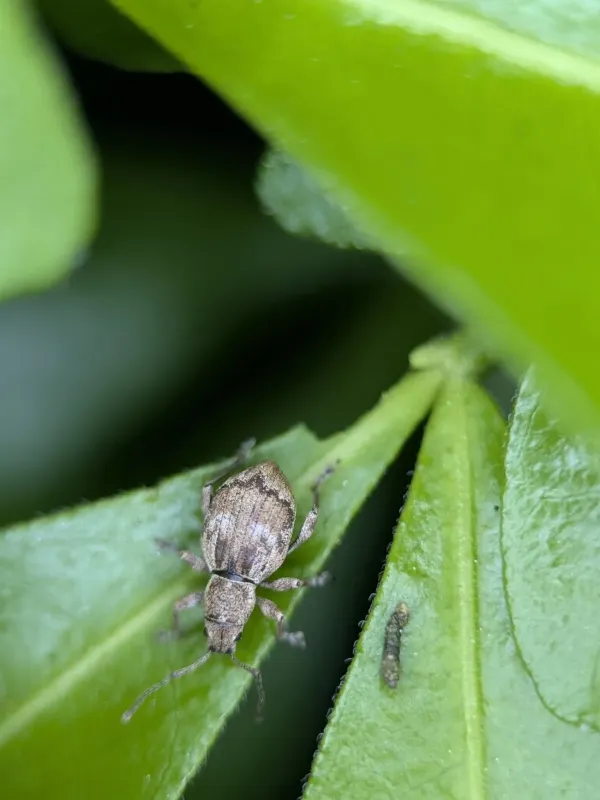
Description
How to identify
Sciopithes obscurus, commonly known as the obscure root weevil, belongs to the family Curculionidae within the order Coleoptera. This beetle typically measures between 6 and 8 millimeters in length and possesses a robust body structure with a characteristic short snout.
The coloration of the adult weevil ranges from dull gray to dark brown, often featuring mottled patterns created by fine scales on the elytra. This appearance allows the insect to blend perfectly with bark, soil, and leaf litter, making it difficult to spot during the daylight hours.
The larvae are cream-colored, C-shaped grubs with distinct brown head capsules. They spend their entire developmental period underground, where they live within the root zone of host plants, feeding on the small roots and root hairs.
Adults are nocturnal by nature, remaining sedentary and hidden during the day. This nocturnal behavior is a key trait, as they emerge under the cover of darkness to feed on the foliage of various host plants, which complicates standard scouting procedures.
The life cycle involves complete metamorphosis, with most populations completing one generation per year. Larvae are the primary stage capable of surviving the winter, often found deeper in the soil profile as temperatures drop to avoid freezing.
What it damages
As a polyphagous pest, Sciopithes obscurus causes damage to a wide array of cultivated plants. It is particularly notorious for its impact on berry crops, including strawberries, raspberries, and blueberries, where both adults and larvae contribute to the decline of the plant.
Adult beetles feed on the margins of leaves, creating characteristic scalloped notches. This type of damage is quite distinct and, when severe, can lead to significant defoliation, which reduces the plant's overall photosynthetic capacity.
Larval feeding is arguably more destructive as they attack the root system. By pruning the rootlets and damaging the main roots, the larvae disrupt the plant's ability to take up water and nutrients, resulting in stunted growth and weakened structure.
When the root system is severely compromised, the plants become highly susceptible to secondary infections by soil-borne pathogens, including root rot fungi. This secondary attack often leads to the final collapse and death of the plant.
The economic impact of this pest is significant, as it can reduce yield, affect the quality of berries, and cause long-term decline in established berry plantings. Preventing high populations is essential for maintaining a healthy and productive garden.
When it appears
Adult weevils begin to emerge from the soil in late spring and early summer as temperatures rise. This timing is crucial for monitoring, as the newly emerged adults immediately begin feeding and preparing for the mating phase.
Peak activity typically occurs throughout the summer months. During this period, populations can expand rapidly if conditions are favorable, making it the most important time to implement preventative measures to disrupt the reproductive cycle.
As autumn approaches, the adults gradually diminish, and the larvae move into their active feeding phase. They continue to consume root tissue until the soil temperature drops, at which point they settle in to overwinter.
In early spring, as soon as the soil starts to warm, the larvae resume feeding. This spring activity often goes unnoticed until the plants show signs of stress, such as yellowing or failure to initiate vigorous new growth.
Because the adults are nocturnal, scouting should be performed at night using a flashlight. Checking the undersides of leaves and along the stems during this time is the most accurate way to determine the current infestation level.
Signs of infestation
The most visible sign of infestation is the notched appearance of the leaf margins. These characteristic semi-circular bites are a telltale sign of weevil activity and are easily identified by experienced gardeners and farmers.
Plants that appear wilted or show chlorosis (yellowing) despite adequate moisture are a major red flag. This symptom usually indicates that the root system has been severely damaged by larval feeding and cannot support the plant's needs.
Digging around the base of a stressed plant can often reveal the presence of C-shaped grubs in the soil. Finding these larvae confirms the diagnosis and indicates the need for immediate intervention to protect surrounding plants.
The presence of adult weevils in the evening hours is a definitive sign of an active infestation. Observing the beetles themselves, either on the plant foliage or by shaking the plants over a white sheet, provides clear evidence of the pest's presence.
Uneven or patchy growth across a field or berry patch is another indication of larval damage. Over time, these patches tend to expand as the population spreads, leading to reduced overall productivity in the affected areas.
Control measures
Effective management of Sciopithes obscurus requires an integrated approach that targets both the adult and larval life stages. Long-term success depends on combining cultural practices with appropriate chemical or biological treatments.
Mechanical removal by hand-picking adult beetles at night is a highly effective control measure for small gardens. This can significantly reduce the number of egg-laying females if performed consistently during the initial emergence period.
Chemical control focuses on applying approved insecticides that target adult weevils when they are active at night. Timing is everything, and applications should be made in the evening to maximize contact and minimize drift and environmental impact.
Soil-applied treatments are necessary to control the larval population. Biological control options, such as using entomopathogenic nematodes, are becoming increasingly popular as they are environmentally friendly and target the larvae directly within the soil.
- Cultivate soil regularly to disrupt larval habitats.
- Maintain a weed-free environment to reduce alternative food sources.
- Use certified, healthy planting material for new additions.
- Apply mulch to create a barrier and monitor for signs of pest movement.
Taxonomy
- Latin name
- Sciopithes obscurus
- Order
- Coleoptera (beetles)
- Family
- Curculionidae
- EPPO code
- SCIOOB
Discussion
No discussions yet — be the first.