
Sciopithes
Sciopithes
Description
How to identify
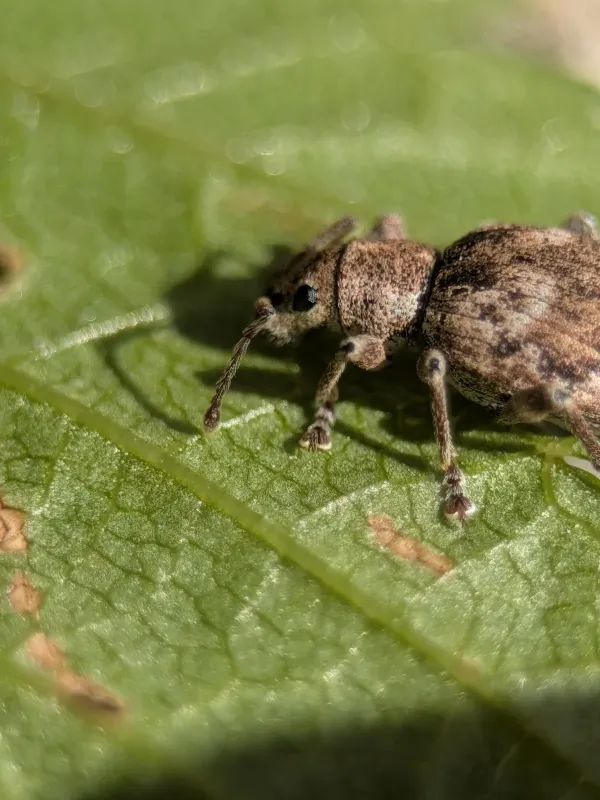
Sciopithes is a genus of insects belonging to the family Curculionidae (true weevils), order Coleoptera. These beetles are masters of camouflage, often blending seamlessly with soil or tree bark.
Adult beetles typically measure between 5 and 8 mm in length. Their bodies are covered with minute scales that range from grey to brown, providing excellent concealment in their natural environment.
A distinctive anatomical feature of this genus is the short, broad snout (rostrum) and the characteristic elbowed antennae, which are hallmark traits of the weevil family.
The larvae are subterranean, white or cream-colored, legless grubs with a distinct dark head capsule. They are often found curled in a C-shape when removed from the soil.
Some species within the genus are known for parthenogenetic reproduction, allowing them to rapidly colonize new areas and build large populations in a short time.
What it damages
Adult Sciopithes feed on the foliage of various ornamental and agricultural plants, leaving characteristic semi-circular or scalloped notches along the leaf margins.
The larvae are responsible for the most severe damage by feeding on the root systems of host plants, which disrupts water and nutrient uptake, leading to plant decline.
Common hosts include berry crops like strawberries, raspberries, and blueberries, as well as various ornamental species such as rhododendrons and azaleas.
In nursery settings, these pests can cause significant economic loss by damaging the root systems of young saplings, making them susceptible to transplant shock.
Root damage also provides entry points for soil-borne pathogens, leading to secondary fungal infections that can accelerate the death of the host plant.
When it appears
Adult activity is primarily concentrated in the spring and summer months, coinciding with the warming of soil temperatures and the onset of vigorous vegetative growth.
The peak feeding period occurs when fresh foliage is available, as adults emerge from the soil to feed on leaves and complete their maturation before mating.
Egg-laying usually takes place in the soil surrounding the base of the host plant, ensuring that the neonate larvae have immediate access to food sources.
Larval development continues in the soil throughout the summer and into early autumn, with individuals gradually moving deeper to overwinter as temperatures drop.
The life cycle is closely linked to soil moisture and temperature, which dictate the emergence timing and the overall survival rate of the larvae throughout the season.
Signs of infestation
The most reliable sign of a Sciopithes infestation is the presence of scalloped leaf margins, which look as if pieces have been carefully removed from the edges.
Wilting of plants, even when soil moisture is adequate, is a strong indicator that the root system has been compromised by larval feeding activities.
Stunted growth, chlorotic (yellowing) foliage, and the inability of a plant to thrive compared to healthy neighbors often point to a subterranean root pest.
Careful excavation around the root zone may reveal the legless larvae or the tunnels they have excavated in the root tissue or surrounding soil.
Nighttime inspections using a flashlight may help spot adult beetles, as many species in this genus exhibit nocturnal feeding patterns.
Control measures
Managing Sciopithes requires an integrated pest management (IPM) approach that combines cultural practices with biological and chemical interventions.
Good sanitation practices, such as removing weeds and keeping the base of plants clear, reduce the number of suitable sites for egg deposition.
Biological control using entomopathogenic nematodes applied to the soil is an effective way to target larvae without relying on broad-spectrum chemical pesticides.
In cases of high infestation, targeted insecticide applications during the adult emergence phase can significantly reduce the potential for future damage.
- Monitoring foliage regularly for notch marks.
- Using physical barriers like fine mulch to deter larvae.
- Removing and destroying heavily infested plants.
- Applying biological agents like B. thuringiensis or beneficial nematodes.
Taxonomy
- Latin name
- Sciopithes
- Order
- Coleoptera (beetles)
- Family
- Curculionidae
- EPPO code
- SCIOSP
Discussion
No discussions yet — be the first.