
Sciaphobus
Sciaphobus
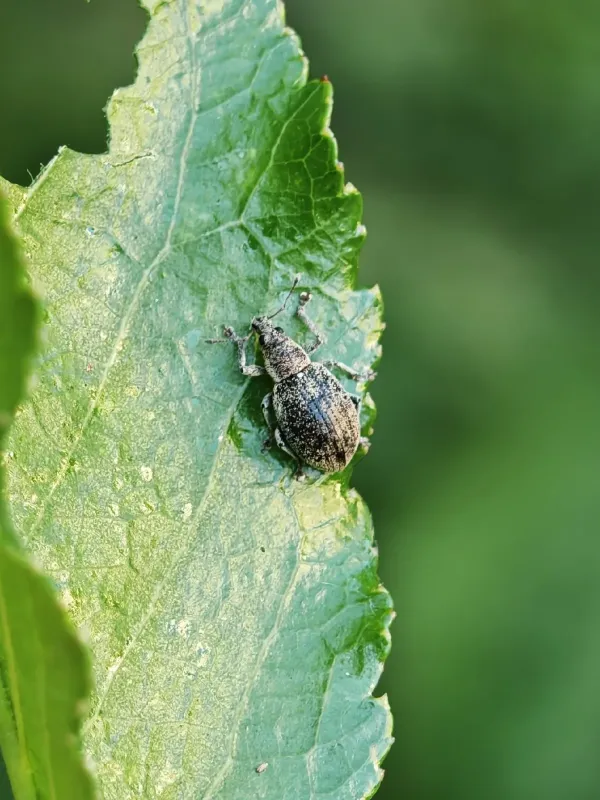
Description
How to identify
Sciaphobus is a genus of weevils belonging to the family Curculionidae. These beetles are characterized by a pronounced rostrum and a grayish-brown appearance that allows them to blend in perfectly with tree bark.
Adult beetles possess a dense layer of scales, which sometimes display a subtle metallic sheen. Typically, these insects measure between 6 and 8 millimeters in length.
The larvae are legless, C-shaped grubs, white in color with a distinctive brown head capsule. They live primarily in the soil, spending most of their life cycle underground.
The life cycle of the insect is closely tied to the soil environment, where pupation and overwintering take place, providing protection against environmental fluctuations.
Females lay eggs in the soil near the root zone of host plants, ensuring that the larvae have immediate access to food sources upon hatching.
What it damages
The primary hosts for Sciaphobus include fruit trees such as apple, pear, plum, and cherry, making it a significant pest in orchards and nurseries.
Adult beetles feed on developing buds and young leaves in early spring, which can severely impact the tree's foliage development and fruit set.
The larvae consume small roots, causing the host plant to lose vitality and become more susceptible to other biotic and abiotic stresses.
In cases of high infestation, the foliage displays extensive skeletonization, as the beetles consume the tissue between the leaf veins, leaving them fragile.
Young trees in nurseries are particularly vulnerable, as damage to the buds and root system can result in stunted growth or even the death of the saplings.
When it appears
Adult beetles emerge from the soil in early spring when temperatures become conducive to insect activity, usually correlating with the onset of bud break.
The peak of activity occurs during the blossoming period, as beetles move to the canopy to feed on fresh, nutrient-rich plant tissues.
As the summer progresses, the population of adult beetles in the canopy decreases as they complete their mating and egg-laying cycles.
Larvae develop throughout the summer and autumn, actively feeding on roots and preparing for the winter by burrowing deeper into the soil.
Overwintering occurs exclusively at the larval stage, buried in the soil at depths of up to 20 centimeters to survive freezing temperatures.
Signs of infestation
The most recognizable sign of infestation is the jagged or notched edges on the leaves, which is typical of weevil feeding activity.
Buds that fail to bloom or show signs of being partially eaten are strong indicators of early-season beetle activity in the orchard.
When disturbed, these beetles often exhibit thanatosis, a behavior where they fall from the branches to the ground and remain motionless to mimic death.
The general decline of saplings, including leaf wilting and poor shoot elongation, often points to root damage caused by larvae.
- Jagged margins on leaves.
- Damaged or hollowed-out buds.
- Beetles falling to the ground when trees are shaken.
- Reduced growth rate of terminal shoots.
- Larvae visible during soil excavation in the root zone.
Control measures
Mechanical collection remains a highly effective control method: shaking the trees early in the morning allows the beetles to be collected on ground cloths.
Cultivation of the soil in the root zone during autumn and spring helps to disrupt the larval life cycle and reduce the population size before the next season.
Chemical control involves the use of approved insecticides applied during the mass emergence of adults, ideally timed before the trees begin to flower.
Sticky traps placed on tree trunks serve as a physical barrier, preventing adult beetles from ascending the tree to damage buds and leaves.
Maintaining a weed-free orchard is essential, as various weeds can serve as alternative host plants for the pests, sustaining their population levels.
Taxonomy
- Latin name
- Sciaphobus
- Order
- Coleoptera (beetles)
- Family
- Curculionidae
- EPPO code
- SCPBSP
Discussion
No discussions yet — be the first.