
Scepticus uniformis
Scepticus uniformis
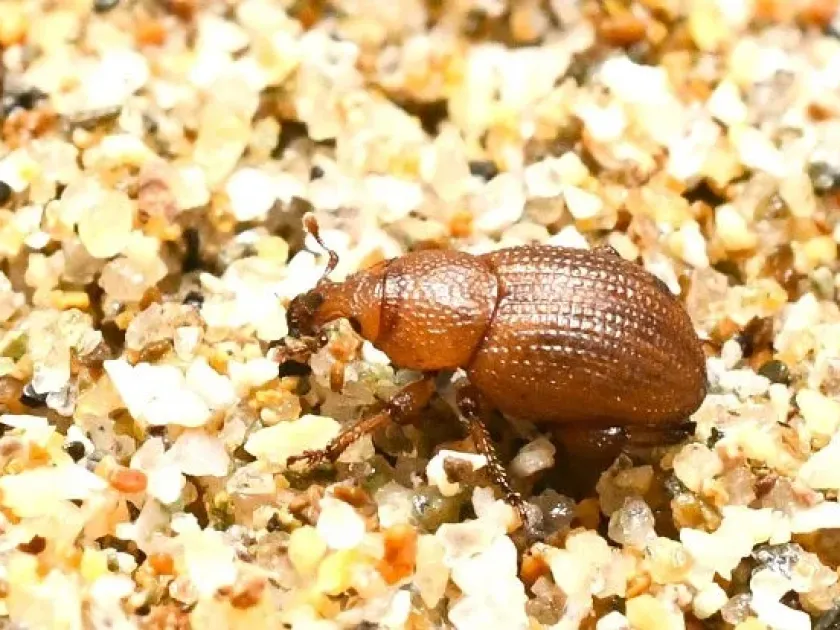
Description
How to identify
Scepticus uniformis is a species of weevil belonging to the family Curculionidae in the order Coleoptera. These insects are characterized by a distinct rostrum (snout) which is typical for the family.
The adult beetles possess a camouflaged appearance, making them difficult to spot on soil surfaces or among plant debris. Their bodies are oval and covered with fine scales that change color based on light conditions.
The larvae lead a cryptic, soil-dwelling life. They have the typical C-shaped body of many soil-inhabiting weevil larvae and are legless, which makes detection within the root zone quite challenging.
The insect undergoes a complete metamorphosis. The life cycle is closely linked to soil conditions, where the larvae pass through several developmental stages by feeding on organic matter or roots.
While adults have developed wings, they primarily move by crawling on the soil surface, which limits their initial spread radius within a field.
What it damages
This pest affects a wide range of agricultural crops, including legumes, vegetables, and technical plants. Damage is caused by both the adult beetles and the larval stage.
Adults primarily feed on the aerial parts of plants. They chew holes in leaf blades, often starting from the edges, which significantly reduces the plant's photosynthetic capacity.
Larvae pose a severe threat to the root system of young plants. They feed on roots and gnaw at the crown, disrupting the plant's ability to absorb water and essential nutrients from the soil.
The most significant damage occurs during the seedling phase when plants are most vulnerable. Severe root damage by larvae often leads to large-scale crop failure and thinning of the stand.
The damage caused by this pest facilitates secondary infections. Wounds in the plant tissue become entry points for bacterial and fungal rot pathogens.
When it appears
The activity of adult Scepticus uniformis beetles occurs mainly during the spring and summer. The first appearance of adults typically coincides with the arrival of stable, warm weather.
The period of most intensive adult feeding usually corresponds to the formation of the first true leaves in crops. During this time, the insects migrate from their hibernation sites to the fields.
Larval development continues throughout the growing season. Maximum damage to the root system is recorded in mid-summer when larvae reach their late developmental stages.
The species overwinters mainly as adults in the soil or under plant debris. In the spring, the beetles emerge from their hibernation sites to begin their active breeding cycle.
The population generally completes one generation per year, although unfavorable climatic conditions may delay development for some individuals, resulting in a prolonged emergence period.
Signs of infestation
The first sign of the pest's presence is the appearance of notched or «chewed» leaf edges. The specific pattern of feeding helps distinguish weevil activity from that of other insects.
Plant wilting during sunny hours, despite adequate soil moisture, indicates damage to the root system by larvae. This is often accompanied by yellowing or reddening of the leaves.
Upon inspecting the root system in the damaged area, one can find winding tunnels bored by the larvae into the roots or tubers. Occasionally, necrosis may be observed around the damaged tissue.
The presence of adult beetles on the soil surface or the underside of leaves during morning or evening hours is direct evidence of a population inhabiting the field.
In areas of infestation, one often observes patches of stunted, poorly developed plants compared to their healthy counterparts.
Control measures
Agronomic measures include deep autumn plowing, which helps destroy larvae and pupae residing in the soil layer by mechanical damage and exposure to unfavorable conditions.
Crop rotation is a critical factor in managing this pest. Avoiding the cultivation of susceptible crops in the same field for several consecutive years reduces population buildup.
Chemical control involves the use of systemic insecticides for seed treatment or soil application at the time of sowing, which protects seedlings during the most critical growth stages.
Biological control methods include the application of entomopathogenic nematodes or fungal-based biopesticides, which target the larval stage directly within the soil environment.
Monitoring pest populations through soil sampling and the use of light traps helps in determining the precise timing for insecticide applications during the vegetation period.
Taxonomy
- Latin name
- Scepticus uniformis
- Order
- Coleoptera (beetles)
- Family
- Curculionidae
- EPPO code
- SCEPUN
Discussion
No discussions yet — be the first.