
Tiger weevil
Scepticus tigrinus
Description
How to identify
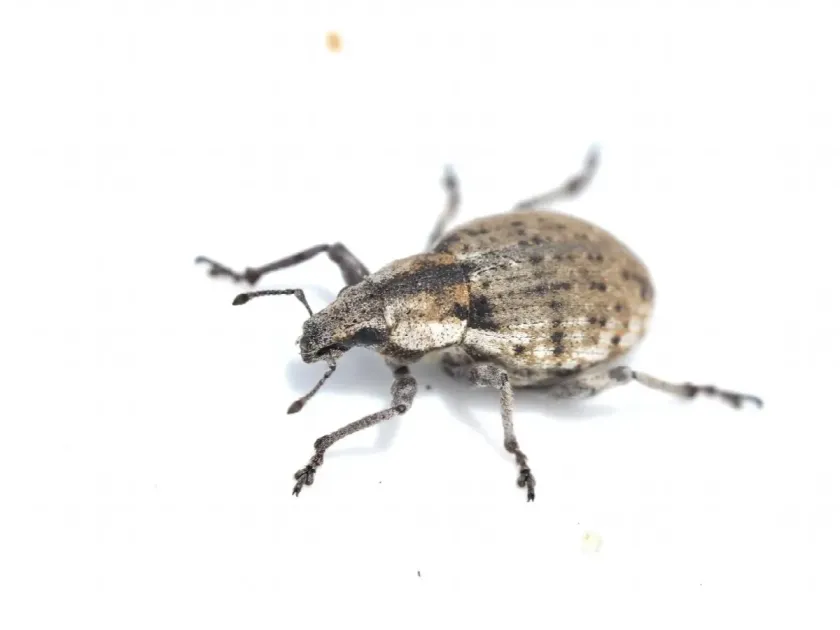
The tiger weevil (Scepticus tigrinus) belongs to the Curculionidae family. It is characterized by a body length of approximately 7–9 mm, covered with dense gray-brown scales that create a mottled pattern resembling tiger stripes, which serves as camouflage.
The rostrum is short and broad, a key diagnostic feature distinguishing it from other weevils. The antennae are elbowed and clubbed, typical for the Curculionidae family. The elytra display longitudinal ridges filled with fine, light-colored scales.
Larvae are typical of the weevil family: legless, fleshy, and C-shaped, with a creamy white color and a brown head capsule. They live exclusively in the soil, which makes them particularly difficult to detect and manage during the growing season.
The life cycle involves complete metamorphosis: egg, larva, pupa, and adult. The insect is highly adaptive, capable of surviving in various soil types and moisture conditions, which contributes to its wide distribution in agricultural areas.
Adults exhibit diurnal activity but can retreat into the upper soil layer during adverse weather or extreme heat. Overwintering typically occurs in the soil as larvae or as adults in crop residues, ensuring population persistence.
What it damages
The tiger weevil is a polyphagous pest, with a significant economic impact on soybeans, beans, and other legumes. Damage is caused by both adults feeding on foliage and larvae feeding on the root systems.
Adults consume the leaf margins, creating a characteristic scalloped pattern known as «notching». In high-density populations, this can lead to severe defoliation, which limits the plant's photosynthetic capacity and reduces yield potential.
Larvae are considered the most destructive stage as they feed on the root cortex and small root hairs. This feeding behavior disrupts the plant's nutrient and water uptake, leading to stunting, chlorosis, and, in severe cases, plant death.
Soybean fields often show localized «hot spots» of damage, where the pest population has successfully established. Young seedlings are particularly vulnerable and may fail to survive if root damage occurs shortly after germination.
Furthermore, larval feeding sites on the roots create wounds that facilitate the entry of soil-borne pathogens. This secondary infection often leads to root rot diseases, complicating the diagnosis and adding to the overall crop loss.
Signs of infestation
The most visible sign of infestation is the presence of irregular, notched edges on the leaves. When scouting, it is common to see these bite marks on the leaf margins, which progress toward the midrib as infestation worsens.
Weakened, yellowing plants that fail to thrive despite adequate moisture are a strong indicator of root-feeding larvae. Excavating the root zone often reveals the C-shaped larvae feeding on the root system.
Adult weevils possess a «death feigning» reflex, dropping to the soil and remaining motionless when disturbed. This behavior, combined with their protective coloration, makes them difficult to spot during routine field inspections.
The presence of exit holes in the soil, formed by adults emerging after pupation, is another indicator of a developing infestation. These small holes are usually visible during the early stages of the crop growing season.
Reduced plant vigor and uneven field stands are often the result of larval damage occurring early in the season. Soil sampling in these areas is recommended to confirm the presence of the larvae before taking control measures.
Control measures
Integrated pest management (IPM) for the tiger weevil emphasizes crop rotation to disrupt the insect's life cycle. Avoiding continuous cultivation of legumes in the same field is the most effective preventative measure.
Mechanical control, such as deep fall plowing, can reduce larval populations by exposing them to extreme weather conditions and predators. Keeping field borders free of weeds also removes alternative food sources for adults.
Seed treatments with systemic insecticides are crucial for protecting young plants during the most vulnerable stage. This provides a baseline level of protection against early-season root damage.
In cases of high infestation, foliar applications of contact-stomach insecticides are required. Timing is critical, as applications must target adults before they lay eggs to effectively manage the population density.
- Rotate crops with non-host species (e.g., cereals).
- Use systemic insecticide seed treatments.
- Monitor adult populations with traps.
Taxonomy
- Latin name
- Scepticus tigrinus
- Order
- Coleoptera (beetles)
- Family
- Curculionidae
- EPPO code
- SCEPTI
Discussion
No discussions yet — be the first.