
Scatopse fuscipes
Scatopse fuscipes
Description
How to identify
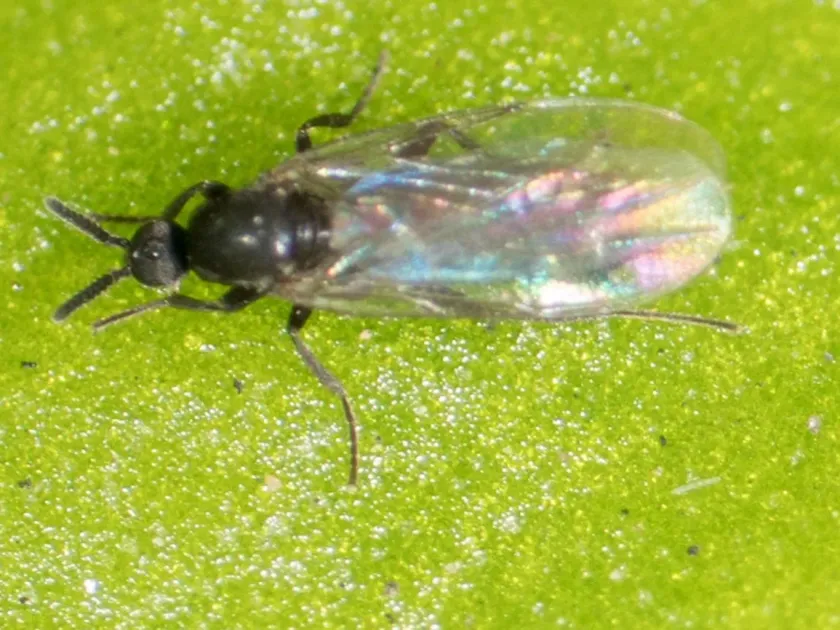
Scatopse fuscipes is a small dipteran insect belonging to the Scatopsidae family. The adults are tiny, dark-colored flies, typically measuring between 2 to 3 millimeters in length.
The larvae of this pest are slender, elongated, and possess a dirty-white to greyish body with a distinct dark head capsule. They primarily thrive in moist, organic-rich substrates.
Identification is mainly based on the specific wing venation patterns of the adults, although they can easily be mistaken for other common soil-dwelling flies in the field.
The life cycle involves several stages, including eggs, larvae, pupae, and adults. Females lay their eggs in damp soil or decaying organic matter, which serves as the primary food source.
While they are essentially saprophagous, larvae can shift to feeding on living plant tissues when organic matter is depleted or their population density is exceptionally high.
What it damages
This pest is known to target vegetable crops, including tomatoes, cucumbers, cabbage, and various bulbous plants, especially during their initial growth stages.
Larvae feed by boring into the roots and stem bases, causing significant structural damage that disrupts nutrient uptake and leads to plant wilting.
The damage caused by the larvae creates entry points for secondary bacterial and fungal pathogens, which frequently result in root rot and total crop failure.
Young seedlings are particularly vulnerable, and even minor feeding damage can lead to stunted growth or the eventual death of the affected plant.
High infestation levels in greenhouse conditions often lead to patchy and uneven stands, forcing growers to re-sow or take emergency control measures.
When it appears
Activity levels are highly dependent on soil temperature and moisture. The flies typically emerge in early spring as soon as the soil starts to warm up.
The pest thrives in cool, damp conditions, with population spikes occurring frequently during periods of heavy spring rainfall or excessive irrigation.
In managed greenhouse environments, they can maintain continuous breeding cycles throughout the year, provided that moisture and food sources remain available.
Adult flights are most noticeable near the surface of the soil, especially in areas where damp, decaying plant debris is present.
As the season progresses, population growth usually slows down, although pupae can survive in the soil for extended periods waiting for better environmental conditions.
Signs of infestation
The primary indicator of an infestation is sudden, unexplained wilting of seedlings that does not correlate with water stress or lack of nutrients.
Upon examination of the root collar, you may observe darkening, necrotic spots, or small tunnels bored into the plant tissue by the larvae.
Visible presence of small black flies swarming over the soil surface in the morning or on cloudy days is a strong warning sign of a growing population.
An unpleasant, rotting smell around the base of the plant often indicates that secondary infections have set in due to larval damage.
The presence of larvae themselves within the root zone or the stem base is the most conclusive sign that Scatopse fuscipes is causing the damage.
Control measures
The most effective management strategy involves strict adherence to sanitation, ensuring that only well-composted, non-pathogenic organic materials are used.
Improving soil drainage is critical to reducing the damp conditions that attract egg-laying females and support larval development.
Yellow sticky traps are an essential tool for monitoring the adult fly population and can provide some level of control in confined greenhouse spaces.
Biological control using entomopathogenic nematodes applied to the soil has shown success in reducing larval numbers without the need for synthetic chemicals.
In severe cases, targeted use of insecticides labeled for vegetable crops can be employed, strictly following the manufacturer’s instructions and safety intervals.
Taxonomy
- Latin name
- Scatopse fuscipes
- Order
- Diptera (flies)
- Family
- Scatopsidae
- EPPO code
- SCTSFU
Discussion
No discussions yet — be the first.