
Scatopse
Scatopse
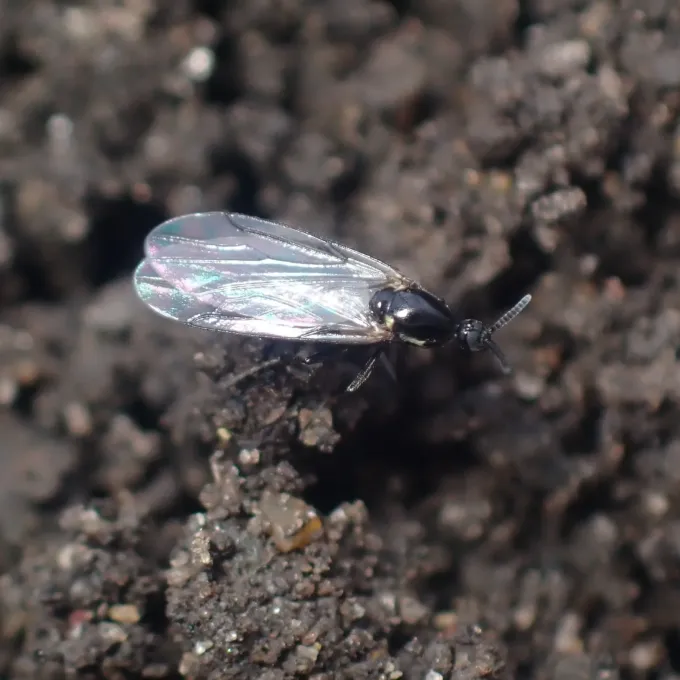
Description
How to identify
Scatopse, a genus within the Scatopsidae family, is commonly referred to as the minute black scavenger fly. These insects are small, typically ranging from 1 to 3 mm in length, with a robust, dark-colored body.
The adult flies possess a distinct wing venation pattern and short antennae, which are key taxonomic characteristics used for precise identification by entomologists.
Their larvae are cylindrical and possess a segmented appearance, often living in habitats rich in decomposing organic matter, manure, or damp soil conditions.
The life cycle encompasses four main stages: egg, larva, pupa, and adult, with development speed heavily dependent on temperature and organic content in the substrate.
While often considered beneficial decomposers in nature, they can become significant pests when environmental conditions in agricultural settings favor their population explosion.
What it damages
Scatopse larvae are opportunistic feeders that primarily damage germinating seeds, young seedling roots, and succulent plant tissues in greenhouse environments.
The primary concern arises when larvae move from organic matter into the root zone of crops, causing feeding damage that stunts plant development.
Plants grown in soils heavily amended with immature compost or manure are at the highest risk of colonization by these flies, leading to severe stand depletion.
Beyond direct feeding, the larvae create entry points for secondary pathogens, significantly increasing the incidence of root rot and other fungal diseases.
Economic losses in nurseries and commercial greenhouses are often due to the need for replanting and the overall reduction in crop vigor caused by root damage.
When it appears
These flies are active throughout the growing season, and in indoor environments like glasshouses, they can reproduce continuously regardless of the external weather.
Populations tend to spike during the early stages of crop production when high humidity and high levels of organic fertilizer are present in the growing medium.
Adult flies are observed swarming around moist substrates, which are their primary choice for laying eggs, particularly when the organic matter is in an active state of decay.
Temperature plays a crucial role; warm conditions accelerate the life cycle, leading to shorter generations and rapidly increasing population densities if left unmanaged.
As the season progresses, monitoring remains essential, as subsequent generations can continue to cause damage until conditions become dry or the organic matter decomposes.
Signs of infestation
The first indicator of an infestation is often poor germination or the sudden wilting of young seedlings without apparent cause, often mimicking damping-off disease.
Closer inspection of the root zone will reveal larvae, which may look like small white threads, feeding on the root tips and destroying the fine root hair structure.
Adult swarms visible on sticky traps or flying near the soil surface are clear evidence that a breeding population is well-established within the growing area.
Unpleasant odors associated with the soil surface or the base of stems, combined with signs of rotting plant tissue, are strong indicators of larval presence.
Seedlings affected by these flies will show signs of nutrient deficiency, as their impaired root systems fail to support healthy growth even under ideal fertilizing conditions.
Control measures
Cultural management is the cornerstone of controlling Scatopse, starting with the use of fully composted organic matter to prevent egg-laying opportunities.
Maintaining proper drainage and ensuring that the growth medium does not stay excessively waterlogged will significantly limit the survival of larvae.
- Deployment of yellow sticky traps to capture and monitor adult populations.
- Sterilization of soil or potting mixes via heat or chemicals before seeding.
- Consistent sanitation practices to remove debris and dead plant material.
- Biological control options using entomopathogenic nematodes applied to the soil.
If chemical intervention is necessary, select insecticides that are labeled for use on specific crops and environments, ensuring efficacy against soil-dwelling larvae.
A proactive monitoring program that includes inspecting roots of stunted plants can help detect infestations early before they reach levels requiring drastic measures.
Taxonomy
- Latin name
- Scatopse
- Order
- Diptera (flies)
- Family
- Scatopsidae
- EPPO code
- SCTSSP
Discussion
No discussions yet — be the first.