
Shore bug
Saldula saltatoria
Description
How to identify
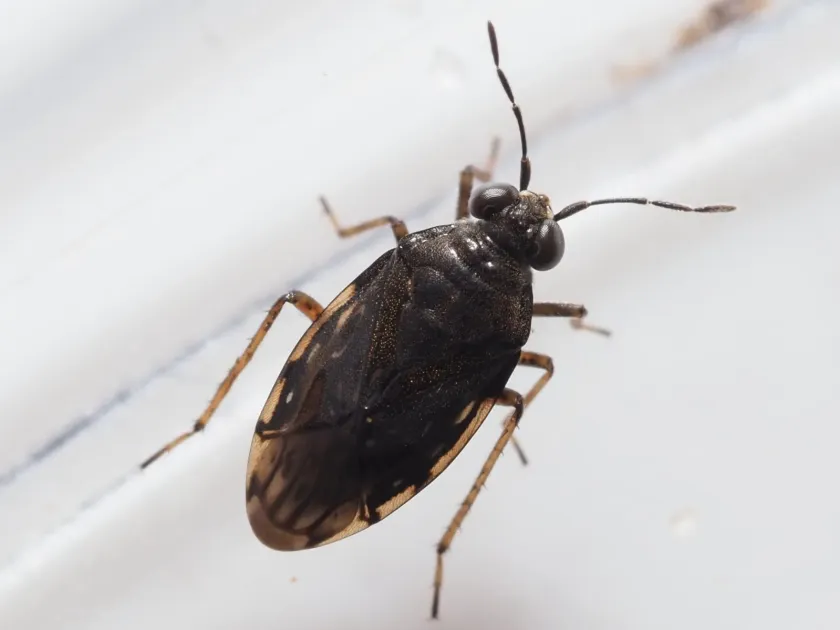
The shore bug (Saldula saltatoria) belongs to the Saldidae family, within the order Hemiptera. These small insects typically measure 3 to 5 mm in length and possess a dark-colored body often patterned with light spots on their wings.
They are known for their exceptional jumping ability, facilitated by developed hind legs that allow them to escape rapidly when disturbed.
Their life cycle involves incomplete metamorphosis. They are most commonly found in moist habitats, such as muddy shorelines, pond edges, or poorly drained areas of agricultural fields.
The head features large, prominent eyes, which assist these active predators in navigating their environment and spotting prey.
While primarily predatory, they can exhibit opportunistic herbivory, occasionally feeding on plant juices when their primary food source is scarce.
What it damages
In agricultural settings, shore bugs are often categorized as minor pests that thrive in areas with consistently damp soil, such as low-lying fields or greenhouses.
They damage crops by using their piercing-sucking mouthparts to feed on young stems and leaves, leading to stunting and general weakness of the seedlings.
Beyond the direct nutritional loss for the plant, the feeding process creates micro-wounds that often serve as entry points for bacterial and fungal pathogens.
Young, sensitive plants are at the highest risk, as intense feeding can lead to severe wilting and eventual death of the affected specimens.
Outbreaks are most commonly observed during seasons characterized by excessive rainfall, which creates ideal humidity levels for the bug's development.
When it appears
Activity begins in early spring as soon as soil temperatures reach a point that allows the bugs to emerge from their overwintering sites.
Populations typically peak during mid-summer, when favorable weather conditions support the rapid reproduction and development of multiple generations.
The number of generations per year can vary depending on the local climate and temperature trends in the specific region.
As temperatures drop in autumn, these insects enter a dormant state, seeking shelter under organic debris or in soil crevices to survive the winter.
Monitoring should be most intensive during periods of high humidity and warm temperatures, which are prime times for their reproductive cycles.
Signs of infestation
The first signs of shore bug activity include small, light-colored spots or chlorotic patches on the foliage, caused by their feeding activities.
Stunted plant growth and the yellowing of leaf margins can indicate chronic feeding pressure from these bugs.
The presence of small, dark fecal spots on the underside of leaves is a common indicator of their infestation.
If you notice tiny, fast-moving, jumping insects on the moist soil surface near the stems, it is a definitive sign of their presence.
In greenhouse environments, sudden wilting of individual plants without obvious root disease should prompt an inspection for these pests.
Control measures
Effective management focuses primarily on cultural practices, particularly improving soil drainage to eliminate the damp conditions they favor.
Maintaining a weed-free area around fields and greenhouses is crucial, as weeds provide refuge for shore bugs during the off-season.
Biological control agents, such as entomopathogenic fungi, can be used to naturally manage populations without harming beneficial insects.
Chemical control should be reserved for high-infestation scenarios and should utilize insecticides approved for the specific crop being protected.
- Improve surface and sub-surface drainage.
- Practice regular cultivation to disrupt their habitat.
- Use yellow sticky traps for population monitoring.
- Maintain strict field sanitation to reduce overwintering sites.
Taxonomy
- Latin name
- Saldula saltatoria
- Order
- Hemiptera (bugs, aphids, leafhoppers)
- Family
- Saldidae
- EPPO code
- SALDSA
Discussion
No discussions yet — be the first.