
Shore bug
Saldula
Description
How to identify
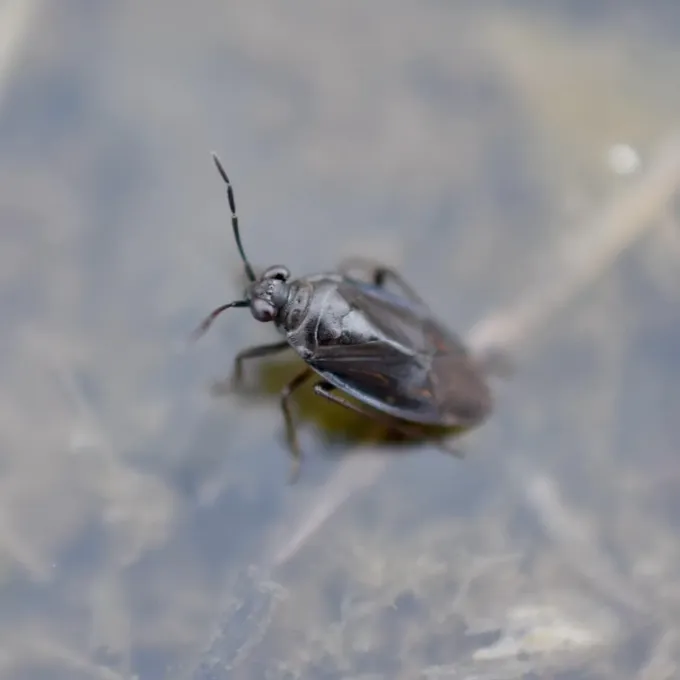
Shore bugs (family Saldidae) are small insects, typically measuring between 3 to 6 mm in length. They are easily recognized by their oval, flattened bodies and distinctively large, bulging eyes that give them excellent peripheral vision.
Their coloration is usually dark with pale, mottled patterns, which serves as a highly effective camouflage against wet soil, mud, and rocky riverbanks, their natural habitats.
Adult shore bugs are capable of strong flight, allowing them to rapidly colonize new areas, including irrigated agricultural lands that mimic the humid conditions they prefer.
The nymphs resemble smaller, wingless versions of adults. They stay close to the ground, moving quickly across moist surfaces to forage for food and hide from predators.
Biologically, they belong to the order Hemiptera. While they are essentially wild insects, they become pests when agricultural practices create damp environments that support their populations.
What it damages
The primary damage caused by shore bugs involves their piercing-sucking mouthparts, which they use to feed on the sap of young, succulent plant tissues.
As they feed, they can inject saliva into the plant, leading to localized cell death, chlorotic spots, and potentially stunted growth of the affected leaves or stems.
Crops most at risk are those grown in low-lying areas, hydroponic systems, or fields with high humidity levels and poor soil drainage, which attract these insects.
The wounds inflicted by their feeding can serve as entry points for various bacterial and fungal pathogens, potentially causing secondary infections that are more damaging than the feeding itself.
In high-density infestations, the cumulative stress on plants can lead to significant yield losses, especially in young seedlings or high-value vegetable crops.
When it appears
Shore bug activity typically peaks during the warmer months, starting in early spring when ground temperatures become conducive to their emergence and breeding.
Throughout the growing season, if moisture levels remain high, these insects can complete multiple generations, maintaining a steady pressure on cultivated plants.
As autumn approaches and temperatures drop, shore bugs begin to seek overwintering sites, often settling in organic debris, under stones, or in soil crevices until the following spring.
Their life cycle is strictly regulated by environmental humidity; therefore, their population density tends to fluctuate drastically depending on annual rainfall and irrigation efficiency.
Agronomists monitor these insects throughout the season, focusing on periods of peak emergence when the most severe damage to young crops is likely to occur.
Signs of infestation
The most common sign of a shore bug infestation is the appearance of small, irregular necrotic spots or tiny holes on the foliage, often concentrated near the base of the plant.
Direct observation is key to diagnosis; upon entering an affected field, the presence of these insects is often indicated by their rapid, erratic jumping and flight patterns when disturbed.
The presence of dark, speckled excrement on the underside of leaves or on the surrounding soil surface is another strong indicator of their feeding activity.
Affected plants may exhibit signs of wilting or slow development, especially if the infestation is localized in areas where moisture has accumulated.
- Small chlorotic or necrotic spots on leaves.
- Rapid movement of small, dark insects near the base of plants.
- Stunted plant growth and deformed foliage.
- Evidence of insect frass near the root zone.
Control measures
The most effective management strategy for shore bugs is cultural control, specifically by managing soil moisture levels and improving field drainage to prevent waterlogging.
Maintaining a clean field by removing debris and weeds reduces the availability of sheltered, damp microhabitats where these bugs prefer to breed and hide.
Biological control agents, such as predatory beetles or entomopathogenic fungi, can be highly effective in maintaining population balance without the need for harsh chemicals.
If chemical control becomes necessary, spot treatment using registered systemic insecticides should be applied during the early stages of infestation to prevent spread.
Regular scouting and monitoring of soil moisture allow growers to preemptively manage the conditions that make their crops vulnerable to these opportunistic pests.
Taxonomy
- Latin name
- Saldula
- Order
- Hemiptera (bugs, aphids, leafhoppers)
- Family
- Saldidae
- EPPO code
- SALDSP
Discussion
No discussions yet — be the first.