
Secretarybird
Sagittarius serpentarius
Description
How to identify
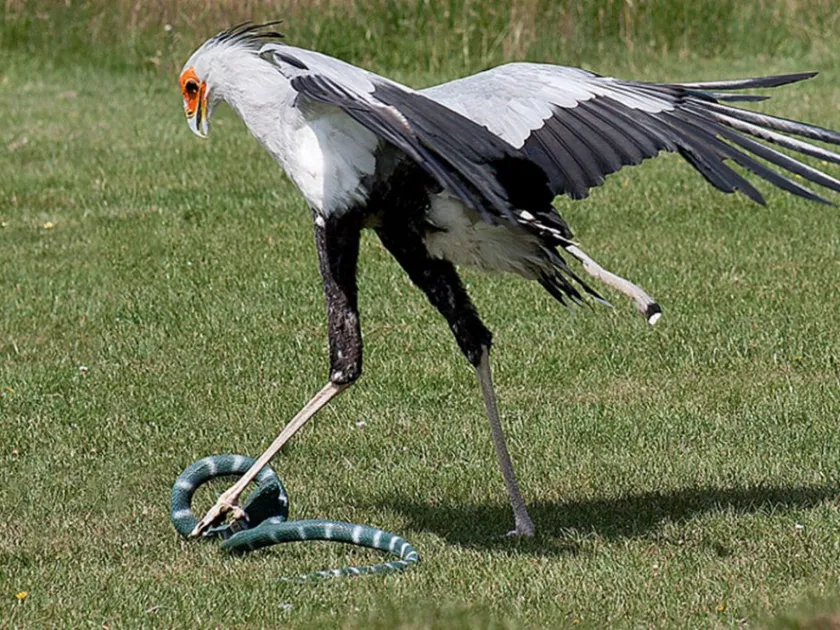
The Secretarybird (Sagittarius serpentarius) is a large, terrestrial bird of prey native to the African savannas, often encountered near agricultural lands due to its hunting behavior.
Standing up to 1.3 meters tall, this bird possesses exceptionally long, strong legs and a distinctive crest of feathers on the back of its head, giving it a unique, regal silhouette.
The plumage is primarily grey with black wing feathers and elongated central tail feathers, providing excellent camouflage while moving through tall crops or grasslands.
Its hooked bill is designed for carnivory, but its primary assets as a pest are its powerful legs, which are used to stomp on prey and can unintentionally crush fragile seedlings.
Identification is relatively straightforward due to its ground-dwelling habit, as it prefers walking or running over flying, making it a visible presence in open agricultural fields.
What it damages
The agricultural impact of the Secretarybird is primarily mechanical, resulting from the bird’s intensive foraging patterns that can flatten sections of sensitive young crops.
When hunting for small reptiles or rodents, the bird uses its feet to strike at the ground, causing localized trampling of wheat, corn, and sorghum in the early development stages.
This trampling effect can damage the root systems of young plants, leading to uneven growth, stunted development, or total loss of the crop stand in the affected areas.
While the birds do not consume the crops themselves, their repetitive presence and vigorous hunting movements create paths and cleared spots that facilitate erosion and reduce stand uniformity.
In large-scale farming, repeated traffic by these birds in specific zones can result in significant gaps in rows, potentially necessitating costly re-seeding operations.
When it appears
Activity levels fluctuate according to the crop growth cycle, with peak visibility and potential interference occurring when vegetation is low and hunting efficiency is highest.
During the early vegetative growth of cereal crops, the field environment is ideal for Secretarybirds, as the lack of dense canopy makes prey detection significantly easier for them.
Migration and foraging paths are often linked to seasonal rainfall, which influences the distribution of the small animals that make up the bird's natural diet.
The breeding season increases the bird's metabolic demands, leading to more frequent patrols of open areas and agricultural boundaries in search of food for the chicks.
Post-harvest periods also attract these birds to fields where stubble provides an environment for rodents, causing the birds to linger longer in cultivated areas than usual.
Signs of infestation
Signs of presence are characterized by distinct, large, three-toed tracks left in the mud or soft soil between the crop rows, indicating recent activity.
Aggregated areas of trampled vegetation, often circular in shape, mark the specific spots where the bird spent significant time pinning down its prey.
Evidence of feeding, such as snake skin fragments, rodent remains, or shed feathers, clearly indicates that the field is being used as a hunting ground.
Observing a decline in visible rodent activity, followed by the appearance of the bird, provides a biological indicator of the bird's role in the local field ecosystem.
Visual identification of the birds stalking through rows during the morning or late afternoon provides direct evidence before extensive physical damage becomes visible.
Control measures
Management strategies for Secretarybirds focus on non-lethal, deterrent-based approaches, respecting the bird's status as a key member of the local ecosystem.
Acoustic deterrents that simulate the presence of apex predators or produce intermittent alarm calls are effective in keeping these birds away from sensitive planting zones.
- Installation of wind-driven visual deterrents such as reflective tape or spinners.
- Deployment of bioacoustic systems that trigger during movement detection.
- Regular field scouting to identify and mitigate prey populations (rodents).
- Creating buffer zones of tall, native grasses to divert foraging traffic away from crops.
- Use of ultrasonic devices to create a non-welcoming field environment.
Effective control also relies on integrated pest management practices that reduce the rodent population within the field, thus removing the primary incentive for the Secretarybird to forage there.
Always prioritize habitat management and gentle exclusion techniques, as the Secretarybird is ecologically valuable and often protected under local wildlife regulations.
Taxonomy
- Latin name
- Sagittarius serpentarius
- Family
- Sagittariidae
- EPPO code
- SAGISE
Discussion
No discussions yet — be the first.