
Berry bug
Sagittarius
Description
How to identify
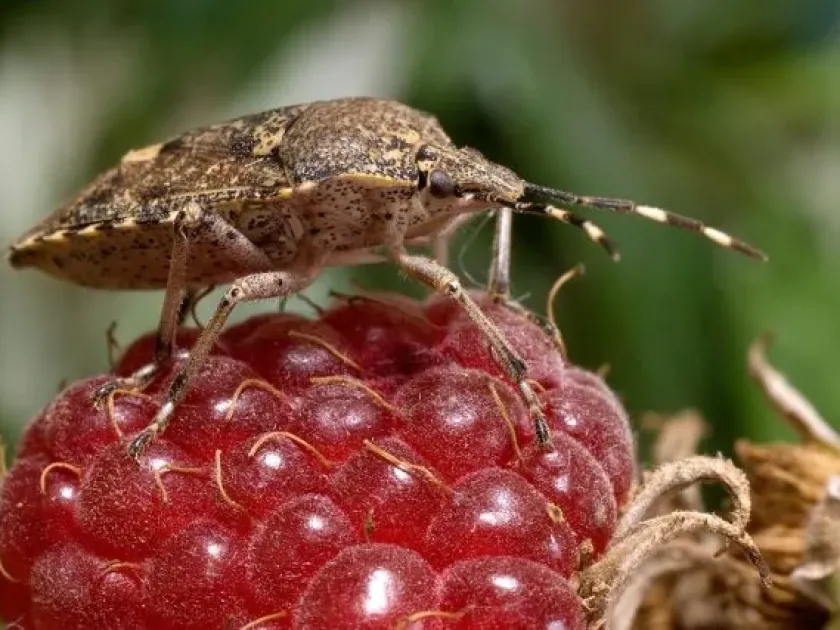
The berry bug, scientifically known as Dolycoris baccarum, is a member of the shield bug family (Pentatomidae). Adult bugs are typically 10 to 12 millimeters long and possess a distinct, broad shield-shaped body.
Their coloration varies from brownish-grey to reddish-brown, and the entire body is covered with fine, pale hairs. A key diagnostic feature is the yellowish or reddish tip of the scutellum on their back.
Nymphs undergo five developmental stages. Unlike adults, they lack fully developed wings and often appear lighter in color, ranging from yellowish-green to brown with prominent dark markings on their abdomen.
The eggs are barrel-shaped and typically laid in clusters on the undersides of leaves. Their white or pale greenish color makes them relatively easy to spot during routine garden inspections.
Adult bugs are equipped with scent glands that release a pungent, unpleasant odor when disturbed. This defensive mechanism is one of the most reliable ways to detect their presence in the garden.
What it damages
This polyphagous pest targets a wide array of crops, showing a strong preference for soft fruits such as raspberries, blackberries, currants, and strawberries. They can also cause significant damage to vegetable crops.
Among vegetables, tomatoes, eggplants, and beans are particularly susceptible. The bugs use their piercing-sucking mouthparts to penetrate plant tissues and extract nutrients from the developing fruit.
Damage occurs primarily during the ripening stage. The punctures created by the bugs serve as entry points for pathogens, leading to fungal infections and rapid decay of the fruit.
A major issue for growers is the strong, foul "buggy" taste and smell imparted to the fruit by the insect's saliva. This renders even slightly affected produce inedible and unsuitable for commercial sale.
Furthermore, early-season feeding on young fruitlets or flower buds can lead to severe deformation, fruit drop, and significant overall yield loss, impacting the economic viability of the crop.
When it appears
Adult berry bugs overwinter in diapause. They seek shelter in protected areas such as leaf litter, dried grass, under tree bark, or in other organic debris, where they remain dormant during cold weather.
They emerge in the spring as temperatures rise, usually around April or May. Initially, they feed on weeds and wild plants before moving onto cultivated berry bushes and vegetable patches as they develop.
The life cycle involves one or two generations per year, depending on the climatic zone. The population peaks during the warm summer months, aligning with the ripening phase of most fruit crops.
Weather conditions play a crucial role in their population dynamics. Hot, dry summers provide optimal conditions for reproduction, while excessive rainfall can negatively impact nymph survival rates.
By autumn, as food sources dwindle, adults begin to seek out suitable hibernation sites. Consequently, garden hygiene at the end of the season is critical to reducing the population for the following year.
Signs of infestation
The most immediate sign of an infestation is a distinct, foul odor near the plants. If you detect this scent while touching the bushes, it is highly likely that a colony of berry bugs is present.
Visual inspection of the underside of leaves will reveal clusters of barrel-shaped eggs. Finding these early allows for manual removal before the nymphs emerge and begin causing damage to the fruit.
On the fruit itself, look for small dark spots or pits. Over time, these areas may turn soft and discolored as the tissue beneath the skin breaks down due to the bug's digestive enzymes.
- Deformed, bumpy, or asymmetrical fruit development.
- Wilting or yellowing of foliage in areas where colonies are feeding.
- Stunted growth of new shoots due to sap extraction.
- Premature fruit or flower drop, often attributed to bug damage.
Affected fruit will exhibit a noticeable loss of quality, including off-flavors and a mushy texture that makes it unusable for fresh consumption or processing.
Control measures
Cultural control is the most effective strategy. This involves thorough removal of plant debris and weeds in the autumn to eliminate potential overwintering sites for the adult bugs.
Regular monitoring and weeding are essential, particularly targeting weed hosts like common orach or goosefoot, which support early-season populations before garden fruits are ready.
Biological control can be implemented by fostering populations of natural predators and parasitoids, such as egg parasitoid wasps, which naturally keep bug numbers in check within the garden ecosystem.
For small-scale infestations, manual collection is highly effective. Shaking the bushes in the early morning, when bugs are sluggish due to cooler temperatures, into a container of soapy water is a simple solution.
Chemical control should be considered a last resort. If insecticides are necessary, they must be applied with extreme caution, ensuring that pre-harvest intervals are respected to ensure food safety.
Taxonomy
- Latin name
- Sagittarius
- Family
- Sagittariidae
- EPPO code
- SAGISP
Discussion
No discussions yet — be the first.