
Romualdius scaber
Romualdius scaber
Description
How to identify
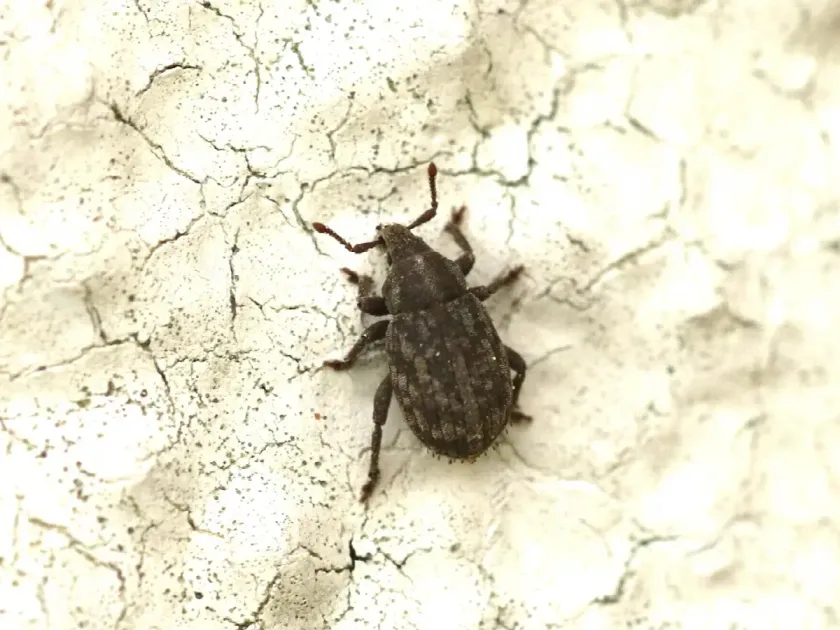
Romualdius scaber is a small beetle belonging to the weevil family (Curculionidae). Adult beetles typically measure about 3–4 mm in length, with a body color ranging from dark brown to almost black.
The insect's body is covered with characteristic scales and fine hairs, giving it a rough, matte appearance, which is the primary feature behind its specific name.
The beetle possesses a typical snout common to weevils, though it is relatively short and broad, which helps in accurately classifying the insect within this taxonomic group.
Unlike many other members of the family, this species leads a secretive lifestyle, often residing in the upper layers of the soil or within the root zone of plants.
The larvae have the classic appearance of legless grubs, white in color with a brown head capsule, which is a hallmark of the larval stage for many coleopteran species within the Curculionidae family.
What it damages
This pest inflicts damage on a wide spectrum of agricultural crops, including industrial and vegetable plants. Sugar beets, fodder roots, and certain legumes are the most frequent targets.
Adults prefer feeding on young leaves and cotyledons of emerging seedlings. During periods of high population density, they can destroy a significant portion of young crops.
The larvae of this species specialize in consuming the plant's root system. They excavate small galleries in fine roots, leading to stunted growth and the development of pathogens in the damaged tissues.
Root system damage is particularly dangerous for young plants, as it disrupts the uptake of water and nutrients, frequently resulting in the total loss of the plant.
Beyond direct damage, these injury sites often serve as entry points for soil-borne fungal infections, which cause root rots and significantly reduce total yield.
When it appears
The emergence of overwintered adult beetles from the soil begins in early spring, as soon as the temperature of the topsoil layer reaches levels favorable for insect activity.
The peak activity of adults usually coincides with the germination phase and the appearance of the first true leaves of crops, making the seedling stage the most vulnerable period.
The reproductive cycle is spread over time: eggs are laid in the soil near the root zone, where larvae subsequently develop and feed on roots throughout the entire summer season.
Pupation typically occurs in earthen cells. A new generation of beetles appears in the second half of summer, after which they continue feeding until the onset of autumn cooling.
Hibernation of adults occurs in the surface layer of the soil or under plant debris, where they enter a state of diapause until the arrival of the next spring season.
Signs of infestation
An indicator of the pest's presence in the field is the appearance of scalloped edges on cotyledon leaves, caused by beetles feeding on the tissue.
When the root system is infested, young plants begin to show visible signs of stunted growth, wilting during the day, and leaves turning chlorotic.
If an affected plant is removed from the soil, one can observe mechanical damage on the taproot or lateral roots in the form of small cavities and boreholes.
In early stages of infestation, characteristic "dust" and insect excrement may be seen on the soil surface, although due to their small size, they are hard to identify without magnification.
Widespread thinning of crop stands without obvious above-ground causes is one of the key indicators that weevil larvae are feeding underground.
Control measures
A primary management method is the implementation of crop rotation, which limits the build-up of the pest population in the soil at a single location over several years.
Deep autumn plowing helps destroy overwintering sites for adults and displaces larvae into less favorable conditions, significantly reducing the pest population in the spring.
The use of high-quality seed treatment with systemic insecticides provides protection for young seedlings during their most critical stage of development.
Once the economic threshold of damage is reached, foliar application of contact-stomach insecticides is recommended to eliminate adults before the egg-laying period begins.
- Elimination of weed reservoirs, especially wild Chenopodiaceae.
- Maintaining optimal agronomic practices to ensure rapid passage through the seedling phase.
- Application of balanced fertilizers to stimulate root system regeneration.
Taxonomy
- Latin name
- Romualdius scaber
- Order
- Coleoptera (beetles)
- Family
- Curculionidae
- EPPO code
- ROMUSC
Discussion
No discussions yet — be the first.