
Romualdius
Romualdius
Description
How to identify
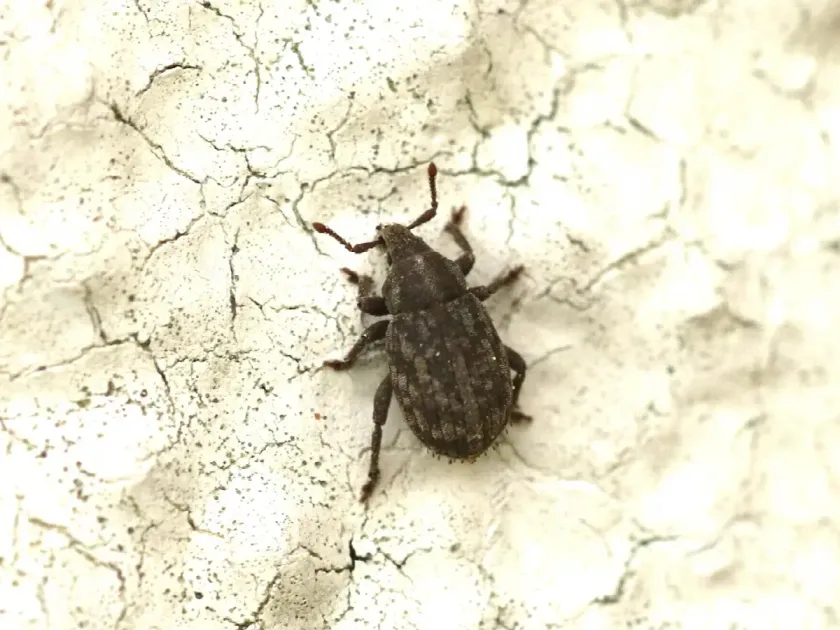
Romualdius is a genus of broad-nosed weevils belonging to the family Curculionidae (order Coleoptera). These insects are small beetles, typically measuring 3 to 5 millimeters in length.
The adults are characterized by a dense, often tuberculate body surface, which assists them in camouflaging against soil particles or plant debris. Their coloration generally ranges from dark brown to grey or black.
The larvae follow the typical morphology of weevil larvae: they are apodous (legless), C-shaped, and possess a well-developed head capsule. They are usually white or cream-colored, making them difficult to detect within the soil substrate.
Systematically, the genus includes several species, with Romualdius angustisetulus being one of the most recognized. They are frequently found in agricultural ecosystems across Europe and surrounding temperate regions.
Adult beetles are predominantly nocturnal and cryptic, often remaining hidden during daylight hours, which makes early detection in fields or greenhouse environments quite challenging.
What it damages
Damage is caused by both adults and larvae, although the nature of the destruction varies significantly. Host plants encompass a broad range of agricultural crops and ornamental species.
Adults feed on the leaf margins, creating characteristic semi-circular notches. This feeding pattern reduces the plant's photosynthetic capacity, which is particularly detrimental to young seedlings during the emergence phase.
The larvae live in the soil and feed on the root systems of host plants. This damage compromises the plant's ability to uptake water and minerals, leading to stunted growth, wilting, or even the death of the plant.
Commonly affected crops include legumes and berry plants, such as strawberries. Various perennial herbaceous plants are also reported as susceptible hosts for this pest.
Significant economic loss often occurs in nursery settings, where root damage by larvae can lead to the total loss of aesthetic and commercial value or plant mortality within a single growing season.
When it appears
The life cycle of Romualdius is strongly regulated by soil temperature. Overwintering adults typically emerge in early spring once soil temperatures reach 8–10 degrees Celsius.
Active feeding by adult beetles peaks during late spring and early summer, coinciding with the rapid vegetative growth phase of host crops.
Eggs are laid in the soil near the root zone. Larvae develop within the soil horizon throughout the summer, feeding on roots and progressing through several larval instars.
Pupation generally occurs in a soil cell during mid-to-late summer. A new generation of adults typically emerges by autumn before seeking refuge in deeper soil layers or under debris for the winter.
In greenhouse conditions with stable temperatures, the developmental cycle can be compressed, potentially allowing for overlapping generations and increased pressure throughout the year.
Signs of infestation
One of the primary indicators of infestation is the appearance of notched leaf edges, confirming the activity of adult beetles during nocturnal hours.
Unexplained stunted growth in plants, despite adequate irrigation, serves as a warning sign. Carefully unearthing such plants often reveals damaged or pruned root systems.
Progressive wilting during the daytime, despite sufficient soil moisture, indicates a disruption in the vascular system caused by larval feeding on the roots.
In field conditions, infestations often appear in patchy, mosaic patterns, spreading from areas where initial population densities were higher.
Soil inspection around the base of the plant often reveals larvae, which instinctively curl into a C-shape and remain motionless when disturbed, blending in with the soil texture.
Control measures
Agronomic management strategies include mandatory crop rotation, excluding susceptible species for 2–3 years to deplete larval populations in the soil.
Deep autumn plowing or soil cultivation helps expose overwintering stages to surface conditions, leading to mortality from cold temperatures and natural predators.
The use of certified, clean planting material is a critical preventive measure to stop the introduction of this pest into new fields or greenhouses.
- Application of biological control agents, such as entomopathogenic fungi (e.g., Beauveria bassiana), to target larvae in the soil.
- Usage of authorized systemic insecticides if population thresholds are exceeded.
- Regular hoeing and weed management to disrupt the larval environment and eliminate secondary host plants.
Chemical control requires strict adherence to timing; foliar applications against adults should be conducted in the evening when beetles are most active on the plant foliage.
Taxonomy
- Latin name
- Romualdius
- Order
- Coleoptera (beetles)
- Family
- Curculionidae
- EPPO code
- ROMUSP
Discussion
No discussions yet — be the first.