
Striped bass
Roccus saxatilis
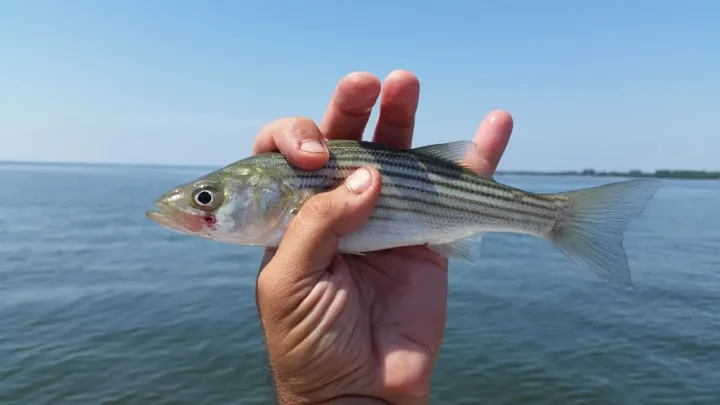
Description
How to identify
The striped bass, classified taxonomically as Roccus saxatilis (or Morone saxatilis), belongs to the family Moronidae within the order Perciformes.
It is a popular and well-studied game fish characterized by its silver body with several distinct longitudinal dark stripes running along its lateral sides.
The species primarily inhabits coastal Atlantic waters and performs spawning migrations into freshwater river systems, showing high adaptability to varying salinity.
Morphologically, these fish possess strong dorsal and anal fins, which are diagnostic traits used by ichthyologists to distinguish them from other bass species.
As a prominent aquatic predator, it maintains its position in the food chain by consuming smaller fish, crustaceans, and various aquatic invertebrates.
What it damages
The striped bass is strictly an aquatic species and does not interact with, damage, or consume any terrestrial crops or ornamental plants.
It is biologically impossible for this species to act as an agricultural pest, as it lacks the physiological tools to feed on plant tissues or sap.
There are no documented cases in agricultural science where Roccus saxatilis has been linked to crop damage, plant disease, or infestation.
This organism poses zero risk to horticultural or agronomic operations, making it irrelevant to plant protection or pest control management strategies.
Any classification of this fish as a plant pest is scientifically incorrect and contrary to all known biological facts about the Moronidae family.
Taxonomy
- Latin name
- Roccus saxatilis
- Family
- Percichthyidae
- EPPO code
- ROCCSA
Discussion
No discussions yet — be the first.