
White perch
Morone americana
Description
How to identify
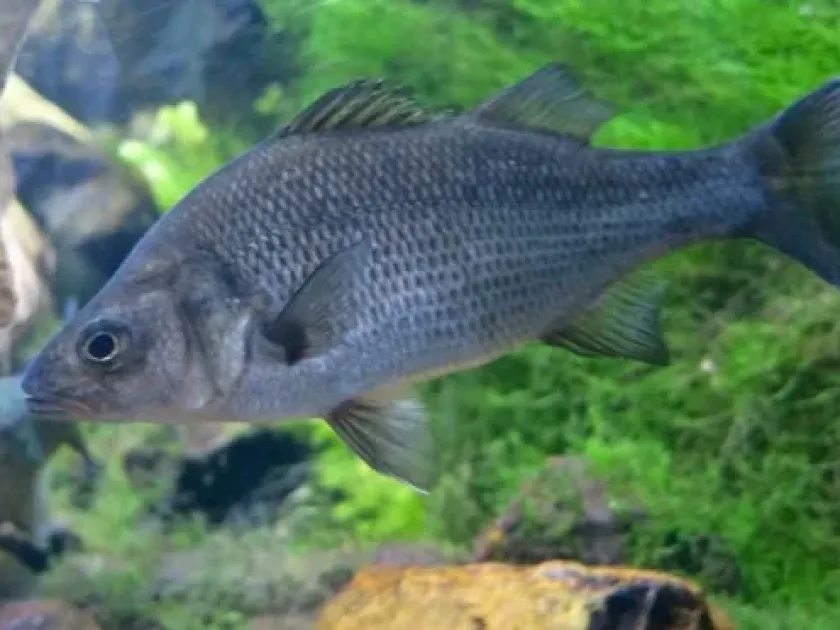
The white perch, scientifically known as Morone americana, is a predatory fish belonging to the Moronidae family. It is characterized by a silvery body with dark stripes and a double-lobed dorsal fin, making it a distinct but highly invasive presence in many water bodies.
Adult individuals typically grow to 20–30 centimeters, though they can reach lengths of up to 50 cm. Their adaptability allows them to thrive in both freshwater and brackish environments, which significantly contributes to their rapid expansion across diverse habitats.
Systematically, this object is classified within the Perciformes order. In the context of agricultural aquaculture, it is considered a pest due to its ability to disrupt local fish populations and interfere with commercially viable species.
They exhibit high reproductive rates and environmental plasticity, enabling them to colonize new areas quickly. This characteristic makes them a major concern for fishery managers and pond owners.
Identification can be confirmed by their robust body shape and the absence of spots on the pelvic fins, which distinguishes them from similar native species like the striped bass.
What it damages
The primary damage caused by white perch involves intense predation on the eggs and larvae of valuable commercial fish. In pond aquaculture, this predation leads to significant losses in stock productivity and economic output.
They compete directly with desired species for food resources, specifically zooplankton and small aquatic organisms, forcing producers to increase feed inputs to compensate for the lost potential yield.
Their presence in water systems can lead to the deterioration of water quality due to the overconsumption of natural plankton, which can negatively impact overall pond health and irrigation efficiency.
In contained aquaculture environments, these fish often consume artificial feed intended for the main stock, thereby reducing the feed conversion ratio and overall operational profitability.
By creating a dominant niche, white perch suppress the growth and survival of other fish species, leading to a general degradation of the aquatic ecosystem’s biological value.
When it appears
The peak activity and spawning phase of the white perch occur in the spring, generally from April to June, when water temperatures reach 15–20 degrees Celsius.
During this period, fish migrate to shallow coastal areas or riverine inlets to spawn, which is the high-risk season for new infestations in aquaculture ponds.
Summer is marked by intense feeding activity, which often coincides with the peak growth phase of young commercial fish, making these juveniles vulnerable to white perch predation.
Feeding continues throughout the autumn as the fish accumulate energy reserves for overwintering, maintaining their metabolic activity until water temperatures drop significantly.
During winter, white perch congregate in deeper, warmer sections of the water body to enter a state of reduced activity, surviving until the return of spring conditions.
Signs of infestation
A primary indicator of white perch infestation is a sudden, unexplained decline in the population of juvenile commercial fish in the absence of disease outbreaks.
Environmental monitoring often reveals a rapid depletion of zooplankton levels, suggesting that the ecosystem is being disrupted by a large, non-native predatory population.
Discovery of white perch during routine harvests or pond sampling serves as definitive evidence that the invasive species has successfully established itself in the system.
Analysis of stomach contents from captured fish, showing fragments of larvae or fish eggs, confirms the predator status and the direct threat to the aquaculture stock.
Increased water turbidity caused by their bottom-feeding behavior can serve as an indirect visual signal that a significant number of these fish are present in the pond.
Control measures
The most effective management strategy involves the installation of mechanical filters and screens at water intake points to prevent the entry of juvenile fish into aquaculture ponds.
Routine monitoring of fish populations is essential for the early detection of the pest, allowing for prompt intervention before the population reaches an uncontrollable level.
If an infestation occurs, techniques such as pond drainage, drying, and disinfection are highly effective in eliminating both adult fish and any remaining eggs in the pond bed.
- Installation of fish-exclusion screening systems.
- Regular ichthyofauna population monitoring.
- Selective biological control measures.
- Pond draining and substrate sanitation.
Limiting the connectivity between natural, wild water sources and production ponds through structural reinforcement is a critical preventive measure for any aquaculture operation.
Taxonomy
- Latin name
- Morone americana
- Family
- Percichthyidae
- EPPO code
- MOROAM
Discussion
No discussions yet — be the first.