
Rhytidoderes plicatus
Rhytidoderes plicatus
Description
How to identify
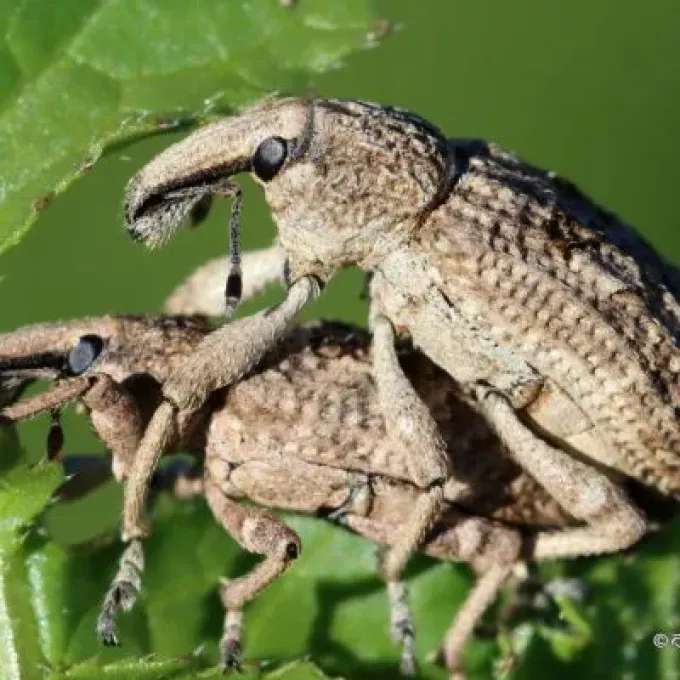
Rhytidoderes plicatus is a species of weevil belonging to the family Curculionidae and the order Coleoptera. These beetles are relatively large, typically measuring between 12 and 16 millimeters in length.
They are easily distinguished by their dark coloration and a very distinct sculpture on their elytra, characterized by prominent longitudinal folds and grooves.
The body is covered in dense greyish or brownish scales, which provides excellent camouflage against soil particles and plant debris in the field.
Like other members of the Curculionidae family, they possess a long rostrum (snout) which is used to feed on plant tissues and is a key diagnostic feature for identification.
The larvae are typical of the weevil family, exhibiting a C-shaped body, creamy-white color, and a hardened, brownish head capsule for digging in the soil.
What it damages
This pest primarily attacks members of the Brassicaceae family, with a specific preference for cultivated cabbage, radishes, turnips, and mustard plants.
Adult beetles cause damage by feeding on the margins of young leaves, creating irregular holes and edges, which significantly compromises the health and growth of the seedlings.
In cases of high infestation, adult weevils can cause severe defoliation, leading to the stunted growth or total loss of young plantings in a matter of days.
The larvae, which live underground, feed on the root system of the host plants, creating galleries that disrupt the plant's ability to absorb water and nutrients.
Roots damaged by larvae are highly susceptible to secondary pathogens, such as soil-borne fungi and bacteria, which often accelerate plant decline and decay.
When it appears
Adult beetles overwinter in the upper soil layers, under crop residues, or within other protected areas on the farm, remaining dormant until temperatures rise.
The spring emergence of overwintering adults usually coincides with the planting season, as temperatures become suitable for their activity and subsequent feeding.
The peak period of damage occurs during the late spring and early summer when the beetles are most active in feeding and the females begin laying eggs.
The lifecycle usually consists of a single generation per year, though the timing of emergence can vary depending on local weather conditions and regional climate.
Optimal conditions for larval development require sufficient soil moisture, meaning that high-rainfall seasons may correlate with increased pest pressure in the field.
Signs of infestation
The most visible sign of an infestation is the presence of serrated or ragged leaf margins on young cabbage plants, a clear indicator of adult feeding activity.
Wilting of plants during the hottest part of the day, despite adequate irrigation, often signals severe root damage caused by larvae tunneling into the base of the plant.
Beetles can often be found by searching the base of damaged plants during dawn or dusk, as they are most active during cooler parts of the day.
Yellowing of lower leaves and slow plant development are common indicators that the root system is being compromised by larval feeding underground.
If a plant is pulled up, the presence of galleries on the taproot or signs of root loss provides conclusive evidence of a Rhytidoderes plicatus infestation.
Control measures
The cornerstone of management is a robust crop rotation strategy, which prevents the build-up of pest populations by alternating non-host crops on the site.
Deep plowing in the autumn is a critical cultural practice that exposes overwintering adults to adverse weather conditions and natural predators.
Weed management is essential, as many common cruciferous weeds serve as alternative hosts and reservoirs for the pest population between crop seasons.
When populations exceed economic thresholds, the use of insecticides targeting the adult stage is recommended to prevent egg-laying and further damage.
- Regular monitoring during the seedling stage.
- Using row covers to physically exclude the beetles.
- Destroying crop residues immediately after harvest.
- Applying systemic insecticides for early protection.
Taxonomy
- Latin name
- Rhytidoderes plicatus
- Order
- Coleoptera (beetles)
- Family
- Curculionidae
- EPPO code
- RHYDPL
Discussion
No discussions yet — be the first.