
Rhytidoderes
Rhytidoderes
Description
How to identify
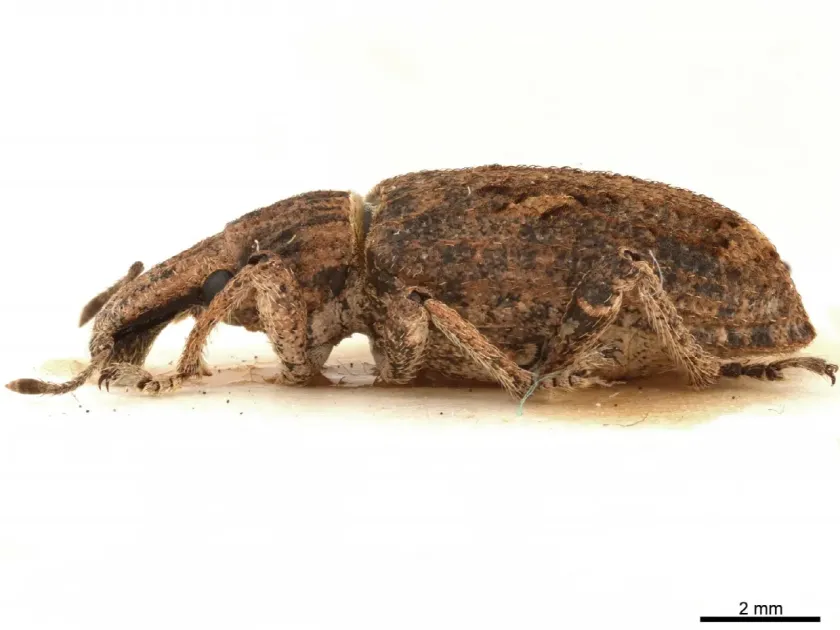
Rhytidoderes is a genus of insects belonging to the Curculionidae family (weevils). These beetles are characterized by their robust bodies and prominent snouts, which are typical morphological features used for feeding and oviposition in host plants.
The adult beetles are generally dark-colored, providing excellent camouflage against soil or agricultural debris. Precise identification requires examination of the elytral patterns and the shape of the pronotum, which are specific to the species within the genus.
Larvae are legless, C-shaped grubs with a pale, fleshy body and a hardened, often brownish head capsule. They live primarily in the soil, where they forage on the root systems of various plant species.
The life cycle of Rhytidoderes is significantly influenced by soil temperature and moisture content. The insect typically undergoes complete metamorphosis, with the soil serving as the developmental environment for the larval and pupal stages.
Adult activity is often nocturnal or cryptic, making detection challenging for farmers during regular field scouting. Understanding their emergence patterns is essential for planning timely interventions.
What it damages
The damage caused by this pest is primarily root destruction by the larvae, which feed on the root cortex and vascular tissues. This feeding behavior restricts water and nutrient uptake, leading to plant stunting, wilting, and eventually death.
Adult beetles contribute to damage by feeding on the aerial parts of young plants, particularly the foliage and stems. Such damage can be extensive during periods of high pest density, causing significant losses in photosynthetic leaf area.
Cruciferous crops are among the primary hosts for Rhytidoderes. In heavily infested areas, the destruction of the root system often causes uniform patches of crop failure, necessitating replanting.
Physical injury caused by larval feeding often acts as a pathway for soil-borne pathogens. These secondary infections frequently accelerate the decline of the plant, complicating the diagnosis of the primary pest.
The economic impact is most severe when infestations coincide with the seedling stage, as young plants have limited capacity to compensate for root system damage or tissue loss.
Control measures
Cultural control practices, such as proper crop rotation, are fundamental to managing Rhytidoderes. By ensuring that host plants are not grown in the same field sequentially, the pest population density can be kept below the economic threshold.
Mechanical cultivation and tillage disrupt the larval and pupal stages in the soil. These practices expose the subterranean life stages to environmental stress and natural predators, such as birds and beneficial insects.
Chemical control focuses on the use of seed treatments or soil-applied insecticides. These measures provide a protective zone around the germinating seeds and developing root systems, reducing early-season damage.
Monitoring for adult presence using specialized traps allows for precision application of insecticides. Targeting the adults before they lay eggs is a proactive strategy to reduce future larval pressure in the soil.
Integrated Pest Management (IPM) programs increasingly incorporate biological control agents, such as entomopathogenic nematodes or fungi. These agents provide an effective and environmentally sustainable alternative to traditional chemical pesticides.
Taxonomy
- Latin name
- Rhytidoderes
- Order
- Coleoptera (beetles)
- Family
- Curculionidae
- EPPO code
- RHYDSP
Discussion
No discussions yet — be the first.