
Rhyssomatus
Rhyssomatus
Description
How to identify
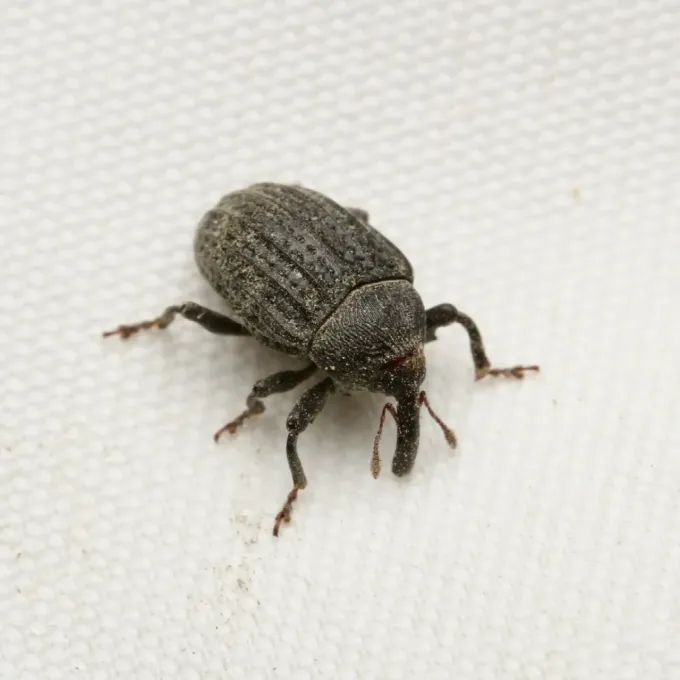
Rhyssomatus is a genus of weevils belonging to the family Curculionidae within the order Coleoptera. These insects are easily recognized by their distinct, elongated snouts, which are characteristic of the Curculionidae family.
Adult weevils possess a robust, hardened exoskeleton, typically dark in color, which provides excellent protection against external environmental stress and predators.
The larvae of Rhyssomatus are legless, fleshy, and usually cream-colored, featuring a well-developed, dark head capsule that allows them to tunnel into plant tissues effectively.
The life cycle undergoes complete metamorphosis, including egg, larval, pupal, and adult stages, with each phase adapted to specific host plant tissues.
Identification in the field is most effective during the growing season when adults are actively feeding on foliage or laying eggs on the pods of host crops.
What it damages
These pests primarily target legume crops, with soybeans being the most frequently impacted agricultural host, often suffering severe yield losses.
Adults cause damage by feeding on leaves, stems, and buds, which can stunt plant growth and reduce the overall photosynthetic capacity of the soybean crop.
The most significant economic damage is caused by the larvae, which bore into the pods and consume the developing seeds, directly reducing yield quality and quantity.
Damaged seeds are often unfit for market, and the boreholes created by the larvae provide easy access for secondary pathogens such as fungi and bacteria.
Under high population pressure, Rhyssomatus can destroy a significant percentage of the harvest, necessitating proactive monitoring and intervention strategies.
When it appears
Adult Rhyssomatus emerge in the spring after overwintering, seeking out young host plants to begin their feeding and reproductive activities.
The most critical period for crop damage occurs during the flowering and pod-filling stages, when the plant is most attractive for egg-laying and larval development.
Environmental factors like temperature and soil moisture play a key role in the duration of each life cycle stage, influencing the speed of population growth.
As the season progresses toward autumn, the insects prepare for winter, typically seeking refuge in the soil or under dense crop residue to avoid freezing.
Agronomists track seasonal development to time scouting efforts correctly, ensuring that preventive measures are applied before the infestation becomes severe.
Signs of infestation
The earliest signs of an infestation include small, rounded feeding punctures on the leaves, which are created by adults as they graze on green tissue.
Examination of the pods may reveal minute oviposition scars, which appear as dark, small indentations where the female has deposited her eggs.
Inside the pods, finding partially consumed seeds or the presence of larval waste (frass) is a definitive indicator of an active Rhyssomatus infestation.
Reduced plant vigor, premature yellowing of the leaves, and unseasonable pod drop are common symptoms of high-level infestation within a soybean field.
Field monitoring using yellow sticky traps or visual inspection of pods is essential for determining the actual density of the pest population.
Control measures
Integrated Pest Management (IPM) is crucial, starting with crop rotation to disrupt the life cycle of the weevil by moving host plants away from infested areas.
Deep tillage after harvest is a highly effective mechanical control method, as it exposes overwintering larvae and pupae to harsh weather and natural predators.
Selecting early-maturing soybean varieties can help the crop reach physiological maturity before the peak population of the pest occurs, thereby reducing vulnerability.
Chemical control involving systemic insecticides is recommended when population counts exceed the economic threshold, ensuring protection during the pod-filling phase.
By combining cultural practices, such as proper field sanitation, with targeted chemical applications, farmers can effectively manage the threat posed by Rhyssomatus.
Taxonomy
- Latin name
- Rhyssomatus
- Order
- Coleoptera (beetles)
- Family
- Curculionidae
- EPPO code
- RHSMSP
Discussion
No discussions yet — be the first.