
Wrinkled bark beetle
Rhysodes sulcatus
Description
How to identify
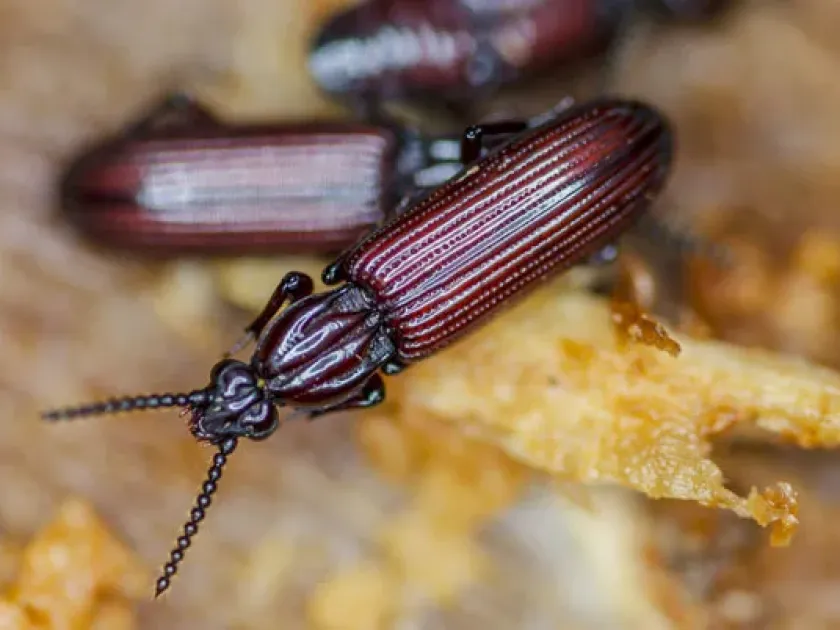
Rhysodes sulcatus is a distinct species of beetle belonging to the family Rhysodidae within the order Coleoptera. These beetles are characterized by their elongated, cylindrical bodies, typically measuring 6-8 mm, and their striking dark brown to black coloration.
The most notable feature of this beetle is the deep longitudinal grooves on the pronotum and elytra, which give the insect its common name. The head is noticeably narrowed, and the mandibles are robust, reflecting their specialized adaptation for boring into decaying wood.
Larvae are typical of xylophagous insects: soft-bodied, white, and legless. They spend their entire life cycle deep within the wood, which makes them very difficult to observe in their natural environment without destructive sampling.
Adults are rarely seen as they spend most of their time inside moist, decaying timber. Their biology is intrinsically linked to the presence of specific wood-rotting fungi, which facilitate their feeding and developmental process.
Systematically, this beetle represents a relict lineage often associated with old-growth forests. They are considered bioindicators, signaling the presence of stable, high-moisture woody environments essential for their reproduction.
What it damages
The primary damage is caused by the larval stage, which constructs intricate galleries within damp or decomposing deciduous wood. They show a preference for oak, beech, and hornbeam logs that are already undergoing the initial stages of decay.
The beetles contribute to the physical fragmentation of wood, facilitating further colonization by fungi and other microorganisms. While they rarely attack living, healthy trees, they can colonize weakened sections of trees, speeding up the degradation process.
In industrial forestry, the damage is localized rather than widespread. The presence of larval galleries reduces the structural integrity and aesthetic quality of timber, making it unsuitable for high-value manufacturing if heavily infested.
Evidence of infestation includes the presence of fine wood dust and small entry holes in the bark or exposed wood surface. Unlike mass outbreaks of bark beetles, the impact of Rhysodes sulcatus is typically slow and persistent rather than acute.
Economic damage remains minimal as the species is not a primary pest of healthy timber plantations. However, their presence in stored logs that remain in damp, shaded areas should be monitored to prevent localized quality loss.
Control measures
Effective management focuses on proper forestry hygiene and timber storage practices. Removing freshly felled timber from damp forest environments prevents the initial colonization by these beetles.
Storing timber in well-ventilated, dry areas significantly reduces the suitability of the wood for larval development. Moisture control is the most critical factor in inhibiting the activity of these xylophagous insects.
Sanitary forest management, including the removal of excessively damp, rotting debris, helps maintain lower population densities in commercial forest areas without the need for chemical intervention.
Given the conservation status of Rhysodes sulcatus in many regions, indiscriminate pesticide use is strongly discouraged. Integrated pest management strategies rely on cultural practices rather than synthetic chemicals.
Long-term forest health monitoring is essential to differentiate between beneficial wood-decomposing species and true pests, ensuring that control measures are only applied when economic thresholds are reached.
Taxonomy
- Latin name
- Rhysodes sulcatus
- Order
- Coleoptera (beetles)
- Family
- Rhysodidae
- EPPO code
- RHSOSU
Discussion
No discussions yet — be the first.