
Rhyncolus
Rhyncolus
Description
How to identify
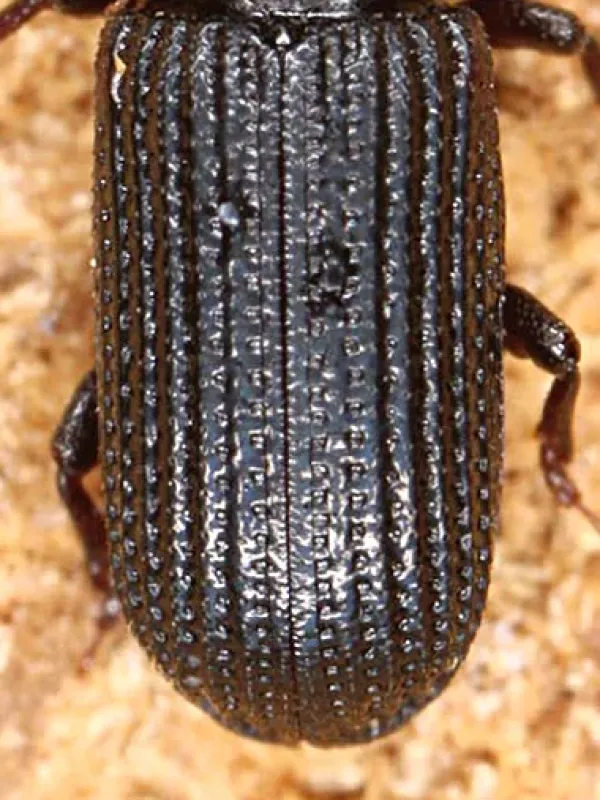
Rhyncolus is a genus of beetles belonging to the Curculionidae family within the order Coleoptera. These are small insects, typically measuring between 2 to 5 millimeters in length, characterized by their elongated, cylindrical bodies.
Their coloration ranges from dark brown to black, and their bodies often exhibit a shiny or finely punctured surface. A distinguishing morphological feature is their short, wide rostrum, which is typical for this genus of weevils.
The larvae are white, legless, and have a C-shaped body, equipped with a well-developed head capsule. They are specialized for a cryptic lifestyle, living and feeding exclusively within woody tissues.
The genus comprises numerous species adapted to temperate forest ecosystems, where they function as important agents in the natural decomposition of decaying wood.
Both adults and larvae are highly adapted to moisture-rich environments found deep inside wood, allowing them to infest trees that are already suffering from decay or fungal infections.
What it damages
Rhyncolus species act as technical wood pests, targeting both coniferous and deciduous trees. They are frequently found in forest stands, lumber storage facilities, and within wooden structures.
The primary damage is caused by the larvae, which tunnel through the sapwood and heartwood. These tunnels weaken the structural integrity of the timber and significantly lower its commercial value.
The beetle typically selects trees that are already stressed, dying, or have fallen. They prefer environments affected by rot, which creates the ideal conditions for larval development.
In cases of high infestation, these beetles accelerate the demise of unhealthy trees and contribute to the spread of fungal spores throughout their tunnel systems.
For the timber industry, Rhyncolus represents a significant risk, as they can rapidly degrade stored raw wood, rendering it unsuitable for high-quality construction or carpentry projects.
When it appears
The flight period for adult Rhyncolus beetles generally commences in spring as soon as average daily temperatures remain consistently above freezing. Reproductive activity continues throughout the warmer summer months.
The peak development phase for larvae occurs during the summer when moisture levels within the wood are optimal. Depending on the climatic zone, the life cycle may range from several months to a full year.
As autumn approaches, activity decreases, and the insects enter a state of diapause to survive the winter. Larvae remain protected within the tunnels they have bored, shielded from external temperature fluctuations.
Spring warming triggers the reactivation of the population, leading to new egg-laying cycles. Monitoring during this period is essential for effective forest management.
Environmental conditions, such as prolonged drought or flooding, significantly influence the population density of Rhyncolus, often leading to outbreaks when tree defenses are compromised.
Signs of infestation
The primary indicator of infestation is the appearance of small entry holes on the bark of trees or the surface of timber. These holes correspond to the size of the adult beetle.
Accumulations of frass, or "wood flour," near these entry holes or on the base of the tree are clear evidence of active boring. This fine sawdust is a reliable sign that the wood is being actively colonized.
Visible internal damage includes intricate networks of tunnels packed with larval excrement. These channels are often stained dark due to the growth of associated fungi.
Visual symptoms in standing trees include yellowing of foliage or needles, shedding of bark, and a general decline in canopy health, indicating significant internal wood destruction.
- Presence of fine wood flour near entry points.
- Small circular holes (1–2 mm in diameter).
- Intricate tunnel systems discovered after removing bark.
- Premature tree wilting or canopy thinning.
Control measures
The most effective management strategy is forest hygiene. Timely removal of dead, wind-fallen, or severely weakened trees is crucial to eliminate breeding grounds for the pest.
In lumber yards, it is essential to store wood in clean, dry, and well-ventilated conditions. Keeping timber off the ground helps maintain the low moisture levels needed to prevent colonization.
Chemical control, including the application of insecticides, may be necessary in forest nurseries or at lumber storage sites to prevent large-scale infestations of valuable wood.
Applying antiseptic or fungicidal treatments to raw timber can prevent fungal colonization, which in turn makes the wood less attractive to Rhyncolus larvae.
Pheromone traps serve as an effective tool for monitoring population levels and catching adult beetles during their peak spring flight, allowing for targeted intervention.
Taxonomy
- Latin name
- Rhyncolus
- Order
- Coleoptera (beetles)
- Family
- Curculionidae
- EPPO code
- RHYOSP
Discussion
No discussions yet — be the first.