
Alder leaf flea weevil
Rhynchaenus testaceus
Description
How to identify
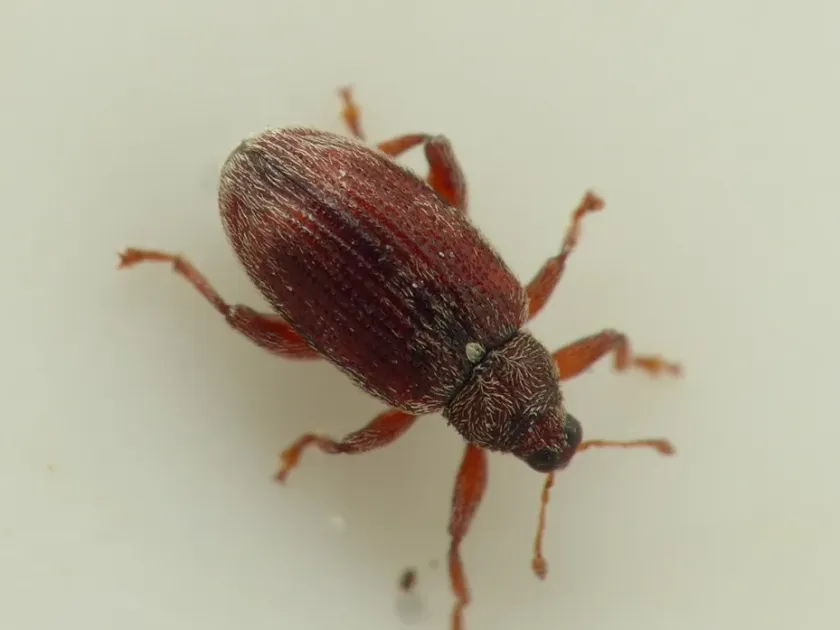
The alder leaf flea weevil, scientifically known as Rhynchaenus testaceus, belongs to the Curculionidae family of beetles. It is a small insect with a brown or reddish-brown coloration that serves as effective camouflage against bark.
Adult beetles possess specialized jumping hind legs, allowing them to escape quickly when threatened. The snout, typical of the Rhamphinae subfamily, is moderately developed.
The imago is characterized by a compact, oval-shaped body, reaching approximately 2-3 millimeters in length. The elytra are covered in fine hairs, giving the beetle a matte appearance.
The larvae are typical of the weevil family, being legless, white to cream-colored, and featuring a darkened head capsule. They live a sheltered life protected within leaf tissues.
Pupation occurs within the mines created by the larvae, providing the developing insect with a shielded environment away from predators and harsh weather.
What it damages
The primary host plants for this weevil include various deciduous trees, specifically alder and birch. Other members of the Betulaceae family may also be affected.
Adult weevils cause damage by feeding on young leaves, resulting in numerous small, pin-like holes. This leads to the degradation of the leaf surface and a reduction in photosynthetic capacity.
The most significant damage is caused by the larvae, which are endophagous. They burrow into the leaf tissue, creating intricate, winding channels known as mines.
As the larvae feed, the leaf tissue at the site of the mines dies, creating large, brown, necrotic patches. In cases of high infestation, the tree canopy may appear burnt or discolored.
Severe infestations cause premature leaf drop, which weakens the tree significantly, making it more susceptible to environmental stress and secondary diseases during the dormant season.
When it appears
Overwintered adults emerge in early spring, synchronized with the budding of host trees. They immediately begin feeding on fresh foliage to regain energy after winter diapause.
Egg-laying occurs in late spring. Females chew small punctures into the leaves and deposit individual eggs, which remain protected within the plant tissue.
Larval development takes place throughout the summer months. There is often more than one generation per year, ensuring the pest remains active until the end of the season.
Pupation takes place within the leaf mines, and the new generation of adults typically emerges in the second half of the summer, feeding until the onset of autumn chill.
The weevils overwinter as adults, seeking refuge in leaf litter, bark crevices, or under organic debris, where they can survive low winter temperatures.
Signs of infestation
The first visual indication of pest activity in spring is the emergence of numerous tiny holes on the newly unfurled leaves of the host trees.
The primary diagnostic symptom is the presence of visible, light-colored or brown mines of irregular shape appearing on the surface of the leaf blades.
When inspecting the leaves using backlighting, the internal larvae or their accumulated frass (excrement) can often be seen within the mined tunnels.
Infested branches often look unsightly due to the presence of large necrotic areas that eventually lead to leaf curling and premature drying of the foliage.
A mass emergence of the new generation in late summer is often marked by a second wave of leaf puncturing, clearly visible as new damage on older, surviving leaves.
Control measures
Good sanitation practices, such as raking and disposing of fallen leaf litter in autumn, are essential, as this reduces the overwintering sites for the adult beetles.
In orchards and parklands, prophylactic treatment with systemic or contact insecticides may be necessary during the peak period of adult emergence.
- Use systemic neonicotinoid-based treatments for young tree protection.
- Apply foliar sprays during the evening to reduce the impact on non-target pollinators.
- Utilize trunk banding if significant migration of beetles is observed.
Biological control options include encouraging native natural enemies, such as parasitic wasps, which are known to prey on the weevil larvae within their mines.
Maintaining high biodiversity within the garden environment helps regulate the population of the flea weevil, preventing outbreaks that could cause significant economic damage.
Taxonomy
- Latin name
- Rhynchaenus testaceus
- Order
- Coleoptera (beetles)
- Family
- Curculionidae
- EPPO code
- RHYHAS
Discussion
No discussions yet — be the first.