
Birch flea weevil
Rhynchaenus rusci
Description
How to identify
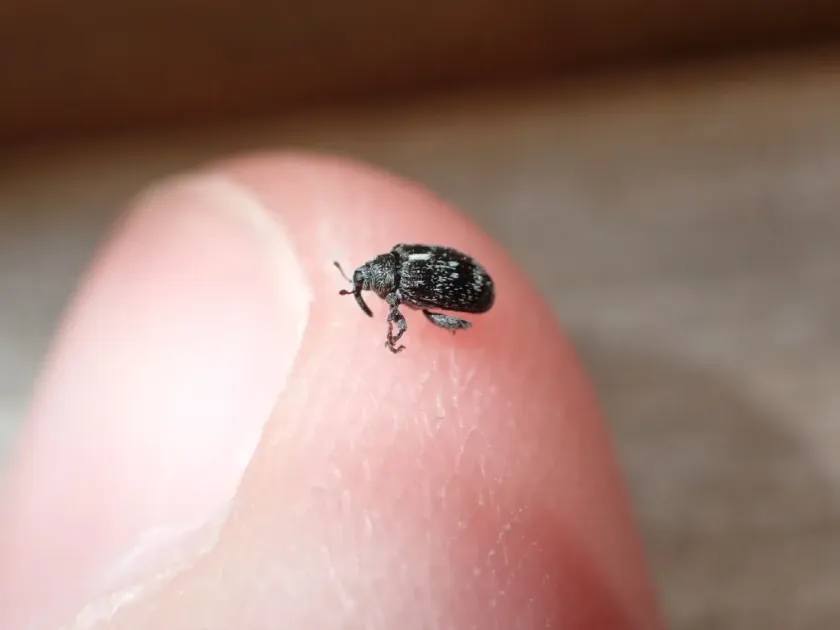
The Birch flea weevil (Rhynchaenus rusci) is a small beetle belonging to the Curculionidae family. Measuring only 2–3 mm in length, it is easily recognized by its dark, rounded body and enlarged hind legs, which enable the insect to leap away quickly when disturbed, similar to a flea.
What it damages
This species primarily targets birch trees, although it can occasionally be found on alder. The damage is caused by both adults feeding on the leaf surface and larvae mining the internal tissue of the leaves, which can be particularly detrimental to young or stressed trees during the growing season.
When it appears
The life cycle begins in early spring when overwintering adults emerge to feed on developing birch leaves. Females deposit eggs inside the leaf tissue, and upon hatching, the larvae immediately begin constructing mines between the upper and lower leaf surfaces to feed throughout their development stage.
Signs of infestation
The presence of this pest is indicated by the formation of blotch-like mines on the foliage. These areas eventually turn brown, dry out, and may cause the leaf to become distorted or drop prematurely. Severe infestations result in extensive defoliation, which negatively impacts the tree's health and aesthetic value.
Control measures
Effective management includes the application of systemic insecticides during the initial spring emergence of adults. Additionally, clearing and destroying fallen leaves under the tree canopy in late autumn is a crucial cultural practice, as it removes the pupation sites and significantly reduces the number of emerging weevils in the following season.
Taxonomy
- Latin name
- Rhynchaenus rusci
- Order
- Coleoptera (beetles)
- Family
- Curculionidae
- EPPO code
- RHYHRS
Discussion
No discussions yet — be the first.