
Oak leaf miner
Rhynchaenus quercus
Description
How to identify
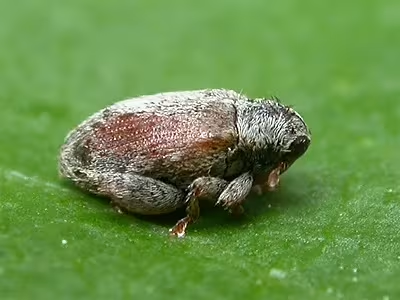
The Oak leaf miner (Rhynchaenus quercus) is a small beetle belonging to the Curculionidae family within the order Coleoptera. It is typically 2.5–3 mm in length and possesses a distinctive snout, typical for weevils.
The beetle exhibits a color ranging from reddish-brown to dark brown, which provides camouflage against tree bark. A notable morphological feature is its thickened hind legs, enabling the beetle to jump suddenly when disturbed.
The larvae are legless, slightly curved, and yellowish-white in color with a brown head capsule. They live exclusively inside the leaf tissue, which makes them difficult to spot during the initial stages of infestation.
The pupa develops inside a leaf mine—a characteristic cavity created by the larva. This phase is protected from external environmental factors and predators.
Adults overwinter in leaf litter or bark crevices, emerging in early spring as soon as temperatures rise, signaling the start of the new annual cycle.
What it damages
The primary host for this pest is the oak (Quercus). However, when populations are high, the beetle may feed on related deciduous species, impacting the overall health of forest ecosystems.
Adults feed on young leaves, creating numerous small holes that weaken the leaf structure and reduce the photosynthetic capacity of the tree during the critical growth phase.
Larval damage is the most severe; as they feed within the leaf tissue, they create extensive mines. These tunnels often merge, leading to the browning and eventual premature shedding of foliage.
High infestation levels lead to significant defoliation, which causes severe physiological stress to the tree, reducing its growth rate and vitality throughout the season.
Trees weakened by severe leaf miner activity are more susceptible to secondary attacks from fungi and wood-boring insects, which can eventually lead to branch dieback or tree death.
When it appears
Adult beetles emerge in April or May, perfectly synchronized with the bud break of oak trees, ensuring that they have access to tender young leaves for feeding and oviposition.
Females lay eggs by piercing the leaf surface and depositing an egg into the tissue. The larval stage follows, lasting for several weeks while the insect feeds internally.
Pupation occurs inside the leaf mines in June. By mid-summer, the new generation of adults emerges, feeds for a brief period, and then seeks overwintering sites.
The movement into overwintering sites is largely triggered by photoperiod and declining temperatures in late summer, leading them into a state of diapause.
Environmental factors, such as unusually warm spring weather, can accelerate the development cycle, potentially leading to increased pest pressure within a single season.
Signs of infestation
The earliest sign of infestation in spring is the "shot-hole" pattern on newly emerged leaves caused by the feeding activity of overwintered adult beetles.
During the summer, the appearance of patchy brown areas on leaves serves as a clear diagnostic sign of larval mining, where the internal tissue has been consumed.
Massive yellowing and premature leaf drop in June and July are indicative of heavy infestations, often giving the canopy a scorched appearance.
Examining leaves against the light reveals the internal structure of the mines, which often contain dark deposits of larval excrement, confirming the presence of the pest.
Heavy defoliation, where trees appear to be experiencing "autumn" in mid-summer, is a strong indicator of a high population density of Rhynchaenus quercus.
Control measures
Sanitation is a primary control method; collecting and destroying fallen leaves in autumn significantly reduces the number of overwintering beetles in the vicinity of trees.
Chemical control can be effective if applied during the early spring period, specifically targeting the adult beetles as they emerge to feed on developing leaves.
Promoting a diverse environment that supports insectivorous birds helps maintain natural biological control over the beetle population throughout the growing season.
Monitoring using pheromone traps is recommended in commercial forests or ornamental plantations to accurately time insecticide applications and prevent economic loss.
- Application of systemic insecticides during the peak of adult activity.
- Regular inspection and pruning of heavily infested branches to reduce local pest pressure.
- Maintaining healthy tree conditions through proper irrigation and soil management.
Taxonomy
- Latin name
- Rhynchaenus quercus
- Order
- Coleoptera (beetles)
- Family
- Curculionidae
- EPPO code
- RHYHQU
Discussion
No discussions yet — be the first.