
Hairy jumping weevil
Rhynchaenus pilosus
Description
How to identify
The Hairy jumping weevil (Rhynchaenus pilosus) is a small beetle belonging to the Curculionidae family and the order Coleoptera. Adult specimens typically measure between 2 and 3 millimeters in length.
The beetle has a dark brown to black coloration, with the elytra densely covered in fine, light-colored hairs, which is the defining feature of the species. It possesses a slender rostrum typical of the jumping weevil subfamily.
The hind legs are notably thickened, enabling the beetles to perform rapid, jumping motions when threatened. Larvae are white, legless, and adapted for living inside the leaf tissues.
Adults are active during the day within the canopy, moving freely between branches and trees. Their jumping ability and wings make them highly mobile pests capable of rapid spread.
Identification in the field is usually based on the combination of their dense hair cover and the distinctive mining damage left on the foliage.
What it damages
The primary hosts for the Hairy jumping weevil are various species of linden (Tilia). Adults feed on the leaf tissues, creating numerous small, characteristic holes.
Larvae behave as leaf miners, creating tunnels within the leaf blades. This feeding activity disrupts photosynthesis and weakens the overall health of the tree.
Severe infestations lead to premature yellowing and dropping of leaves, which significantly impacts the aesthetic and biological value of the trees.
While often a minor pest, high populations can cause substantial damage to young nursery stock and mature trees in urban landscapes.
Continuous mining by the larvae can also result in localized necrosis and curling of the leaves, further stressing the host plant.
When it appears
Adult weevils overwinter in leaf litter, debris, or deep fissures in the tree bark, remaining dormant throughout the cold winter months.
Emergence occurs in early spring, typically around April or May, when adults begin feeding on the newly developed linden leaves.
Following a period of maturation, females lay eggs inside the leaf tissue. Larval development occurs during the summer months, with the larvae remaining inside the mine.
The new generation of adults typically emerges mid-summer and continues to feed on foliage until the temperatures drop in autumn.
By late autumn, the beetles migrate to their overwintering sites, completing their annual biological cycle.
Signs of infestation
The first signs of infestation are small, circular holes in the leaves caused by the feeding activity of adult beetles in the spring.
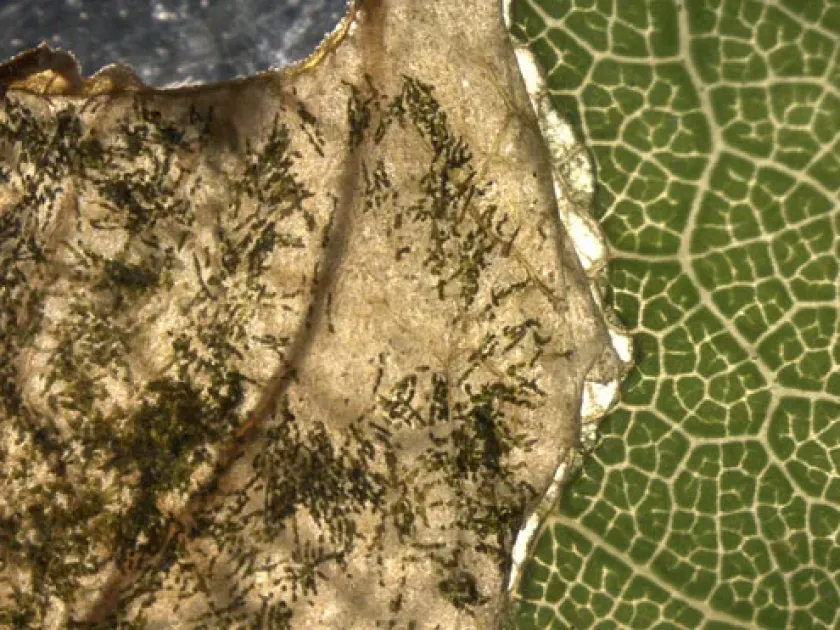
Later in the season, characteristic mines appear on the leaves. These look like irregular, swollen patches where the larvae have consumed the inner tissue.
Damaged leaves often show signs of desiccation or discoloration, especially under hot and dry weather conditions.
- Small holes in the foliage
- Swollen blotch-like mines
- Deformed or curled leaves
- Presence of adults on the branches
If you hold a damaged leaf against the light, you can clearly observe the path created by the larvae inside the leaf blade.
Control measures
Effective management of the Hairy jumping weevil involves a combination of sanitation and chemical interventions.
Autumn sanitation, specifically the removal and destruction of leaf litter, is crucial as it eliminates the primary overwintering sites of the pest.
Chemical control can be implemented using systemic insecticides, which are effective in targeting the larvae residing within the leaf tissue.
Monitoring the canopy during the spring and summer is essential to determine the timing and necessity of insecticide applications.
Promoting general tree vigor through proper watering and fertilization helps the trees better tolerate the stress caused by the pest.
Taxonomy
- Latin name
- Rhynchaenus pilosus
- Order
- Coleoptera (beetles)
- Family
- Curculionidae
- EPPO code
- RHYHPI
Discussion
No discussions yet — be the first.