
Hazel leaf miner
Rhynchaenus avellanae
Description
How to identify
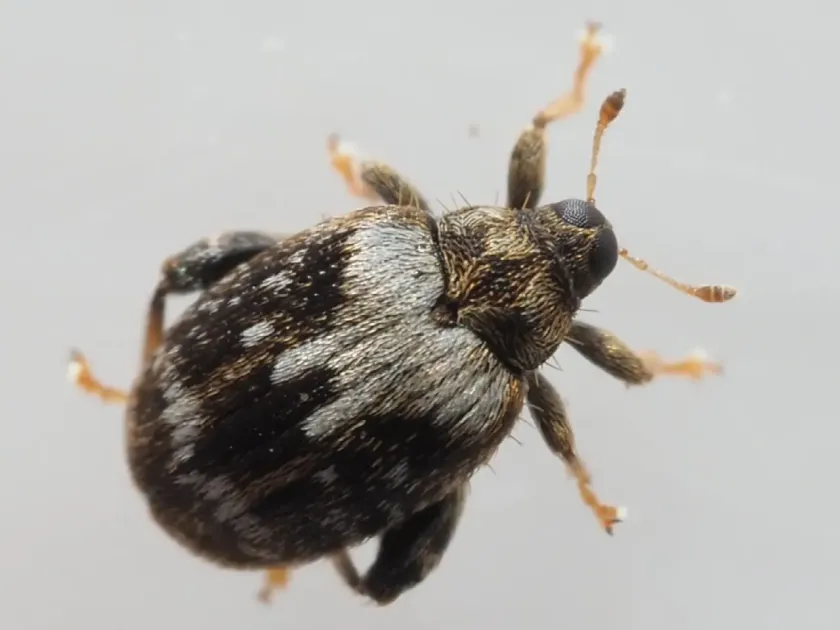
The hazel leaf miner (Rhynchaenus avellanae) is a small beetle belonging to the weevil family (Curculionidae). Adults are typically 2-3 mm long, making them difficult to spot without careful inspection.
A key feature of this species is its enlarged hind legs, which allow the beetle to jump suddenly when disturbed. The body is usually dark brown to black, covered with fine, sparse hairs.
Like other weevils, it possesses a characteristic snout or rostrum, which is used for feeding and preparing egg-laying sites. Antennae are elbowed and attached to the middle of the snout.
The larvae are legless, curved, and pale yellow with a distinct brown head. They live exclusively inside leaf tissues, protected from the environment until they reach maturity.
Pupation occurs within a specialized chamber constructed by the larva inside the leaf. After the pupal stage, the adult chews an exit hole in the leaf epidermis to emerge.
What it damages
The hazel leaf miner specifically targets members of the Corylus genus, most notably cultivated hazelnuts. High infestations can lead to significant aesthetic and physiological damage.
Larval feeding creates mines within the leaf blade. These mines consist of tunnels where the larva consumes the parenchyma tissue, causing the leaf to wither and brown in affected areas.
Adult beetles cause additional damage by chewing small, pin-like holes in the foliage. When populations are high, this results in a perforated leaf appearance, reducing the photosynthetic area.
The cumulative damage weakens the tree, potentially reducing nut yield. Severe infestations can lead to premature leaf drop, stressing the plant before the harvest season.
Young hazelnut trees are particularly vulnerable, as leaf damage restricts their ability to produce sufficient energy for vegetative growth and the development of next year's fruit buds.
When it appears
Adults overwinter in leaf litter, bark crevices, or the upper soil layers of the orchard. They emerge in early spring, synchronized with the onset of bud break in hazelnuts.
Mating and egg-laying occur during late spring. Females puncture the young leaves to insert eggs, which triggers the initial development of the larval mines.
Larval development takes place throughout the early summer months. This is the period when symptoms like browning leaves and tunneling are most obvious to growers.
A new generation of adults emerges in mid-to-late summer. These beetles engage in supplementary feeding to gain energy reserves for the upcoming winter hibernation.
As temperatures begin to drop in autumn, the beetles move to their overwintering sites. The lifecycle is strictly dictated by the seasonal cycle of the hazel tree host.
Signs of infestation
The most diagnostic sign of an infestation is the presence of brown, blotchy mines on the leaves. These often look like swollen or blistered areas of the leaf surface.
Small circular holes or puncture marks on the leaves indicate that adult beetles have been feeding. A heavily infested tree will show a "shot-hole" pattern across its canopy.
Premature yellowing of individual leaves, especially those located on lower branches, is a common indicator of underlying larval mining activity affecting the leaf's health.
By inspecting the underside of the leaf, one might find the pupal chamber—a small, rigid, and slightly raised structure where the beetle is currently developing.
Shaking a branch over a white cloth in springtime will often dislodge the adult beetles. Their jumping behavior upon hitting the cloth makes them easy to distinguish from other insects.
Control measures
Good orchard hygiene is essential. Removing and destroying fallen leaves in autumn eliminates the primary overwintering sites for the beetles, significantly reducing next year's population.
Chemical control can be implemented during the spring emergence of adults. Using approved insecticides, applied according to local agricultural regulations, effectively minimizes the initial damage.
Pruning the canopy to improve air circulation and light penetration creates a less suitable environment for the larvae and makes the trees generally more resilient.
Encouraging natural predators, such as parasitic wasps that target the mining larvae, is an excellent biological way to maintain the beetle population below economic damage thresholds.
Monitoring the orchard using visual counts or sticky traps helps determine the exact timing for control measures. Early intervention is critical to prevent the insects from damaging the growing season's canopy.
Taxonomy
- Latin name
- Rhynchaenus avellanae
- Order
- Coleoptera (beetles)
- Family
- Curculionidae
- EPPO code
- RHYHAV
Discussion
No discussions yet — be the first.