
Zozana
Rhyacionia zozana
Description
How to identify
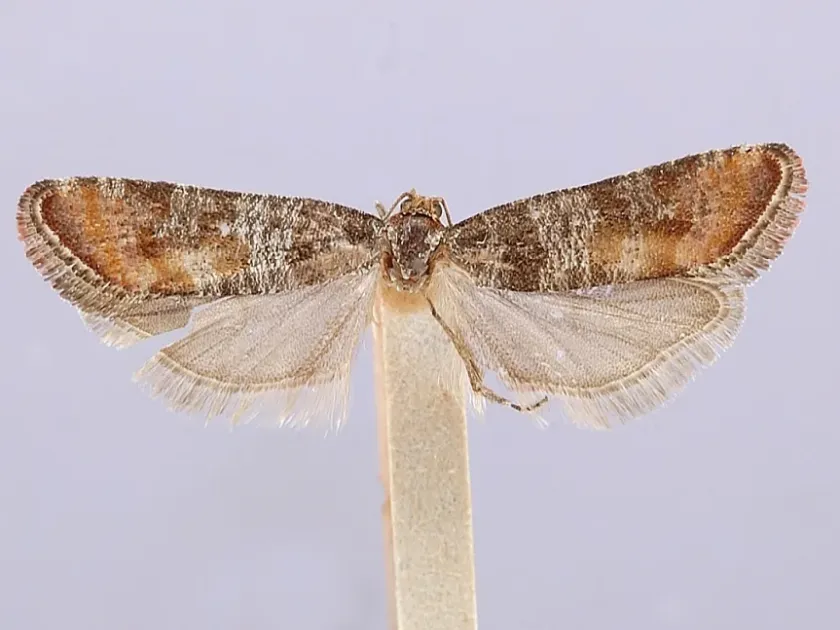
Zozana (Rhyacionia zozana) is a moth species belonging to the Tortricidae family. Adult moths are relatively small, with a wingspan of approximately 15–20 mm, and are easily identified by their distinct reddish-brown and silver-grey patterned wings.
The larvae, which are the main destructive stage, have a dark head capsule and a body color that changes as they grow. They are highly active and demonstrate a defensive behavior by rapidly retreating into their tunnels if disturbed.
The biological cycle is univoltine in most regions. Adult emergence typically occurs in late spring or early summer, synchronized with the development of tender new growth on susceptible pine species, which provides the necessary nutrition for the larvae.
This species shows a high degree of specialization for conifer habitats. Its survival strategy involves laying eggs directly on buds or young needles to minimize the distance the newly hatched larvae must travel to reach a food source.
Because they spend most of their larval stage protected within the host plant tissue, identifying their presence requires careful monitoring of the tree canopy during the specific time frames of their life cycle.
What it damages
The primary hosts of Rhyacionia zozana are pine species (Pinus). Damage is most severe in young trees, specifically in pine plantations and ornamental conifer nurseries, where the loss of terminal growth has a significant impact on tree development.
Larvae feed by boring into the terminal buds and shoots. This feeding behavior disrupts the transport of water and nutrients, which invariably leads to the death of the terminal leader or the branch tips they occupy.
Heavy infestations result in permanent deformities of the tree, including crooked trunks and excessive branching, which drastically reduces the economic and aesthetic value of the timber or nursery stock.
Beyond direct physical damage, the wounds created by the larvae serve as entry points for various fungal pathogens, which can exacerbate the tree's health decline and lead to secondary mortality.
In stressed or drought-affected environments, the cumulative impact of zozana damage significantly reduces the tree's ability to regenerate, often resulting in stunted growth or death of the entire plant.
Signs of infestation
One of the earliest signs of a zozana infestation is the appearance of pitch or resin drops on the shoots. These are produced by the tree as a defensive reaction to the larvae boring into the woody tissue.
The presence of fine, webbed sawdust or excrement pellets near the buds is a reliable indicator of active larval feeding. Careful inspection of these spots often reveals the entrance hole of the caterpillar.
Yellowing or browning of the needles on the tips of new growth is a clear symptom. Eventually, these shoots wilt and break off, often hanging downwards, which is a classic manifestation of pine tip moth damage.
The terminal leader of the tree may fail to develop correctly, leading to a loss of apical dominance. This creates a recognizable "flagging" effect where the top of the pine turns brown while the lower branches remain green.
During a high-population year, the overall silhouette of the pine canopy appears ragged and stunted, indicating that multiple shoots across the entire tree have been compromised by the pest.
Control measures
Integrated Pest Management (IPM) is essential for controlling zozana. The first line of defense is monitoring using pheromone traps to identify the exact timing of adult activity and egg-laying cycles.
Chemical control is effective only during the short window when larvae are hatching and moving on the surface of the plant before they tunnel into the shoots. Timing is critical for insecticide application.
Sanitation practices are highly effective; manually removing and destroying infested tips during the larval stage can drastically reduce the overwintering population and minimize the damage to the trees in the following season.
Silvicultural management, such as maintaining healthy tree spacing and ensuring trees are not nutrient-deficient, helps them withstand pest pressure and promotes more vigorous recovery from incidental attacks.
Biological control agents, including parasitic wasps and targeted biopesticides like Bacillus thuringiensis, offer a safer, environmentally friendly alternative to synthetic insecticides for managing populations in sensitive forestry areas.
Taxonomy
- Latin name
- Rhyacionia zozana
- Order
- Lepidoptera (butterflies)
- Family
- Tortricidae
- EPPO code
- RHYAMO
Discussion
No discussions yet — be the first.