
Nantucket pine tip moth (related/representative context)
Rhyacionia rigidana
Description
How to identify
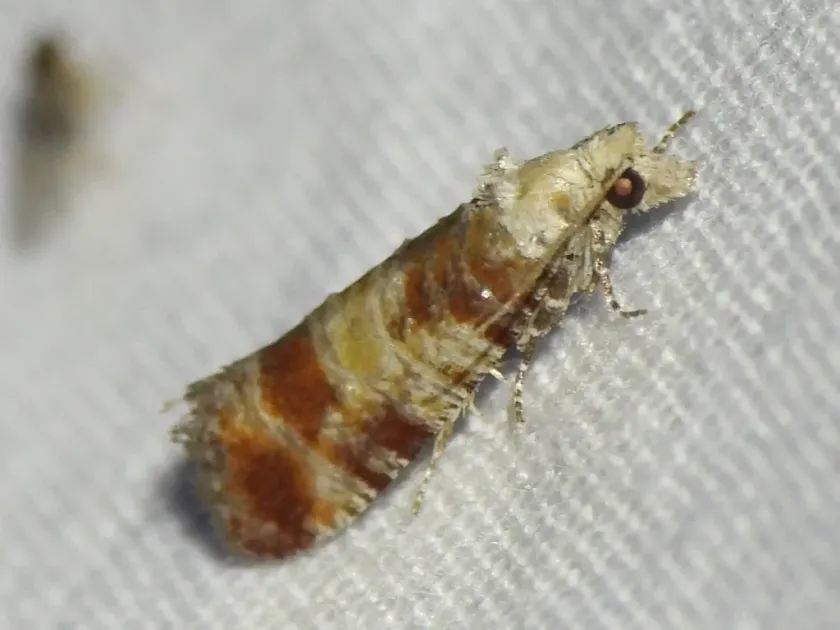
The pine tip moth Rhyacionia rigidana belongs to the Tortricidae family. Adult moths typically have a wingspan of approximately 15–20 mm, featuring reddish-brown forewings with distinct metallic, silver-grey transverse bands.
Larvae are typically copper-red to yellowish-brown in color, with a dark head capsule. They grow to about 12–14 mm in length. The larval stage is responsible for all the damage caused to the host plants.
The pupal stage is passed within the damaged buds or shoots, encased in a tough, silken, resin-covered cocoon. This protective structure makes the pupa resilient to environmental changes.
Depending on the latitude, the moth completes one to two generations per year. The timing of adult emergence is closely synchronized with the flush of new growth on pine trees.
Since the moths are nocturnal and inconspicuous, monitoring is primarily conducted by scouting for physical damage to the tips of the branches rather than trapping adults.
What it damages
This pest primarily attacks various species within the Pinus genus, including Scots pine, eastern white pine, and loblolly pine. It shows a strong preference for younger trees and saplings.
The larvae bore into the buds and the succulent new growth of the shoots, effectively killing the terminal growing point of the branch.
As the larvae feed, they sever the vascular tissue within the shoot. This leads to the death of the tip, which typically turns brown and dies back during the growing season.
Repeated infestations lead to tree deformation, characterized by stunted height growth, bushy crown appearance, and crooked, multiple stems that lack commercial timber value.
Young plantations are at the highest risk, as intensive feeding by the moth can cause significant mortality in the apical dominance of the trees, resulting in long-term growth losses.
Signs of infestation
Early detection is crucial for management. Look for dead, brown needles at the tips of shoots, often referred to as "flags," which become visible in the spring and early summer.
Evidence of larval activity includes the accumulation of frass (excrement) mixed with resin at the entry points of the buds, creating small, hardened resinous lumps.
A distorted or "crooked" tip on the terminal leader is a hallmark sign that the shoot has been hollowed out by larval feeding, causing it to bend as it grows.
- Browned and dead tips of the branches.
- Resin droplets at the point of larval entry.
- Presence of hollowed-out tissue inside the shoot.
- Terminal leader death and subsequent side-branching.
- Webbing observed near the damaged buds.
Inspecting the shoots by slicing them longitudinally during the mid-season will reveal the presence of the larvae or their tunnels.
Control measures
Sanitation is a primary control method. Pruning and destroying infested tips before the adult moths emerge can significantly reduce the local population of the pest.
Chemical control using systemic insecticides is most effective when applied at the time of egg hatch, targeting the larvae as they crawl across the needles before boring into the buds.
Pheromone-baited traps are highly effective tools for monitoring flight patterns, allowing for precise timing of chemical applications to ensure maximum efficiency.
Encouraging biological control by protecting and promoting the habitats of parasitoid wasps and other natural predators can help keep populations below economic injury levels.
Proper site selection and maintaining vigorous growth through silvicultural management practices help trees outgrow the window of susceptibility to tip moth damage.
Taxonomy
- Latin name
- Rhyacionia rigidana
- Order
- Lepidoptera (butterflies)
- Family
- Tortricidae
- EPPO code
- RHYARI
Discussion
No discussions yet — be the first.