
New Mexico pine tip moth
Rhyacionia neomexicana
Description
How to identify
The New Mexico pine tip moth (Rhyacionia neomexicana) is a small moth belonging to the family Tortricidae, known for causing significant damage to various pine species.
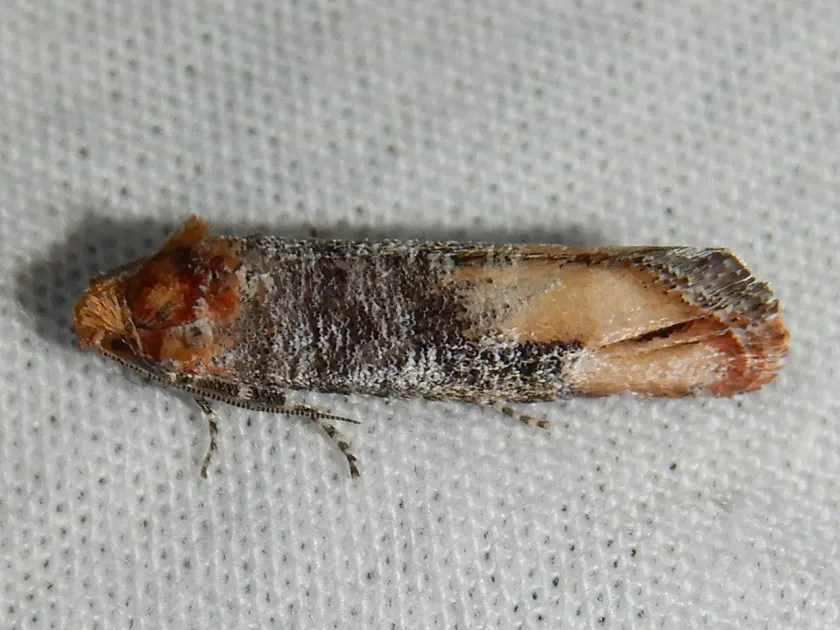
Adult moths have a wingspan of approximately 15 to 20 mm, with mottled greyish-brown forewings that provide excellent camouflage against the bark of host trees.
The larvae are typically brownish with black head capsules, and they are responsible for all the physical damage caused to the host plants during their development.
The life cycle involves four stages: egg, larva, pupa, and adult, with usually one generation produced per year in most of the species' native range.
Proper identification of this moth is crucial for early intervention, as they are often confused with other species of the genus Rhyacionia that affect similar hosts.
What it damages
This pest specifically targets pines, particularly the Ponderosa pine, by infesting and destroying the growing tips of new shoots.
As the larvae bore into the central part of the shoot, they sever the vascular tissue, causing the tip to wilt, yellow, and eventually die off.
Repeated attacks on the terminal leaders of young trees cause severe stunting and crooked stems, rendering the trees unsuitable for timber or aesthetic use.
Heavy infestations can lead to significant growth loss in pine plantations, weakening the trees and making them more susceptible to secondary environmental stresses.
In nursery settings, the damage is particularly detrimental as it ruins the growth habit and marketability of young ornamental or forest planting stock.
When it appears
Adult moth emergence typically occurs in early spring, synchronized with the bud-break and initial growth stages of the host pine trees.
Females lay eggs on needles or near buds, and upon hatching, the young larvae immediately begin to seek out suitable sites to bore into the shoots.
Larval activity continues throughout the late spring and summer months as they feed and grow within the protective confines of the pine shoots.
By late summer or autumn, the larvae reach maturity and transition into the pupal stage, often remaining within the damaged shoots or moving to the forest litter.
Understanding these seasonal patterns is vital for timing the application of insecticides to coincide with the period when larvae are exposed and vulnerable.
Signs of infestation
The most prominent sign of infestation is the yellowing or browning of the current season's terminal needles and the eventual death of the shoot tip.
Small masses of pitch or resin exuding from the entry holes on the stems are a reliable indicator of active larval presence inside the shoot.
Upon breaking open an infested shoot, one will find frass (larval excrement) and hollowed-out tissue, confirming the presence of the tip moth larvae.
Deformed or multi-leadered tops on young trees, often referred to as "rosetted" or "crooked" stems, are clear historical indicators of past tip moth damage.
In early spring, close inspection of buds may reveal tiny, flattened, oval eggs, which indicate an impending infestation of the new growth.
Control measures
Integrated Pest Management (IPM) is the most effective approach, combining chemical control with cultural practices to mitigate the damage.
Systemic insecticides applied before or during the initial larval entry stage provide excellent control by killing the larvae as they feed on treated tissues.
Pruning and destroying infested shoots before the emergence of the next generation of adults can significantly reduce the local population of the pest.
Encouraging natural predators, such as parasitic wasps and predatory beetles, can help manage populations in areas where chemical intervention is limited.
Regular monitoring using pheromone traps allows forest managers to track moth flight patterns and optimize the timing of control efforts for maximum impact.
Taxonomy
- Latin name
- Rhyacionia neomexicana
- Order
- Lepidoptera (butterflies)
- Family
- Tortricidae
- EPPO code
- RHYANE
Discussion
No discussions yet — be the first.