
European pine shoot moth
Rhyacionia duplana
Description
How to identify
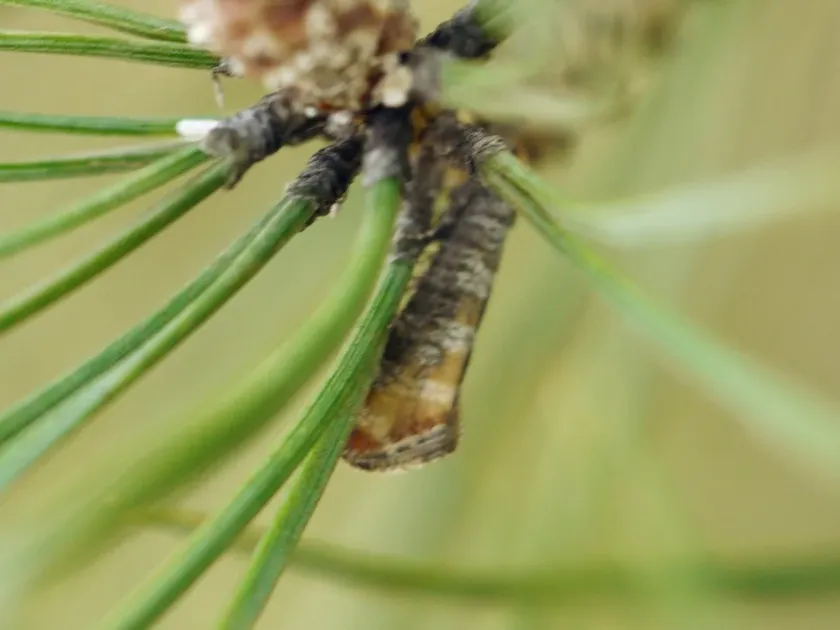
The European pine shoot moth (Rhyacionia duplana) is a member of the Tortricidae family of moths. The adult moth has a wingspan of approximately 14–18 mm, featuring brownish-grey forewings with distinct light-colored transverse bands that provide excellent camouflage against pine bark.
The larvae are typically yellowish-brown with a dark head capsule, growing up to 15 mm in length. During their developmental stages, they exhibit high mobility before settling into the host tissue to begin their destructive feeding cycle within the shoots of the tree.
The life cycle is primarily univoltine, meaning there is one generation per year. Development starts in the early spring, as adult moths emerge to mate and lay eggs on the needles or buds of young pine trees, initiating the infestation for the upcoming season.
Survival through winter is facilitated by the larva's habit of overwintering within the tree shoots or near the base of the buds. This behavior protects the insect from extreme cold and predators, ensuring that the population persists even in harsh winter conditions.
The distribution of this species is closely linked to coniferous forests where pine species are prevalent. Environmental factors such as temperature and humidity during the egg-laying period are critical for the successful establishment of new populations in forest stands.
What it damages
This pest mainly affects various species of pines, especially the Scots pine (Pinus sylvestris). Young trees under 15 years old are the most susceptible, as the delicate structure of their developing shoots provides the primary nutrition for the larvae.
Secondary hosts may occasionally include other coniferous species, although the moth shows a distinct preference for pine varieties. High infestations can cause significant economic losses in silviculture by ruining the apical dominance of the trees.
Signs of infestation
Visible signs of infestation include resin exudation at the base of the shoots, where the young larvae have made their entry holes. These spots often look like small, hardened resin droplets that can be identified during a close manual inspection of the branches.
Later in the season, the needles on the tips of the shoots begin to yellow and eventually turn brown as the shoot dies. This leads to permanent deformation of the tree, often resulting in a twisted stem or the loss of the central leader shoot, which hinders normal vertical growth.
Control measures
Cultural control is considered the most effective method, involving the pruning and destruction of infested shoots before the larvae pupate or the adults emerge. This proactive approach helps in managing population levels in smaller stands or ornamental plantations.
Chemical control involving systemic insecticides is often used in commercial forestry to protect young plantations. Integrated pest management (IPM) practices, such as monitoring adult flight activity with pheromone traps, are essential for determining the precise timing for applications.
Taxonomy
- Latin name
- Rhyacionia duplana
- Order
- Lepidoptera (butterflies)
- Family
- Tortricidae
- EPPO code
- EVETDU
Discussion
No discussions yet — be the first.