
Rhopobota unipunctana
Rhopobota unipunctana
Description
How to identify
Rhopobota unipunctana is a species of moth belonging to the Tortricidae family, commonly known as leafrollers. This insect is recognized as an agricultural pest affecting various woody plants.
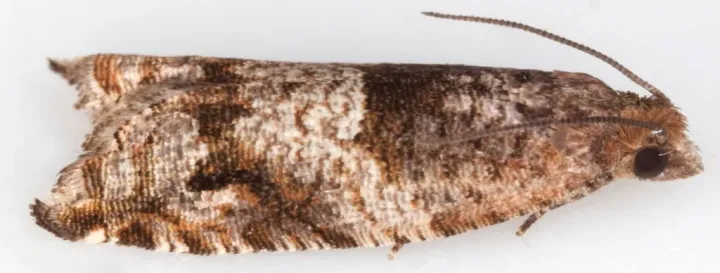
The adult moth is relatively small, with a wingspan that typically measures between 12 and 15 millimeters, characterized by a brownish-grey coloration with a distinct single spot on the forewings.
The larvae, or caterpillars, are highly mobile and exhibit a range of colors from pale yellow-green in early instars to dark brown as they reach maturity.
The life cycle follows a complete metamorphosis: egg, larva, pupa, and adult. The insect typically overwinters in the pupal stage, hidden within crevices of bark or plant debris.
Proper identification in the field often requires pheromone traps, as the adult appearance can be confused with other common species of the Tortricidae family.
What it damages
This pest is known to target members of the Rosaceae family, posing a significant risk to fruit orchards by feeding on plant tissues during early spring.
The primary damage is caused by larvae that bore into developing buds, destroying the internal tissues and preventing the formation of healthy leaves and flowers.
As the season progresses, the larvae feed on young leaves by spinning silk to fold or roll the foliage, creating protective nests that hinder plant growth.
Severe infestations can lead to substantial reduction in photosynthetic area, which weakens the trees and results in decreased overall fruit yield.
The feeding sites created by the larvae also serve as entry points for various fungal and bacterial pathogens, leading to secondary infections on shoots.
When it appears
The flight of the first generation of adults usually coincides with the budding and blooming stages of fruit trees in late spring.
Temperature and humidity levels play a critical role in the development rate, with mild, humid weather providing optimal conditions for population growth.
Rhopobota unipunctana can produce multiple generations within a single season, requiring growers to monitor tree health consistently throughout the summer months.
Larval activity peaks during periods of rapid shoot growth, making the plants particularly vulnerable during the early stages of the growing season.
By autumn, the caterpillars reach the end of their feeding cycle and seek secure locations to transition into pupae for overwintering.
Signs of infestation
The most noticeable sign of infestation is the presence of silk webs binding the leaves together at the tips of new shoots.
Visual symptoms include deformed, curled, or necrotic leaves that appear damaged due to the larvae feeding inside the protected silk-bound structures.
- Visible frass (larval waste) trapped within the curled or webbed leaves.
- Hollowed-out buds that fail to open or show significant damage to the inner scales.
- Small, irregular holes appearing on the surface of young leaves.
If disturbed, the larvae often react by dropping from the leaves on a silk thread, which is a classic behavior of many leafroller species.
Light traps are highly effective for detecting the presence of adults in the evening, providing an early warning signal for growers to implement control measures.
Control measures
Effective management begins with good horticultural practices, such as clearing away leaf litter where the pupae can survive through the winter.
Manual cleaning of the trunk and older branches can help remove potential overwintering sites, reducing the likelihood of a massive emergence in the spring.
Biological control, using microbial insecticides such as those based on Bacillus thuringiensis, is an environmentally friendly way to manage younger larvae.
Chemical intervention should be restricted to periods when the pest density exceeds the economic threshold, ensuring all safety guidelines and harvest intervals are met.
Integrated Pest Management (IPM) programs, utilizing pheromone traps, are recommended to time applications accurately and minimize unnecessary insecticide usage.
Taxonomy
- Latin name
- Rhopobota unipunctana
- Order
- Lepidoptera (butterflies)
- Family
- Tortricidae
- EPPO code
- RHPOUN
Discussion
No discussions yet — be the first.