
Black-headed fireworm
Rhopobota naevana
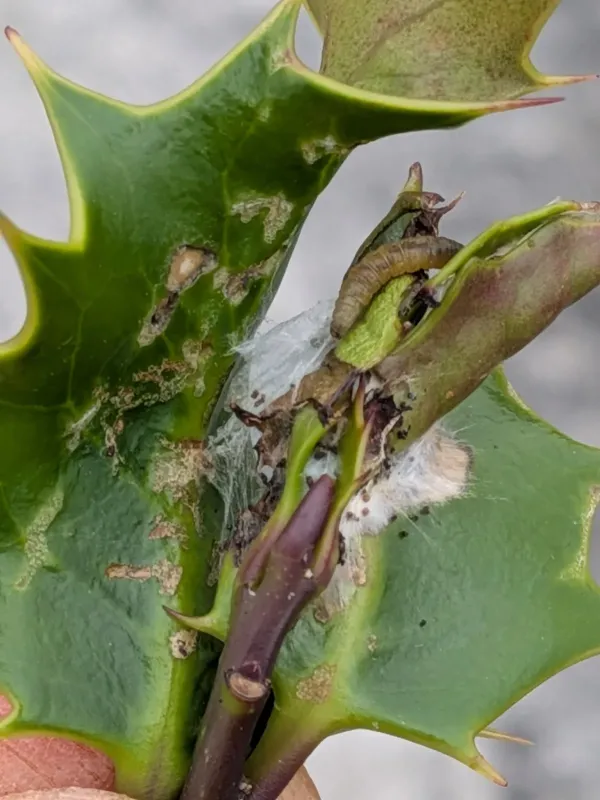
Description
How to identify
The black-headed fireworm (Rhopobota naevana) is a moth belonging to the Tortricidae family. The adult moth has a wingspan of approximately 12–15 mm and is characterized by a mottled grey-brown pattern on its forewings.
The larvae are easily identified by their distinct black heads, contrasting with their yellowish-green bodies. As they mature, their color can shift, but the head capsule remains dark throughout the larval stages.
The species typically undergoes one generation per year, overwintering in the egg stage. Eggs are laid on the undersides of leaves or on stems, remaining dormant until the spring.
Adult moths are primarily nocturnal and highly elusive, which is why monitoring for their presence often requires the use of specialized pheromone traps within the field.
Understanding their life cycle is crucial for effective management, as the timing of larval emergence is directly correlated with the phenology of the host plants.
What it damages
The black-headed fireworm primarily attacks plants in the Ericaceae family, with cranberries and blueberries being the most economically significant hosts.
The larvae feed on young leaves, terminal buds, and flowers. By webbing leaves together, they create protective feeding chambers that prevent standard contact insecticides from reaching them effectively.
Damage to the terminal buds is particularly severe as it halts the vertical growth of the plant and directly reduces the number of potential fruiting sites.
During the flowering stage, the larvae consume buds and blossoms, which can cause significant yield loss. A heavy infestation can lead to a "burnt" appearance of the field, hence the name "fireworm."
Weakened plants show reduced vigor and are more susceptible to secondary infections and winter damage, threatening the long-term viability of the crop plantation.
When it appears
Larval emergence occurs in spring, usually coinciding with the bud break stage of cranberries, which typically happens in May.
The period of active feeding lasts throughout June and early July. During this time, the larvae move between plant parts, making them more vulnerable to control efforts.
Pupation takes place in mid-summer, usually within the silk-lined leaf shelters constructed by the larvae. This stage protects the insect while it metamorphoses.
Adult moths emerge in late summer to mate and lay overwintering eggs on host plants, completing the annual cycle.
Monitoring during the larval feeding window is essential, as this is the most critical time to intervene and prevent significant crop damage.
Signs of infestation
The presence of webbed clusters of leaves at the terminals of branches is a classic sign of infestation. These structures are easily spotted during field inspections.
Larval frass (waste) trapped within these webbed leaves is a clear indicator that the fireworm is actively feeding and causing damage to the plant.
Distorted, skeletonized, or browned leaves at the shoot tips are common symptoms. In severe cases, the entire terminal portion of the branch may die back.
Buds that appear empty, hollowed out, or prematurely dried are evidence that the larvae have targeted the reproductive structures of the plant.
In mature infestations, the discolored patches across the field are highly visible, indicating significant pest pressure and the need for immediate action.
Control measures
Integrated Pest Management (IPM) is the best approach for controlling the black-headed fireworm, combining biological, cultural, and chemical methods.
Regular monitoring using pheromone traps allows growers to identify the timing of moth flights and target subsequent larval stages with precision.
Biological control using microbial insecticides, such as products containing Bacillus thuringiensis, is highly effective when applied against young larvae.
Chemical control should be reserved for periods when monitoring indicates that larval populations have exceeded economic thresholds, ensuring minimal impact on non-target species.
- Maintaining field hygiene to reduce overwintering sites.
- Preservation of natural predators like parasitic wasps and spiders.
- Proper timing of insecticide applications to catch larvae before they web leaves.
- Strategic pruning to improve air circulation and reduce pest pressure.
Taxonomy
- Latin name
- Rhopobota naevana
- Order
- Lepidoptera (butterflies)
- Family
- Tortricidae
- EPPO code
- RHPONA
Discussion
No discussions yet — be the first.