
Rhodophaea
Rhodophaea
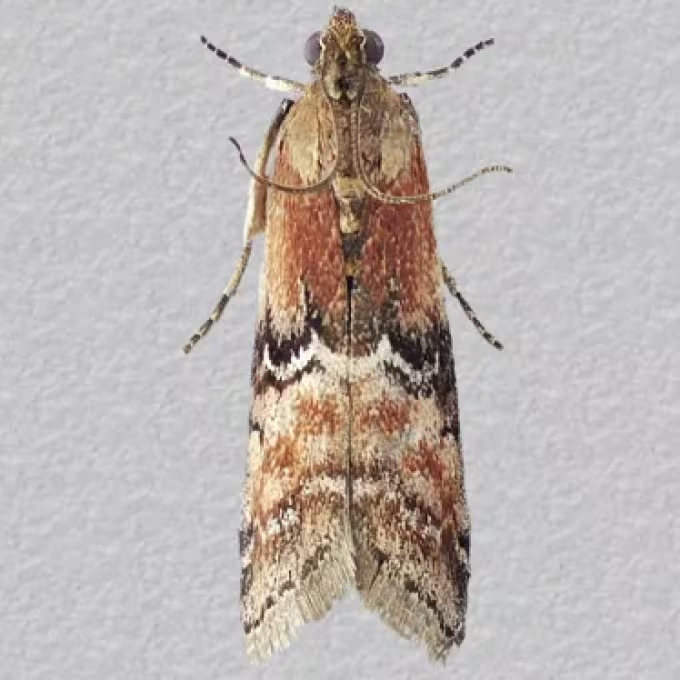
Description
How to identify
Rhodophaea is a genus of moths belonging to the family Pyralidae, commonly known as snout moths. These insects are nocturnal and often overlooked in orchard management due to their cryptic camouflage.
Adult moths typically possess narrow forewings with muted color patterns, ranging from gray to brown, which help them blend into the bark of fruit trees during the daylight hours.
The larval stage, or caterpillar, is the primary destructive phase. These larvae possess mandibulate mouthparts specialized for feeding on vegetative and reproductive plant tissues.
The life cycle is closely synchronized with the phenology of host plants, often involving hibernation as larvae in sheltered areas on the tree trunk or under debris.
Field identification is often supported by using pheromone traps, which act as a vital monitoring tool to detect the presence of the pest early in the season.
What it damages
Rhodophaea primarily infests trees of the Rosaceae family, including apple, pear, and plum varieties. The damage is directly caused by the feeding activities of the larvae.
In early spring, larvae target budding tissues, often destroying flower buds before they open, which leads to immediate yield loss for the growing season.
As the season progresses, the caterpillars consume young leaves and penetrate the developing fruit, causing deformation, premature fruit drop, and susceptibility to secondary rots.
Heavy infestations can lead to significant defoliation and a reduction in the tree's overall vigor, making the orchard more susceptible to environmental stressors.
The economic impact is significant in commercial orchards, as even moderate damage can degrade fruit quality, making it unmarketable for fresh consumption.
When it appears
The life cycle begins in early spring when warming temperatures trigger the end of larval hibernation and the emergence of caterpillars from their winter hideouts.
Adult flight activity typically occurs from late spring through mid-summer, coinciding with the flowering and fruit-setting stages of the host trees.
Depending on the climatic zone, the pest may complete one or two generations per year, with the highest activity peaking during the warm months of the growing season.
Feeding intensity is at its highest during periods of rapid sap flow, as larvae require the high nutrient content of developing buds and succulent leaves.
As autumn approaches, the late-instar larvae seek out suitable niches for overwintering, transitioning into a dormant state until the following spring.
Signs of infestation
The most prominent sign of infestation is the presence of silk webbing, which larvae use to tie leaves together to create protective chambers for feeding.
- Buds that fail to open or appear hollowed out from the inside.
- Visible excrement (frass) pellets found on leaves or near entry holes in the fruit.
- Small, circular entry holes in young fruit, often followed by internal rotting.
- Wilting of flowers or clusters of leaves tied together with fine silken threads.
- Premature fruit drop caused by larval boring into the stems or the fruit base.
Control measures
Cultural control is essential, involving the regular cleaning of tree bark to remove overwintering sites and the meticulous removal of fallen leaves and debris.
Biological control agents, such as microbial insecticides based on Bacillus thuringiensis, offer an effective and environmentally friendly management option.
Chemical control measures should be timed with the peak emergence of young larvae, typically applying registered insecticides during the early growth stages.
Monitoring using pheromone traps allows for precise timing of interventions, reducing the need for broad-spectrum insecticide applications across the orchard.
Promoting a healthy ecosystem by supporting natural predators and parasitoids can keep Rhodophaea populations below the economic injury level.
Taxonomy
- Latin name
- Rhodophaea
- Order
- Lepidoptera (butterflies)
- Family
- Pyralidae
- EPPO code
- RHOHSP
Discussion
No discussions yet — be the first.