
Mouse-tailed bat
Rhinopoma
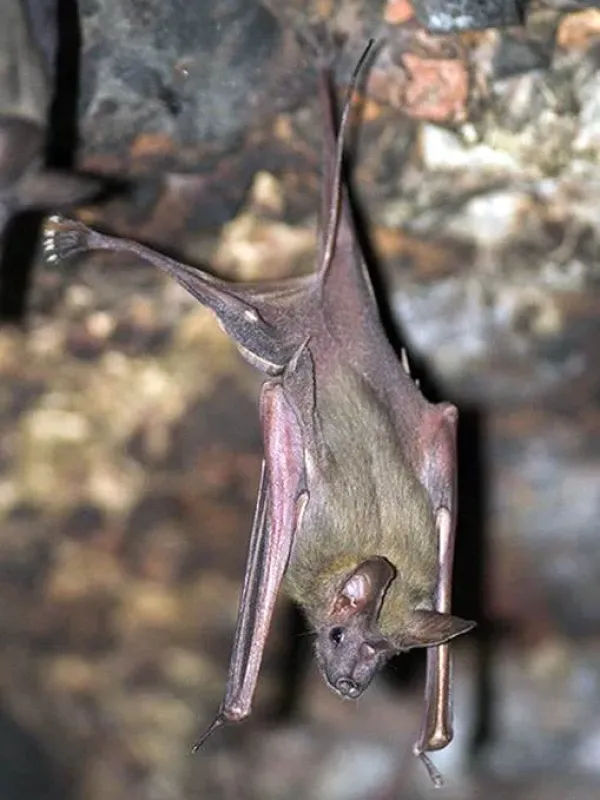
Description
How to identify
The mouse-tailed bat (genus Rhinopoma) belongs to the order Chiroptera and the family Rhinopomatidae. These are not agricultural pests but rather mammalian creatures characterized by an exceptionally long tail, which often exceeds the length of the body.
They are primarily found in arid and semi-arid regions. They have distinct biological features such as large ears and a facial structure adapted for insectivory, which differentiates them entirely from any plant-consuming insects.
What it damages
These animals do not damage crops. They are strict insectivores, feeding exclusively on small flying insects during the night. They do not possess the biological capacity to feed on leaves, stems, or fruits of agricultural vegetation.
There is no economic damage associated with this species in agriculture. Their presence in or near fields does not lead to yield loss or plant disease transmission.
When it appears
Their activity is strictly linked to the presence of their prey—insects. During warm seasons when insect populations are high, mouse-tailed bats are active during the night.
In colder conditions, they may enter a state of torpor or relocate, independent of any crop growth cycles or agricultural planting schedules.
Signs of infestation
Because these bats do not interact with crops in a predatory or herbivorous way, there are no "signs of infestation" to look for on plants. No feeding marks, wilting, or tissue destruction will occur.
If they reside in nearby man-made structures, the only sign of their existence would be guano accumulation, which is unrelated to the health of the surrounding crops.
Control measures
No control measures are necessary, as these bats are not pests. They provide a valuable ecosystem service by suppressing populations of nocturnal insects that may actually be pests.
The recommended approach is complete avoidance of harm. Protecting these animals contributes to natural pest management within the agro-ecosystem, reducing the need for chemical interventions.
Taxonomy
- Latin name
- Rhinopoma
- Family
- Rhinopomatidae
- EPPO code
- RHNPSP
Discussion
No discussions yet — be the first.