
Persicaria stem weevil
Rhinoncomimus latipes
Description
How to identify
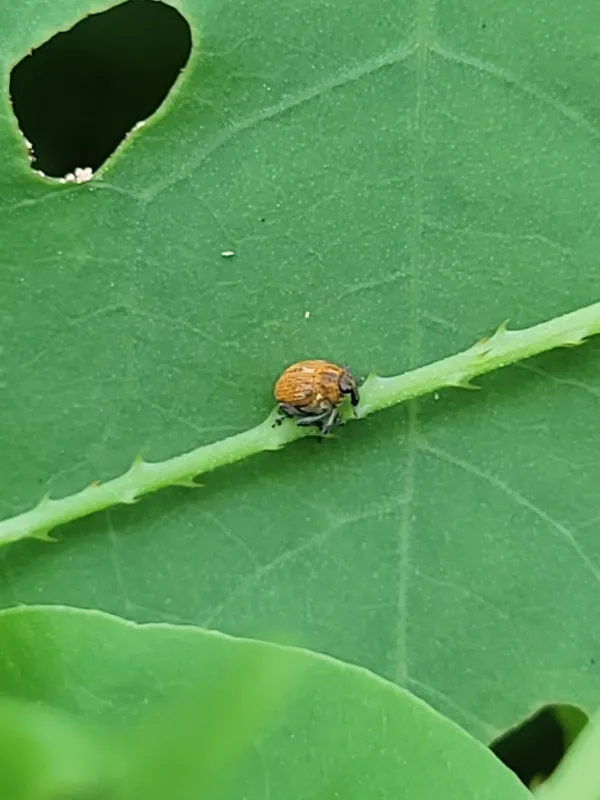
The Persicaria stem weevil (Rhinoncomimus latipes) is a small beetle belonging to the family Curculionidae. It is a highly specialized insect primarily used for the biological control of invasive weed species within the Persicaria genus.
The adult weevil possesses the classic morphology of the family, featuring a distinctive elongated snout (rostrum) adapted for feeding on specific plant tissues. Its coloration is generally dark, providing camouflage against the stems and leaves of its host.
The life cycle of this weevil follows a complete metamorphosis, comprising egg, larval, pupal, and adult stages. This cycle is perfectly synchronized with the phenology of the host plant to maximize its impact as a biocontrol agent.
Larvae are legless and typically pale or yellowish in color. They reside exclusively inside the plant stem, which serves as both their primary food source and a protective environment against environmental stresses and predators.
Pupation occurs within the soil, where the insect completes its transformation. Emerging adults then restart the cycle, ensuring multiple generations during the growing season if environmental conditions remain favorable.
What it damages
Damage is caused by both adults and larvae, although the primary impact on plant vigor results from larval feeding. Adults consume leaf tissue, creating small circular feeding holes that diminish the photosynthetic capacity of the plant.
The larvae are internal feeders, tunneling through the interior of the stems. This mining behavior disrupts the plant's vascular system, hindering the transport of water and nutrients from the roots to the upper foliage.
As a result, heavily infested stems show signs of stunted growth, chlorosis, and reduced vigor. In many cases, the structural integrity of the stem is compromised, leading to premature wilting or bending.
The cumulative effect of this feeding activity is a significant reduction in the reproductive success of the weed, including lower seed production and decreased competitive ability against neighboring vegetation.
Because of these traits, Rhinoncomimus latipes is considered a valuable ally in integrated pest management programs, offering a sustainable alternative to chemical herbicide usage.
Signs of infestation
The most visible sign of infestation is the presence of numerous pin-prick feeding holes scattered across the leaf surface, created by adult weevils.
Stem deformations, such as swelling or abnormal curling, provide clear evidence of internal larval activity, as the larvae consume the core tissue of the stem.
Yellowing or drooping of the upper leaves often points to impaired nutrient transport caused by significant tunneling in the lower or middle sections of the stem.
Exit holes, appearing as tiny, neat circular openings on the outer epidermis of the stem, indicate that the larvae have completed their development and the adults have emerged.
A visible decline in the overall health and density of the target weed population in specific patches is a strong indicator of successful establishment and activity of the weevil.
Control measures
Since the weevil is an intentional biological control agent, the primary control strategy is to create conditions that support and preserve its population rather than eradicate it.
Reducing the application of broad-spectrum insecticides in areas where the weevil is established is crucial for maintaining effective biocontrol pressure on target weeds.
Maintaining soil health and avoiding deep tillage during the peak pupation periods can significantly increase the survival rate of the insect populations in the field.
Regular surveys should be conducted to monitor the density of both adult weevils and larval exit holes to assess the effectiveness of the current biological control program.
- Minimize the use of pesticides near target weed populations.
- Avoid excessive soil disturbance to protect pupating larvae.
- Conduct periodic monitoring of host plant health.
Taxonomy
- Latin name
- Rhinoncomimus latipes
- Order
- Coleoptera (beetles)
- Family
- Curculionidae
- EPPO code
- RHCMLA
Discussion
No discussions yet — be the first.