
Rhinoncomimus
Rhinoncomimus
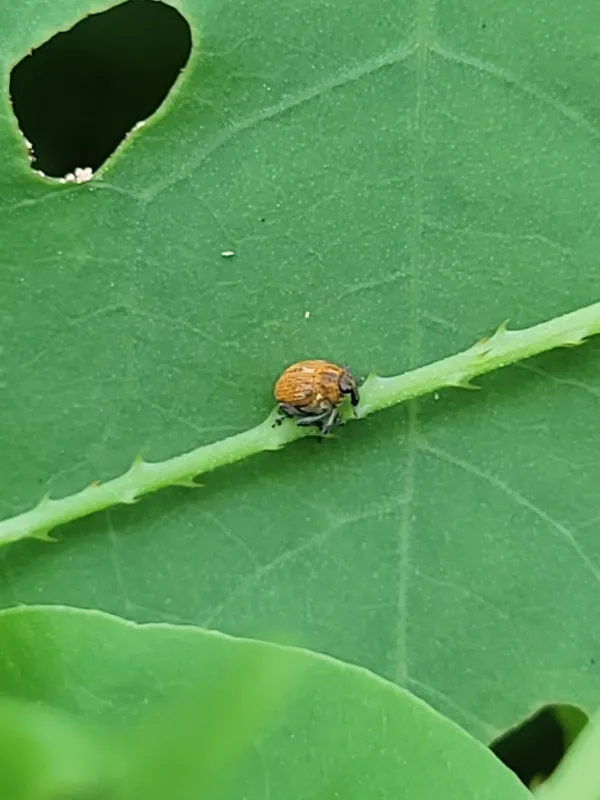
Description
How to identify
Rhinoncomimus (specifically Rhinoncomimus latipes) is a small species of weevil belonging to the family Curculionidae. Adult beetles are typically 2–3 mm in length.
They possess an oval-shaped body with a dark brown to black coloration. Their elytra are often marked with distinct patterns of small, light-colored scales that provide camouflage.
The larvae are legless and creamy-white with a characteristic brownish head. They are specialized for a cryptic lifestyle within the tissues of host plants.
Originally studied as a biocontrol agent against invasive weeds, this species has emerged as a significant pest of commercial mustard crops in several regions.
Adults overwinter in the soil or under surface debris, emerging in early spring when temperatures begin to rise to search for emerging host plants.
What it damages
Rhinoncomimus primarily attacks mustard plants (Brassicaceae). They can cause severe economic losses in industrial oilseed mustard cultivation.
Adult beetles cause damage by feeding on foliage, creating small circular holes. This reduces the photosynthetic capacity of the plants during their early developmental stages.
Larval feeding is the most damaging stage; larvae bore into the petioles and stems of the plants, creating tunnels that disrupt the transport of nutrients and water.
These tunnel systems weaken the plant's structural integrity and often serve as entry points for secondary bacterial or fungal infections, further damaging the crop.
Heavy infestations lead to stunted growth, leaf yellowing, and in severe cases, the death of the main growing point of the plant, preventing normal development.
When it appears
Emergence from overwintering sites typically occurs in late spring, as soon as the daily average temperature exceeds +10–12 degrees Celsius.
Mating and oviposition take place during the vegetative growth phase of the mustard crop, with females depositing eggs into the plant stems or leaf stalks.
The larval stage lasts approximately 3–4 weeks. The rate of development is highly dependent on ambient temperature, with warmer conditions accelerating the life cycle.
Pupation occurs in the soil, usually at a shallow depth. The new generation of adults typically emerges in mid-to-late summer to feed before the onset of winter.
The species usually completes one full generation per year, though in warmer climates, a partial second generation may occur under favorable environmental conditions.
Signs of infestation
The earliest signs of infestation include tiny, distinct feeding holes on the leaves, often mistaken for early flea beetle damage.
Stems and leaf petioles often show characteristic swellings, galls, or physical deformation caused by the larvae burrowing inside the plant tissue.
Plants may exhibit localized necrosis or discoloration at the points where larvae have entered or exited the stems, leading to weakened plant health.
Wilting of leaves and general chlorosis can be observed if the internal tunnels significantly restrict the vascular flow within the mustard plant.
A reduced stand density and lack of uniformity in crop height are common field-level indicators of a significant population of Rhinoncomimus larvae.
Control measures
Integrated Pest Management (IPM) for this weevil relies on crop rotation and maintaining spatial distance from previous years' mustard fields.
Deep plowing after harvest is an effective mechanical method to destroy pupae and overwintering adults residing in the upper soil layers.
Management of cruciferous weeds in adjacent areas is crucial, as these plants act as a reservoir for the pest population between cropping seasons.
Chemical control is most effective when applied against adult weevils upon their emergence in spring, before they have the chance to lay eggs inside the plant.
- Application of registered systemic insecticides to control internal larvae.
- Use of yellow sticky traps or sweep netting for monitoring population thresholds.
Taxonomy
- Latin name
- Rhinoncomimus
- Order
- Coleoptera (beetles)
- Family
- Curculionidae
- EPPO code
- RHCMSP
Discussion
No discussions yet — be the first.