
Rhinastus
Rhinastus
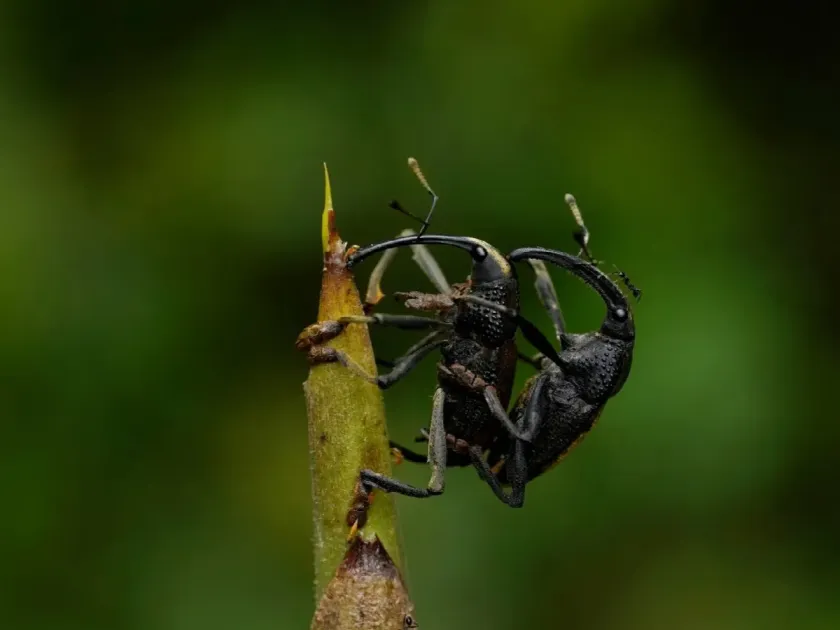
Description
How to identify
Rhinastus is a genus of weevils (Curculionidae) belonging to the order Coleoptera. These insects are easily recognized by their distinct, elongated snouts, which are characteristic of this large and diverse family of beetles.
The adult beetles are typically dark-colored and possess a robust exoskeleton. This structural adaptation allows them to inhabit harsh environments and effectively camouflage themselves within the crevices of tree bark or leaf sheaths.
The life cycle of Rhinastus follows complete metamorphosis, including egg, larva, pupa, and adult stages. The larvae are legless, fleshy, and C-shaped, perfectly adapted for burrowing deep into plant tissues where they feed and develop undisturbed.
Host plant selection is precise, with females using their snouts to bore holes in soft tissue for oviposition. The development period depends heavily on temperature and humidity, with faster life cycles occurring in tropical climates.
Rhinastus populations are often difficult to track due to their cryptic habits. Adults are generally nocturnal or crepuscular, often hiding deep within the crown of the host plant during the heat of the day.
##damage##The primary hosts of Rhinastus include various species of palm trees and tropical plants. This pest causes significant agricultural losses, particularly on commercial plantations of oil palms and ornamental tropical landscapes.
The most destructive phase is the larval stage. Larvae create extensive tunnels within the stems and growing points of the host, which severely restricts the plant's ability to transport water and essential nutrients.
Adult beetles contribute to the damage by feeding on young leaves and petioles. While this feeding does not always kill the plant immediately, it provides entry points for pathogens and weakens the overall structure.
In severe infestations, the cumulative damage leads to the collapse of the terminal bud, leaf wilting, and subsequent death of the tree. The structural integrity of the plant is compromised, making it prone to wind damage.
Economic damage is exacerbated by the internal nature of the infestation. By the time visual signs of decline are apparent, the internal tissue is often so severely degraded that recovery is nearly impossible.
##signs##Early warning signs of a Rhinastus infestation include small, localized boreholes on the plant stem. Often, these openings are accompanied by sawdust-like frass, which is ejected by larvae as they tunnel inside.
Yellowing and drying of the central spear leaves are classic indicators of advanced damage. This symptom suggests that the growing point (apical meristem) has been compromised by larval feeding activity.
A foul, rotting odor emitting from the trunk is a common sign of infestation. This is typically the result of opportunistic bacteria and fungi invading the larval tunnels, causing tissue decay within the plant.
Adults can sometimes be observed during inspections, hiding in leaf axils or near the base of the crown. Checking these secluded areas is crucial for detecting early populations before they become well-established.
Sap exudation on the stem surface may occur as a defense mechanism by the plant. This sticky discharge can indicate a focal point of larval attack or the presence of secondary infections related to the damage.
##control##Sanitation is a cornerstone of Rhinastus management. Heavily infested plants must be promptly removed and destroyed to prevent the migration of beetles to surrounding healthy trees in the plantation.
Chemical control often involves systemic insecticides. These can be administered via trunk injections or canopy sprays, ensuring that the active ingredients penetrate the plant tissues to reach hidden larvae effectively.
Biological control, such as the use of entomopathogenic fungi or specialized nematodes, offers a sustainable alternative. These biological agents can actively seek out larvae within the tree, reducing reliance on synthetic pesticides.
Cultural practices, including proper fertilization and irrigation, strengthen the plant's natural resilience. Healthy, vigorous plants are better able to withstand lower levels of insect pressure and recover from damage.
Integrated Pest Management (IPM) programs often utilize pheromone traps to monitor adult beetle activity. This data-driven approach ensures that interventions are timed perfectly, maximizing efficiency and protecting the crop.
Taxonomy
- Latin name
- Rhinastus
- Order
- Coleoptera (beetles)
- Family
- Curculionidae
- EPPO code
- RHIASP
Discussion
No discussions yet — be the first.