
Pine shoot moth
Retinia sabiniana
Description
How to identify
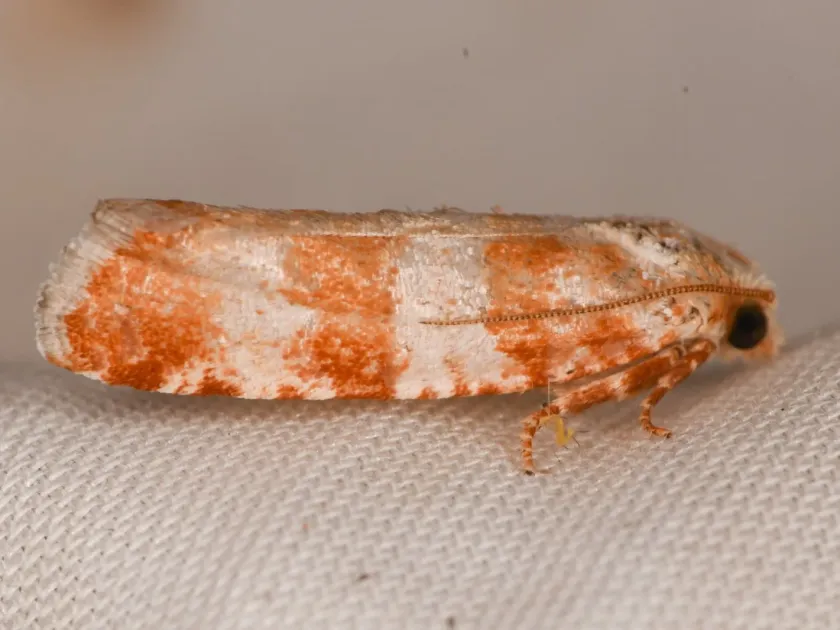
The pine shoot moth (Retinia sabiniana) is a member of the order Lepidoptera and the family Tortricidae. The adult moth is relatively small with a wingspan of approximately 15 to 20 mm, characterized by brownish-patterned wings that provide excellent camouflage against the bark of pine trees.
The biological cycle consists of four distinct stages: egg, larva, pupa, and adult. The larval stage is the most active and damaging period, during which the caterpillars develop within the succulent tissues of the host plant, eventually pupating inside the damaged shoots before emerging as adults.
What it damages
This pest primarily attacks various species of the genus Pinus, with a strong preference for young pine trees in nurseries and forest plantations. The larvae focus their feeding activity on the apical shoots and terminal buds, which are crucial for the tree's vertical growth and structural development.
Severe infestations can lead to significant economic damage in silviculture by causing stunted growth, stem deformations, and reduced timber quality. The loss of terminal leaders often results in a bushy or distorted appearance, rendering the affected trees unsuitable for high-quality wood production.
Signs of infestation
Visible signs of infestation include the appearance of fresh resin droplets on the surfaces of young shoots, indicating larval entry holes. As the larvae feed internally, the needles on the affected shoots begin to turn yellow and eventually wither, causing the tips to droop significantly.
Additional indicators include the accumulation of larval frass (waste) held together by silk webbing around the buds and shoots. In late spring and summer, the drying and browning of the current year's growth serve as clear evidence of active larval colonization within the branches.
Control measures
Integrated pest management strategies often utilize chemical insecticides applied during the critical windows of egg hatching and early larval migration. Systemic pesticides are particularly effective as they are translocated into the plant tissues, targeting the larvae protected within the shoots.
Cultural practices include the manual removal and destruction of infested shoots during the dormant season to reduce the overall population density. Encouraging natural predators, such as insectivorous birds and parasitic wasps, plays a vital role in keeping the pine shoot moth populations below the economic injury threshold.
Taxonomy
- Latin name
- Retinia sabiniana
- Order
- Lepidoptera (butterflies)
- Family
- Tortricidae
- EPPO code
- PETVSA
Discussion
No discussions yet — be the first.