
Spruce shoot moth
Retinia picicolana
Description
How to identify
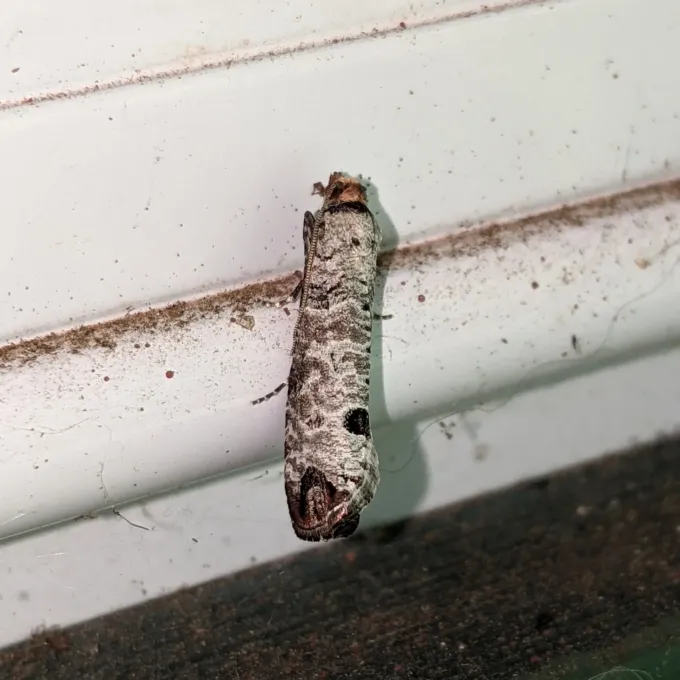
The spruce shoot moth (Retinia picicolana) is a member of the Tortricidae family within the order Lepidoptera. The adult moth has a wingspan of approximately 15–18 mm, with grayish-brown forewings that bear intricate patterns, providing excellent camouflage against tree bark.
The larvae, or caterpillars, reach lengths of 12–15 mm and are characterized by a yellowish-brown to brown body with a dark-colored head. They spend most of their developmental stage hidden deep within the spruce shoots.
The life cycle is generally univoltine, meaning there is one generation per year. Development typically follows the phenological stages of the spruce tree, ensuring the larvae are present when young growth becomes available.
Adult moths are nocturnal or crepuscular, making them difficult to spot during daylight hours. They rely on their cryptic coloration to remain unseen by predators and forest managers alike.
The transition from egg to adult occurs within the host tissue, meaning that identifying the species often requires careful dissection of damaged plant material during the larval phase.
What it damages
The primary host for this species is the Norway spruce (Picea abies) and related coniferous species. Young spruce trees in nurseries, plantations, and landscaping are the most frequent targets of infestation.
Damage is inflicted primarily on the buds and the succulent young growth of the current year. The larvae bore into the central pith of the shoots, causing them to wilt and eventually die back.
This feeding activity disrupts the tree's apical dominance, often resulting in crooked or distorted terminal shoots. Such deformities significantly diminish the aesthetic value of the trees and can reduce timber quality.
Severely infested trees may exhibit stunted growth or, in extreme cases of repeated attacks, may suffer from a decline in vigor, making them susceptible to secondary pests such as bark beetles.
Physical weakness of the damaged shoots frequently leads to branch breakage during heavy winds or snow accumulation, further degrading the structure of the spruce canopy.
Signs of infestation
A hallmark sign of infestation is the presence of resin (pitch) globs near the entry points of the larvae. These resinous masses are often mixed with sawdust-like frass produced by the feeding caterpillars.
In spring and early summer, the needles at the tip of the affected shoots may change color, turning yellowish or reddish-brown as the shoot loses its water and nutrient supply.
Hollowed-out pupal casings protruding from exit holes in the shoots serve as definitive evidence that the insects have completed their cycle and the moths have emerged.
Silken webbing spun by larvae around the base of needles or between buds is another indicator that active infestation is occurring within the tree canopy.
Crown deformation, such as the loss of a clear leader or the development of bushy lateral growth near the top of the tree, is a common indicator of historical and ongoing shoot moth pressure.
Control measures
The most effective cultural practice in nursery settings is the prompt pruning and destruction of infested shoots. This mechanical removal prevents the population from completing its development and spreading.
Chemical control can be implemented using systemic insecticides, which are most effective when applied during the period of larval eclosion, typically just before they bore deep into the plant tissue.
Maintaining high forest and garden health through proper irrigation and balanced fertilization helps trees withstand attacks and recover faster from the damage caused by the moth.
Biological control methods, such as encouraging the presence of natural predators like insectivorous birds or parasitic wasps, can assist in keeping the moth population below the economic threshold in larger wooded areas.
- Regular monitoring of tree crowns
- Mechanical removal of damaged shoots
- Application of bio-rational pesticides
- Systemic insecticide treatment if needed
Taxonomy
- Latin name
- Retinia picicolana
- Order
- Lepidoptera (butterflies)
- Family
- Tortricidae
- EPPO code
- PETVPI
Discussion
No discussions yet — be the first.