
Comstock pine moth
Retinia comstockiana
Description
How to identify
The Comstock pine moth (Retinia comstockiana) is a moth species of the family Tortricidae. It is recognized as a significant pest affecting various pine species across its geographical range.
The adult moth is relatively small, with a wingspan typically ranging from 15 to 20 mm. Its coloration is highly cryptic, blending seamlessly with the bark of coniferous trees, which serves as a defense mechanism.
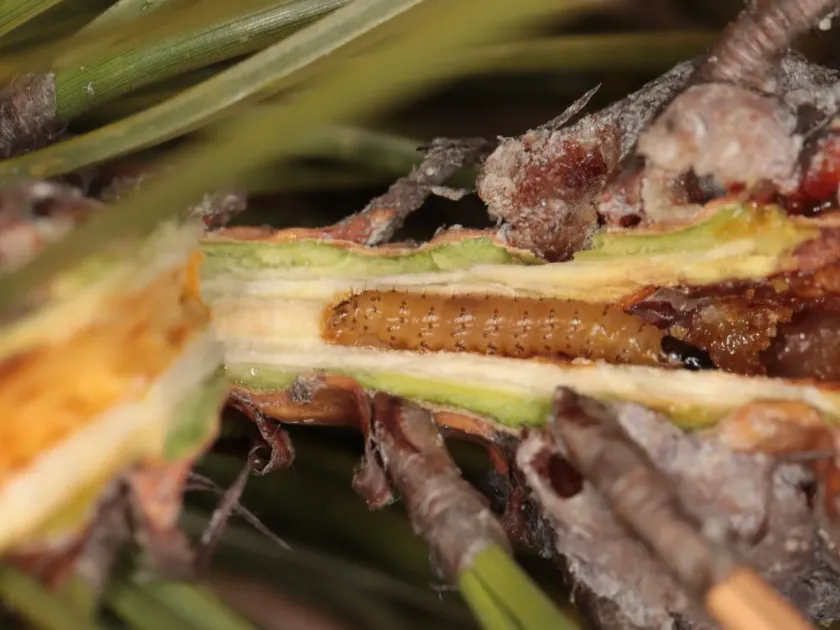
The larvae are pale caterpillars with dark heads, known for their habit of boring into the shoots of host plants. Their development stages are crucial for agricultural monitoring and intervention.
This species is highly adaptable, allowing it to colonize diverse environments, including natural forests, nurseries, and managed plantations. Its life cycle generally consists of one generation per year, depending on environmental temperatures.
Adult moths are nocturnal and are usually attracted to light, which makes light traps a potential, albeit non-specific, tool for studying their flight patterns in the field.
What it damages
The primary hosts of the Comstock pine moth are species within the Pinaceae family, specifically the genus Pinus. Young, growing trees are particularly susceptible to damage due to their limited resource storage.
The larvae cause direct damage by boring into the new shoots and leaders of the trees. This activity severs the vascular tissue, effectively choking the tree's internal transport system.
In forestry, the damage leads to reduced growth rates and timber deformities. Constant infestation can significantly downgrade the economic value of pine plantations intended for lumber production.
The structural damage caused by the larvae also creates entry points for secondary pathogens, such as fungi or bark beetles, which can exacerbate the tree's decline.
Repeated destruction of the terminal shoot often leads to crooked or stunted growth, ruining the aesthetic value of ornamental pines and slowing the development of forest crops.
Signs of infestation
The most prominent sign of infestation is the appearance of pitch or resin masses on the surface of the branches. These masses are a response to larval feeding activity and are often mixed with frass.
Visible entrance holes on the bark of young shoots are characteristic indicators. Larvae frequently push out their waste, resulting in distinct brown, pellet-like frass accumulating around the site of infection.
Galling, or swelling, of the shoots is common as the tree attempts to heal the site where the larva is feeding. This deformation is often easy to spot during regular inspections of saplings.
Dieback of the shoot terminal, often accompanied by the yellowing or browning of needles, is a severe sign indicating that the vascular tissues have been destroyed.
- Pitch masses and resin droplets on shoots.
- Brown, sawdust-like frass on the branch surface.
- Deformed, galled, or swollen branches.
- Withering needles on infested terminals.
Control measures
Chemical control involving systemic insecticides is the most effective way to eliminate larvae residing inside the woody tissues of the branches. Timing the application to the larval emergence period is critical.
Pruning and destroying infested branches is an essential cultural practice. This manual intervention helps reduce the local population density if performed before the adult moths emerge.
Pheromone traps are used as an effective monitoring tool to track the emergence of adults, allowing farmers to apply treatments only when they are most likely to be effective.
Biological control efforts focus on enhancing the habitat for natural predators, such as wasps and birds, which can naturally suppress moth populations in healthy ecosystems.
Maintaining high plant vigor through proper fertilization and watering can help trees better tolerate or recover from minor infestations, reducing the need for intensive chemical applications.
Taxonomy
- Latin name
- Retinia comstockiana
- Order
- Lepidoptera (butterflies)
- Family
- Tortricidae
- EPPO code
- PETVCO
Discussion
No discussions yet — be the first.