
Malaysian wood rat
Rattus tiomanicus
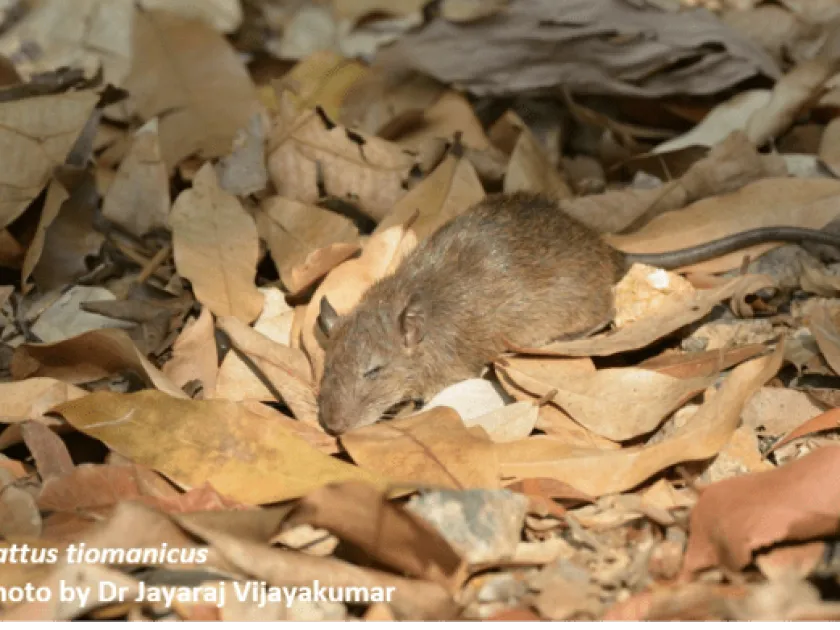
Description
How to identify
The Malaysian wood rat (Rattus tiomanicus) belongs to the family Muridae and is a rodent species highly adapted to climbing and life in the forest canopy.
Physically, it is slender with a long tail, which helps in balancing while navigating through the branches of tropical trees like the oil palm.
Its coat is typically brownish-grey on the dorsal side and lighter, greyish-white on the ventral side, providing camouflage in the plantation environment.
These rodents are nocturnal, spending their days in nests constructed from leaves and fibers within the crowns of palm trees or thick vegetation.
They are known for their high mobility and ability to colonize plantation areas quickly, making them persistent pests for growers in Southeast Asia.
What it damages
The species is primarily recognized as a major pest of oil palm plantations, where it causes severe economic losses by feeding on the palm fruits.
Rats consume the soft tissues of developing and mature palm fruits, which directly reduces the yield of palm oil and kernel production.
Beyond oil palms, they can infest cocoa and coconut trees, as well as various cereal crops if they are cultivated within the rats' home range.
Physical damage to the fruit bunches promotes the entry of pathogens, leading to fruit rot and further degradation of the crop quality.
Repeated feeding on the terminal buds or succulent parts of young palms can retard plant development or even lead to the death of the plant.
Signs of infestation
The most common sign of infestation is the discovery of partially eaten fruit bunches lying on the ground or still attached to the tree.
Distinctive teeth marks on the palm fruit husks are a diagnostic feature of rodent activity, differentiating it from insect or bird damage.
The presence of nests made of dry palm leaves and debris tucked into the axils of fronds indicates active nesting sites within the plantation.
Increased night-time activity, characterized by rustling sounds in the canopy, often confirms a high population density of the rats.
Small pathways or runways cleared through the vegetation along the ground or across the canopy connecting different palm trees are clear signs of travel.
Control measures
Biological control using barn owls (Tyto alba) has proven highly effective in many plantations, as these predators can naturally regulate rat numbers.
Chemical control involves the use of anticoagulant rodenticides placed in tamper-proof bait stations to ensure the safety of other non-target species.
Sanitation practices are essential, including the removal of fallen fruits and crop debris that provide shelter and food sources for the rodent population.
Mechanical protection, such as metal bands or collars around the trunks of young trees, can prevent rats from climbing up into the canopy to reach the fruit.
- Regular monitoring and census of rat populations.
- Integrated Pest Management (IPM) strategies.
- Strategic placement of bait stations.
Taxonomy
- Latin name
- Rattus tiomanicus
- Order
- Rodents
- Family
- Muridae
- EPPO code
- RATTTH
Discussion
No discussions yet — be the first.