
Brown rat
Rattus conatus
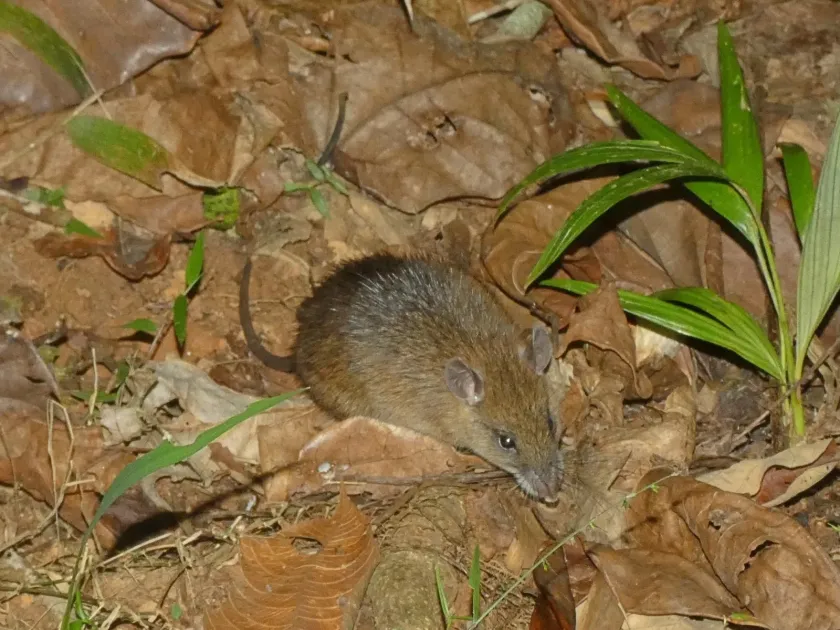
Description
How to identify
The brown rat is a member of the Muridae family and is widely distributed across all agricultural regions of the world.
It is a large rodent, characterized by a heavy, sturdy body, a blunt muzzle, small ears, and a tail that is shorter than the head and body combined.
The fur color ranges from brown to grayish-brown, with the underside being typically lighter, helping to distinguish it from other rodent species.
Brown rats are highly intelligent animals that display strong social behavior and high adaptability to human-modified environments.
They are primarily nocturnal, showing peak activity periods during the dusk and pre-dawn hours of the day.
What it damages
Brown rats cause severe economic losses by feeding on various crops including cereals, maize, and vegetable garden plants in field conditions.
In storage facilities, they consume large volumes of grain and agricultural commodities, causing massive destruction to stored yields.
Beyond actual consumption, they contaminate much larger amounts of grain with their urine, feces, and hair, leading to significant quality degradation.
Their gnawing activity ruins packaging materials, wooden silos, electrical wiring, and other critical infrastructure on agricultural farms.
They also serve as vectors for various zoonotic diseases, posing a health risk to farm workers and potentially spreading infections to livestock.
When it appears
Brown rats are active throughout the year, with their distribution pattern shifting according to seasonal availability of food sources.
During the warmer spring and summer months, populations often expand into fields and outdoor vegetation to exploit available harvest crops.
As temperatures drop in late autumn, they move back into barns, warehouses, and farm buildings to seek shelter and stable food supplies.
Breeding can occur year-round if favorable conditions and sufficient food sources are available within the protected environment.
The peak of field damage typically coincides with the maturation and harvest stages of crops, making these periods critical for control.
Signs of infestation
Evidence of infestation includes the presence of burrows in the soil near foundations, fences, or woodpiles surrounding agricultural buildings.
Gnaw marks on wooden structures, plastic piping, or grain sacks provide visible proof of recent rodent activity in the area.
Droppings are frequently found along established runways, which are often smooth paths worn into the ground or vegetation.
The characteristic smell of urine and audible scratching sounds behind walls or in silos indicate a well-established colony.
Visual sightings of rats in areas where food is stored are a clear indication of a significant and established population present on-site.
Control measures
Effective management requires a combination of sanitation, physical exclusion, and the application of chemical rodenticides.
Sanitation efforts should focus on eliminating food spills and removing debris that provides nesting opportunities for the rats.
Physical exclusion involves sealing all entry points to storage facilities with metal or wire mesh to block rat access completely.
Rodenticides should be deployed in secure bait stations to ensure the safety of livestock while effectively reducing the local rat population.
- Regular inspection of storage areas
- Exclusion and building maintenance
- Use of approved rodenticide baits
- Elimination of shelter and food sources
Taxonomy
- Latin name
- Rattus conatus
- Order
- Rodents
- Family
- Muridae
- EPPO code
- RATTCO
Discussion
No discussions yet — be the first.