
Rice field rat
Rattus argentiventer
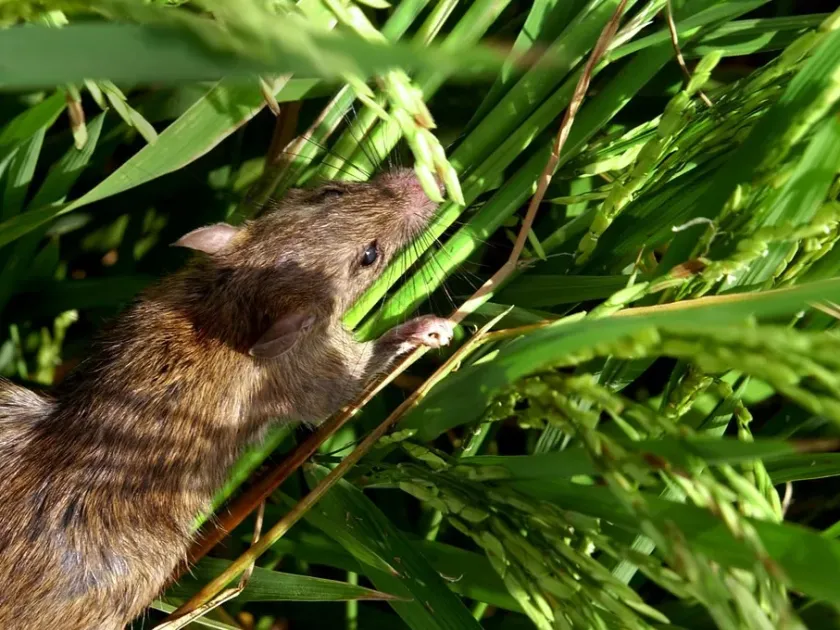
Description
How to identify
The rice field rat (Rattus argentiventer) belongs to the Rodentia order and Muridae family. This medium-sized animal has a grayish-brown dorsal coat with a characteristic "silvery" sheen due to the presence of black and white hair tips.
An adult typically reaches a body length of 14 to 20 cm, with a tail that is equal to or slightly shorter than the body. A distinctive feature is a dark stripe running down the back toward the head, contrasted by a pale belly.
This species is a typical inhabitant of agroecosystems, closely linked to the cultivation of water-intensive crops. Its high adaptability allows it to colonize both irrigated fields and dry areas near plantations.
Unlike other rat species, this rodent exhibits significant intraspecific aggression and a complex social structure, which contributes to the resilience of its population against external pressures.
Activity is primarily nocturnal, although during periods of high population density or crop maturity, they may exhibit diurnal activity as well.
What it damages
The primary food source is rice (Oryza sativa) at all vegetative stages, from seedlings to grain ripening. This makes them a key pest in Southeast Asian regions.
In addition to rice, these rodents can feed on maize seeds, vegetables, peanuts, and other legumes grown in crop rotation with rice.
The most severe damage occurs when they consume reproductive plant parts during the milky and dough stages of grain development, leading to significant yield losses.
Beyond direct grain consumption, the pest causes collateral damage by mechanically damaging stems, leading to lodging and subsequent rot of the affected rice plants.
Their constant search for food leads them to build pathways and burrows through irrigation canal systems, damaging the infrastructure necessary for water management in rice paddies.
When it appears
The reproductive cycle of the rice field rat is directly tied to the phenology of rice crops. Peak breeding periods correspond with the active growth and maturation of cereal crops.
Given an abundant food supply, a female can produce 6–12 pups per litter, with offspring reaching sexual maturity in just a few weeks.
In regions where rice is grown year-round, the rodent population does not hibernate and continues to breed throughout the year, making population control extremely difficult.
The most critical period for farmers is the grain-filling phase, when the pest concentrates in fields, reaching densities of several hundred individuals per hectare.
During the off-season, rodents migrate to road verges, embankments, and abandoned land, maintaining the potential for rapid recolonization when new crops are planted.
Signs of infestation
The first sign of presence is the appearance of numerous burrows in dikes and embankments, as well as distinct pathways through the dense rice canopy.
Damage is visible in the form of stems cut at the base or damaged higher up where rats reach the rice panicles.
Large populations are evidenced by the presence of droppings along pathways and empty husks from consumed grains in the rodents' resting areas.
Surveys often reveal "trampled" patches of rice where rats have established feeding platforms, which appear as bare spots in the middle of the fields.
- Stems cut at an angle
- Entrance holes to burrows on irrigation dikes
- Fresh tracks in moist soil
- A distinct musky odor in areas of high density
Control measures
The primary control method involves the use of second-generation anticoagulant rodenticides, which have proven highly effective in managing local populations.
Agronomic methods play a crucial role, specifically the synchronization of planting schedules within a region to deny rodents a continuous food source.
Maintaining field boundaries and regular weeding are essential practices to remove harborages that rodents use for nesting and reproduction.
To prevent field invasion, the use of Trapping Barrier Systems (TBS), consisting of plastic fences, has shown excellent results in protecting crops.
Biological control measures include protecting natural predators like owls, snakes, and small carnivores, which can significantly suppress population growth if managed properly.
Taxonomy
- Latin name
- Rattus argentiventer
- Order
- Rodents
- Family
- Muridae
- EPPO code
- RATTAR
Discussion
No discussions yet — be the first.