
Hawthorn leaf flea
Ramphus oxyacanthae
Description
How to identify
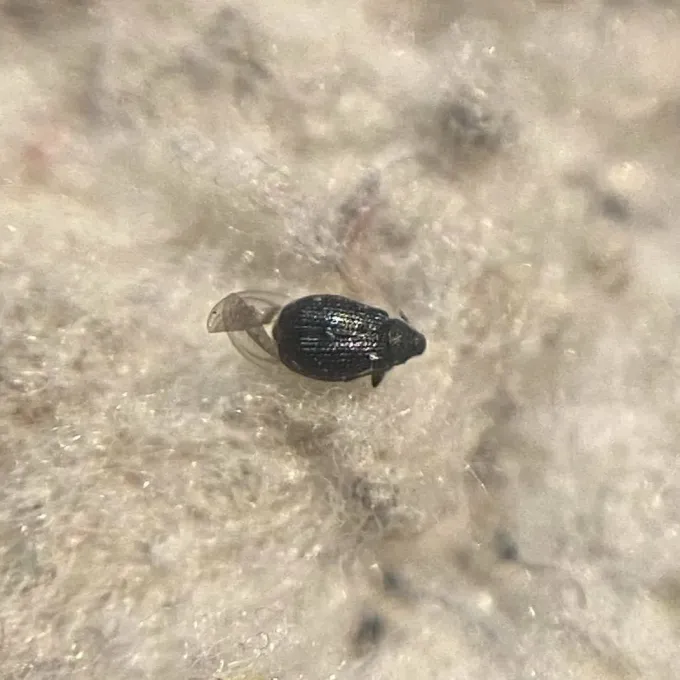
The hawthorn leaf flea (lat. Ramphus oxyacanthae) is a small beetle belonging to the Curculionidae family. It is known for its impressive jumping ability, which makes it difficult to catch or observe directly on the leaves.
Adult beetles are quite tiny, usually measuring between 2 and 3 mm in length. Their coloration is dark, often with a metallic or bronze shimmer, which helps them blend in with the bark or foliage.
The larvae are legless, whitish grubs that live strictly inside the leaf tissue. This hidden lifestyle makes them difficult to target with conventional contact-based insecticides.
The lifecycle is closely linked to the vegetation period of trees. The species is highly specialized, preferring plants within the Rosaceae family for both feeding and reproduction.
Overwintering occurs in the adult stage, typically in soil, leaf litter, or crevices in the tree bark, where they remain dormant until spring temperatures rise.
What it damages
This pest is primarily found on hawthorn, but it frequently attacks fruit trees such as apples, pears, cherries, and plums, causing both aesthetic and physiological damage.
Adult beetles cause damage by feeding on the leaves, creating small, pinprick-like holes. While individual holes are small, heavy infestation can cause significant leaf perforation.
The most severe damage is caused by the larvae, which act as leaf miners. They tunnel inside the leaf, eating the inner parenchyma layer while leaving the outer skin intact.
This mining activity leads to brown, dry patches on the leaves. In severe cases, the affected leaves turn yellow and drop prematurely, impacting the tree's overall photosynthetic capacity.
Young trees and nursery stock are particularly susceptible, as loss of foliage in the early stages of growth can significantly stunt the development of the canopy.
When it appears
Activity begins in early spring, typically at the time of bud burst. The overwintered adults move from their wintering sites to the young foliage to begin feeding.
The egg-laying period usually occurs in late spring or early summer. Females insert eggs into the young leaf tissue, ensuring the larvae have an immediate food source upon hatching.
Larval development happens during the peak of the growing season. The larvae go through their growth phases inside the mines before pupating within the leaf or in the surrounding soil.
A new generation of adult beetles emerges in mid-to-late summer. They continue to feed on the remaining foliage, preparing for the upcoming winter period.
As autumn progresses and temperatures drop, the adult beetles seek shelter in protected areas, marking the end of the active feeding season for the year.
Signs of infestation
The first indicator of an infestation is the appearance of small, transparent «windows» or holes on the leaves caused by the feeding of adult beetles.
The presence of meandering, tunnel-like marks known as mines is the definitive sign of larval activity. These mines often appear as light or brownish lines on the leaf surface.
If you hold an infested leaf up to the light, you can often see the larvae moving inside their tunnels, as well as the dark excrement they leave behind.
Widespread yellowing and early leaf drop during the summer are classic symptoms of high pest density and indicate that the tree is under significant stress.
Deformed or curling leaves, especially those with visible tunnels, are a clear indication that the population of hawthorn leaf flea has reached a damaging level.
Control measures
Chemical control should be timed to hit the adult beetles before they lay their eggs in the spring. Systemic insecticides are often most effective against miners.
Cultural practices are essential, especially the removal and destruction of fallen leaves in autumn, which serves to drastically reduce the overwintering population of the pests.
Biological control, using natural predators or parasites of leaf miners, can help maintain balance in an integrated pest management program, though it may not be sufficient for severe outbreaks.
- Monitor adult activity using yellow sticky traps in spring.
- Maintain tree vigor through proper fertilization and irrigation.
- Apply targeted insecticides when the first leaf-mining signs are detected.
- Remove weeds and debris around the base of the trees.
It is important to evaluate the need for treatment carefully, as excessive pesticide use can eliminate beneficial insects that help control other orchard pests.
Taxonomy
- Latin name
- Ramphus oxyacanthae
- Order
- Coleoptera (beetles)
- Family
- Curculionidae
- EPPO code
- RAMPOX
Discussion
No discussions yet — be the first.