
Thornback ray
Raja clavata
Description
How to identify
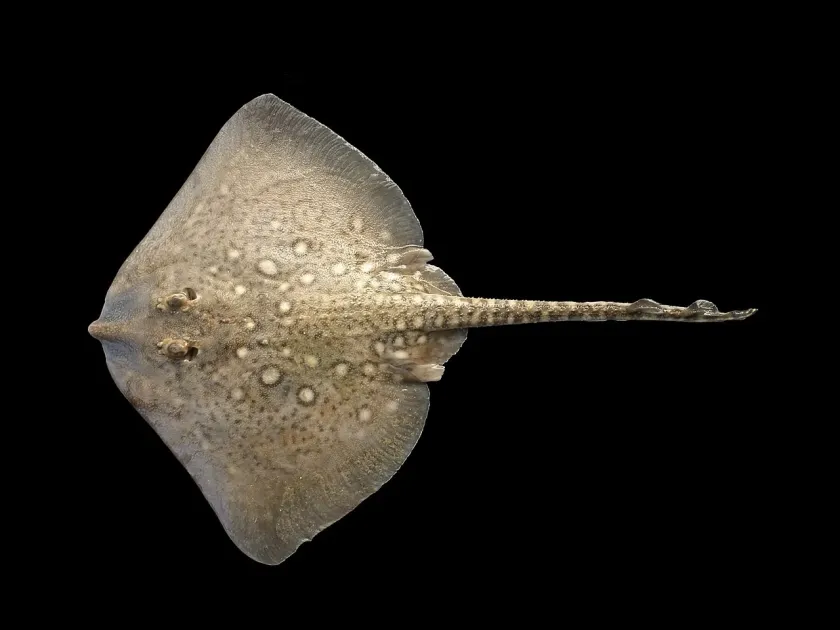
The thornback ray (Raja clavata) is a member of the Rajidae family within the Rajiformes order. This cartilaginous fish is easily identified by its diamond-shaped disc and rows of sharp, thorn-like denticles along its body.
These rays can grow up to 120 cm in length. Their coloration is typically a mix of brown, grey, and yellow with various dark spots, providing excellent camouflage against sandy or muddy sea floors.
They are primarily bottom-dwellers, frequently found at depths ranging from shallow coastal waters down to 300 meters.
The diet of an adult thornback ray consists of crustaceans, mollusks, and small fish, which they hunt by waiting in ambush on the ocean floor.
Their reproductive strategy involves laying eggs inside leathery capsules known as "mermaid's purses," which attach to rocks or seaweed.
What it damages
While the thornback ray is not a pest for land-based crops, it acts as a significant predator in marine aquaculture environments.
In sea cages and coastal enclosures, these rays prey on the stock of shellfish and juvenile fish, leading to significant inventory losses.
The sharp thorns on their bodies and their rough movement patterns can cause structural damage to nylon nets and containment cages.
Predatory pressure from rays causes stress to the farmed species, which may result in suppressed immune systems and reduced growth rates.
Operators of marine farms face additional operational costs due to the need for frequent hardware repairs and predator-proof upgrades.
Control measures
Physical exclusion remains the most reliable method for protecting stock, achieved by installing heavy-duty, predator-resistant netting around farm perimeters.
Maintaining a clean farming environment by ensuring no food waste or dead fish accumulate on the seafloor is crucial to preventing ray attraction.
Many farms employ routine underwater inspections to detect any early signs of net damage that could allow these predatory rays to enter.
Non-lethal acoustic deterrents are increasingly used to create a hostile auditory zone for rays, forcing them to move away from sensitive infrastructure.
- Implementing double-layer netting systems for maximum security.
- Strict management of feed discharge to prevent secondary attractants.
- Use of specialized anti-predator netting materials.
Taxonomy
- Latin name
- Raja clavata
- Family
- Rajidae
- EPPO code
- RAJICL
Discussion
No discussions yet — be the first.