
Pyrgotis
Pyrgotis
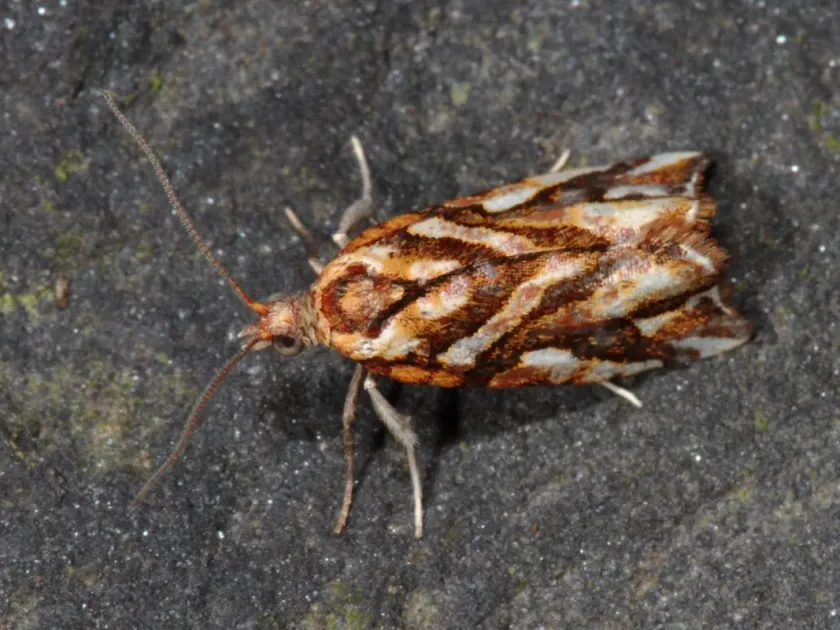
Description
How to identify
The genus Pyrgotis belongs to the Tortricidae family, commonly known as leafrollers, within the order Lepidoptera. Adult moths are relatively small with nocturnal habits and typical wing structures for the family.
Their external appearance often features cryptic coloration, allowing them to blend seamlessly into bark or foliage, which makes them difficult to spot in the field.
Larvae (caterpillars) of this genus are characterized by a cylindrical body shape, a well-developed head, and thoracic legs, adapted for agile movement among leaves.
Accurate species-level identification is challenging and frequently requires examination of genital structures under a microscope, as many species exhibit high visual similarity.
These insects prefer a concealed lifestyle, depositing their eggs in protected micro-habitats on leaves or young shoots to ensure survival.
What it damages
The pest primarily targets woody plants and shrubs, including both ornamental and fruit-bearing species. The most significant damage occurs to buds and young leaves during the early vegetative stage.
Pyrgotis larvae damage foliage by eating holes and, more characteristically, by rolling leaves into tubes or cigar-like shapes, held together by silk strands.
In cases of heavy infestation, the pest can cause significant defoliation, drastically reducing the plant's photosynthetic surface and overall vigor.
Destruction of buds and young inflorescences directly impacts fruit yield or the aesthetic value of the affected ornamental shrubs.
Furthermore, feeding damage creates entry points for secondary pathogens, such as fungi and bacteria, which can exacerbate the decline of the host plant.
When it appears
The life cycle is closely synchronized with the host plant's phenological stages, with larval activity beginning at bud break in the spring.
Moths are primarily nocturnal, which necessitates the use of pheromone or light traps for effective population monitoring and tracking of seasonal flight.
During the summer months, several overlapping generations may occur, necessitating continuous vigilance and repeated control measures throughout the growing season.
Overwintering strategies vary by species; they may pass the winter as pupae protected in silk cocoons within bark crevices or as egg masses deposited on stems.
Peak feeding activity is typically observed during periods of moderate temperature and high humidity, which favor rapid larval development and growth.
Signs of infestation
The primary symptom of infestation is the presence of silk-webbed, rolled leaves that do not unfurl when gently disturbed.
The presence of frass (larval excrement) within these rolled leaves is a definitive sign that the larvae are currently active and feeding.
Young shoots may show "skeletonized" patches where larvae have consumed the soft tissue between veins, leaving only the structural framework behind.
Heavy infestations are accompanied by stunting of new growth, deformation of shoots, and the gradual drying of terminal buds.
Infected inflorescences may drop prematurely, resulting in a significant reduction in fruit set and overall plant productivity.
Control measures
Biological control is a preferred management strategy, utilizing Bacillus thuringiensis formulations to effectively target young larvae without harming beneficial insects.
In cases of high pest pressure, the application of systemic or contact insecticides from the pyrethroid or neonicotinoid groups may be required, following strict usage labels.
Cultural control practices, such as the systematic removal and destruction of infested foliage, are crucial for limiting the population size in early stages.
Pheromone traps are essential tools for monitoring adult flight patterns, ensuring that pesticide applications are timed for maximum efficacy and minimal environmental impact.
- Maintain optimal plant health through balanced soil fertility.
- Encourage the presence of natural predators like birds and parasitic wasps.
- Scrub loose bark from tree trunks to remove overwintering sites.
Taxonomy
- Latin name
- Pyrgotis
- Order
- Lepidoptera (butterflies)
- Family
- Tortricidae
- EPPO code
- PRGTSP
Discussion
No discussions yet — be the first.