
Pyralis pictalis
Pyralis pictalis
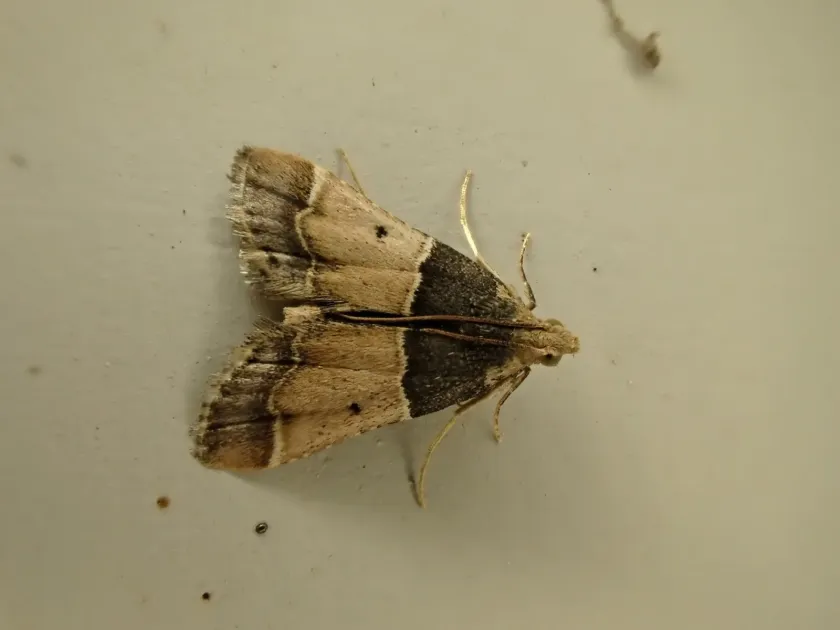
Description
How to identify
Pyralis pictalis belongs to the Pyralidae family within the order Lepidoptera. These moths are known for their distinct wing patterns, which serve as excellent camouflage against grain dust and organic debris in storage environments.
The larvae, or caterpillars, are the primary damaging stage. They exhibit a remarkable ability to survive in environments with low moisture, making them highly successful pests in grain storage facilities.
Adult moths are primarily nocturnal. During daylight hours, they remain motionless in crevices, shadowed areas, or within the deep layers of stored bulk products, complicating visual scouting.
The developmental rate of Pyralis pictalis is strictly temperature-dependent. In warm conditions, the life cycle shortens significantly, leading to multiple generations during a single season.
Proper identification often requires careful examination of wing morphology or the presence of specific silk-like structures left by larvae, as these moths are easily confused with other common warehouse pests.
What it damages
This pest primarily attacks stored dried plant products, including cereals, grains, flour, and dried fruits. The larvae cause direct damage by consuming the nutritious parts of the seeds.
Beyond consumption, the larvae cause massive contamination through the production of silk webbing and frass. This waste creates a matrix that binds grain particles together into unmanageable clumps.
The webbing created by the larvae is highly hygroscopic, promoting the growth of mold and bacteria. This secondary contamination can render an entire batch of grain unfit for consumption or industrial processing.
Seeds intended for planting are often targeted, as the larvae frequently destroy the germ of the seed, leading to a complete loss of germination potential.
In industrial warehouses, Pyralis pictalis causes significant economic losses by reducing both the total weight and the market value of the infested stored commodities.
Signs of infestation
The most prominent sign of infestation is the appearance of silk webbing on the surface of grain bags or within bulk storage silos. This webbing is often the first visible evidence of larval activity.
Clumping of flour or grain indicates that larvae have been active in that area. When inspected, these clumps often contain larvae, pupal cases, or their excrement.
Observing adult moths fluttering near storage units during dusk or nighttime hours indicates that a reproductive population is well-established in the facility.
A musty or unpleasant odor emanating from stored products is a strong indicator of advanced infestations, where the combined activity of larvae and mold has begun to degrade the quality of the material.
The presence of shed larval skins on the surface of stored goods is a clear sign that the population is actively growing and molting, requiring immediate intervention.
Control measures
Effective management begins with strict sanitation protocols. Removing spilled grain, dust, and debris from floors and crevices is crucial to eliminating the moth's breeding grounds.
Environmental control, specifically maintaining low humidity and cool temperatures, can significantly inhibit the development of Pyralis pictalis populations.
Fumigation remains the most effective chemical method for treating existing, heavily infested stocks. However, it must be performed by professionals to ensure the total kill of all life stages.
Pheromone traps are excellent tools for both monitoring the presence of the moth and reducing the density of male adults, thereby limiting the success of mating.
- Sealing storage containers to prevent re-infestation.
- Regular inspection of incoming and stored goods.
- Rotation of stocks to avoid long-term storage of vulnerable items.
- Application of authorized contact insecticides for surface treatment.
Taxonomy
- Latin name
- Pyralis pictalis
- Order
- Lepidoptera (butterflies)
- Family
- Pyralidae
- EPPO code
- PYRAPI
Discussion
No discussions yet — be the first.