
Manioc moth
Pyralis manihotalis
Description
How to identify
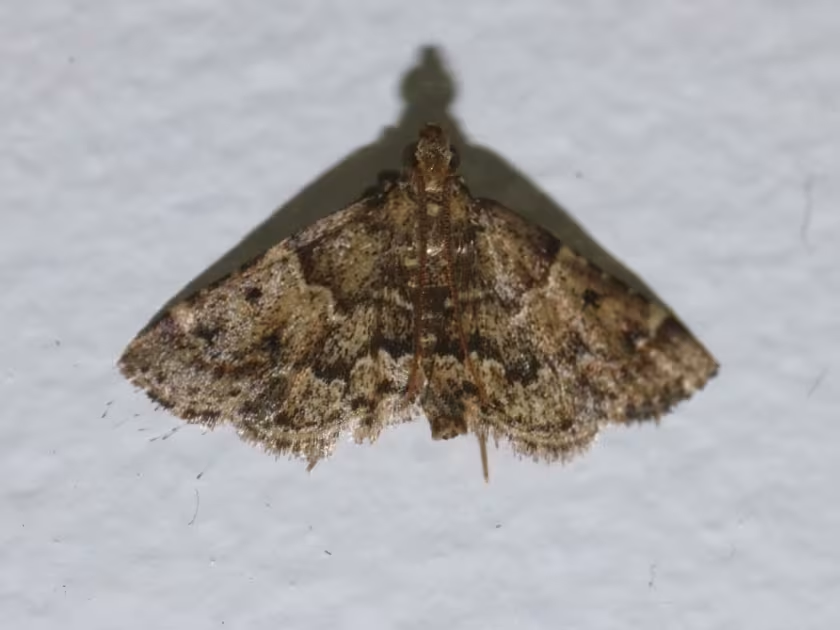
The Manioc moth (Pyralis manihotalis) is a moth species belonging to the Pyralidae family. Adult moths typically have a wingspan of 20–30 mm. Their wings exhibit a brownish-grey pattern with dark transverse lines, providing excellent camouflage in dusty warehouse environments.
The larvae are highly mobile and possess a pale, dirty-white to grey body with a dark head capsule. They are notoriously secretive, preferring to hide within the substrate they infest, which often results in infestations remaining unnoticed until significant damage has occurred.
The pupal stage is protected within a silken cocoon reinforced with debris and larval frass, making it resilient to environmental changes. Adults are nocturnal, exhibiting positive phototaxis, which is a key behavior utilized by pest management professionals during population monitoring.
Taxonomically, this insect is categorized under the order Lepidoptera. Despite its common name, it is a polyphagous insect that thrives on various dried organic materials, not exclusively limited to manioc.
Accurate identification is crucial for effective management. Field experts often rely on pheromone-based traps to confirm the presence of P. manihotalis in grain stores and food manufacturing facilities.
What it damages
This species is a significant pest of stored products. The larvae feed on dried vegetable matter, including grains, flour, legumes, dried manioc, and copra. Their feeding habits cause direct biomass loss and severe contamination.
The larvae construct silken webs through the infested substrate, causing particles to clump together. This web formation damages the physical integrity of the product and creates major challenges for automated sorting and processing machinery.
Infested areas are characterized by the presence of larval silk, fecal pellets, and discarded molts. This biological pollution creates a medium suitable for secondary infestations, including mold and fungal growth, rendering the product hazardous for consumption.
Large populations can lead to total stock destruction. The pest is particularly problematic in humid, poorly ventilated warehouses where product residues are allowed to accumulate in corners and cracks.
- Reduction in total weight of stored commodities.
- Significant loss of product quality and aesthetic value.
- Clumping of raw materials due to silk webbing.
- Increased risk of secondary fungal colonization in stockpiles.
When it appears
In temperature-controlled indoor environments, the Manioc moth can breed continuously throughout the year. The lack of seasonal environmental cues allows for overlapping generations, which can lead to rapid population explosions if not monitored.
In unheated or open storage facilities, activity typically peaks during the spring and summer months as rising ambient temperatures accelerate the insect's biological cycle. During this time, adult emergence becomes frequent.
The developmental period from egg to adult is highly dependent on climate. Under optimal conditions (25–30°C), the lifecycle can be completed in approximately 40–50 days, allowing the pest to multiply quickly within stored stocks.
Larvae can enter a state of diapause under suboptimal temperatures, surviving within warehouse structural crevices or deep inside piles of spilled grain, which enables them to persist through colder seasons.
Monitoring for seasonal peaks helps warehouse managers schedule sanitation and preventive treatments. Understanding the pest's phenology is vital for effective timing of chemical or physical control measures.
Control measures
Good sanitation is the cornerstone of effective management. Regular cleaning of storage areas, specifically removing grain dust and organic debris, significantly reduces the available habitat for the larvae.
Employing airtight packaging is a primary preventative strategy to limit access for egg-laying adults. Maintaining optimal storage moisture and cool temperatures is also essential to suppress the growth and development of the pest.
When severe infestations occur, fumigation with appropriate chemicals (such as phosphine) is the standard professional approach. This process requires precise application techniques to ensure deep penetration into the bulk material.
Pheromone traps are highly recommended for non-toxic monitoring and local suppression of male populations. These traps serve as an early warning system, allowing for targeted intervention before a major outbreak occurs.
Routine disinfection of empty warehouses between shipments is mandatory to prevent cross-contamination. This practice destroys remnant larvae and pupae hiding in the infrastructure, ensuring a cleaner environment for incoming batches.
Taxonomy
- Latin name
- Pyralis manihotalis
- Order
- Lepidoptera (butterflies)
- Family
- Pyralidae
- EPPO code
- PYRAMA
Discussion
No discussions yet — be the first.