
Moss snail
Pupilla muscorum
Description
How to identify
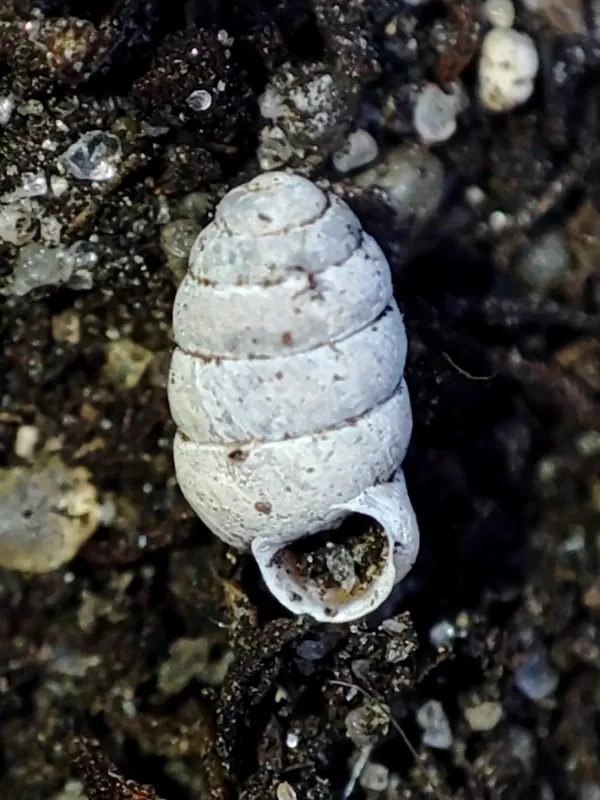
The moss snail (Pupilla muscorum) is a very small terrestrial gastropod mollusk belonging to the Pupillidae family. Its shell typically reaches a length of only 3 to 4 millimeters, making it easy to overlook.
The shell has a cylindrical or elongated oval shape, composed of approximately 5 to 7 whorls. Its color ranges from a light yellowish-brown to a darker, horn-like shade, often with a dull, matte texture.
This species prefers open, dry habitats such as meadows and pastures, but it is frequently found in agricultural fields, hiding under crop debris or within the top layer of moist soil.
The life cycle involves egg-laying in damp soil, where the embryos are protected until they hatch. Like other snails, they are hermaphroditic and can multiply rapidly in favorable environmental conditions.
Due to their small size, they are often mistaken for simple soil particles or seeds, which is why a magnifying glass may be required for accurate identification in the field.
What it damages
The moss snail is a generalist feeder that can damage a wide variety of young vegetable crops and seedlings. They feed by rasping plant tissues with their radula, causing tiny holes in leaves.
While an individual snail eats very little, a large colony can cause significant harm, especially to germinating seeds or tender seedlings that have not yet developed tougher cuticles.
Beyond direct feeding, these snails create entry points for secondary infections. Fungi and bacteria can easily invade the plant tissue through the wounds left by the snails, leading to decay.
Damage is usually most severe during periods of high humidity and rainfall, which allow the snails to move freely and feed during the day rather than just at night.
In greenhouses and nursery environments, they can be particularly problematic, as the constant irrigation provides the perfect habitat for sustained population growth and continuous crop damage.
Signs of infestation
The primary symptom of infestation is the appearance of small, irregular holes in the leaves of low-growing plants. These holes are often accompanied by a shiny, dried mucus trail.
Observing the base of the plant during the early morning is the best time to see the snails themselves. They often cluster near the soil surface or underneath lower, drooping leaves.
The presence of abandoned, empty shells in the soil is a clear indicator that a colony has established itself in the area and is actively reproducing.
When seedlings fail to emerge or appear stunted and ragged without signs of insect pests, it is highly likely that tiny mollusks are grazing on the developing plant tissues.
A glistening silver residue on the soil surface or on the stems near the ground is a hallmark sign that mollusks have been active in the vicinity during the night.
Control measures
Cultural control is the first line of defense. Keeping the area free of weeds and plant debris reduces the available shelter for the snails, making the habitat less hospitable.
Managing soil moisture is critical; utilizing drip irrigation instead of overhead watering can significantly reduce the surface humidity that these snails require to thrive.
Physical barriers such as wood ash, crushed eggshells, or fine sand around sensitive plants can deter the movement of snails, as these textures are difficult for them to traverse.
Chemical control involving molluscicides (e.g., ferric phosphate baits) can be effective in high-density situations. Baits should be applied carefully to avoid contact with harvestable parts of the plants.
- Improve field drainage to eliminate standing water.
- Use trap crops to concentrate and then remove the pests.
- Encourage natural predators like carabid beetles and toads.
- Practice thorough soil cultivation to disturb and expose egg-laying sites.
Taxonomy
- Latin name
- Pupilla muscorum
- Order
- Molluscs
- Family
- Pupillidae
- EPPO code
- PUPIMU
Discussion
No discussions yet — be the first.