
Phantom crane fly
Ptychoptera contaminata
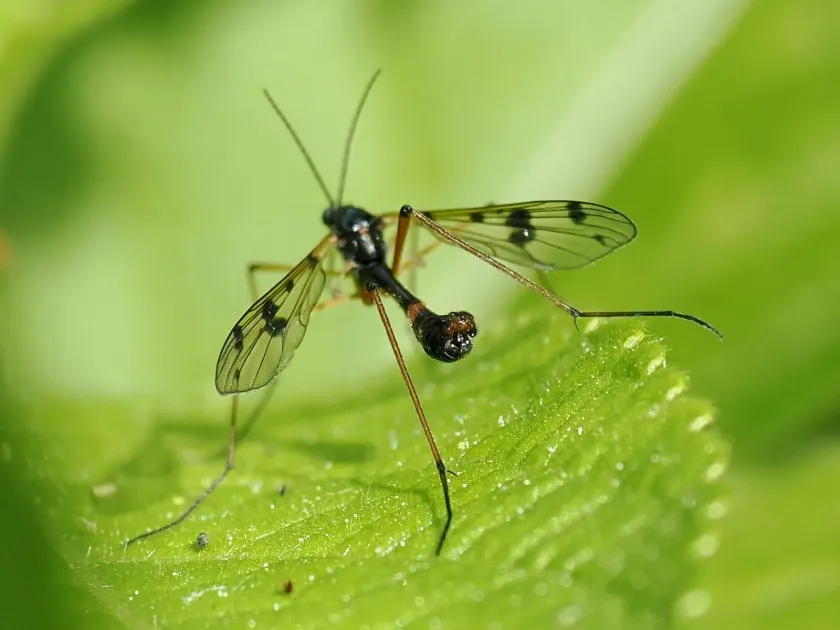
Description
How to identify
The phantom crane fly, scientifically known as Ptychoptera contaminata, belongs to the family Ptychopteridae within the order Diptera. These insects are distinguished by their unique wing venation, which gives them a folded appearance, hence the common name.
Adults resemble typical crane flies but possess notably long legs and specific abdominal markings. They typically reach a body length of 10 to 12 millimeters and exhibit a coloration ranging from dark brown to black with yellow accents.
The larvae are particularly identifiable by a long respiratory siphon at the posterior end of the body. This adaptation allows them to extract oxygen from the air while remaining submerged in saturated soil or stagnant water.
Their life cycle is strictly tied to hydro-morphically active areas. Larvae are typically found in shallow water, drainage ditches, or muddy soil where they feed on decomposing organic matter as detritivores.
While they are not traditional agricultural pests, their presence in large numbers serves as a biological indicator of poor drainage and excessively moist soil conditions that are detrimental to many crop varieties.
What it damages
Direct damage to agricultural crops by Ptychoptera contaminata larvae is generally low, as they primarily consume decaying plant material. However, they can pose a threat to young seedlings if the soil becomes waterlogged.
In cases where organic matter is scarce, larvae may feed on the tender roots of vegetables. This feeding activity creates wounds that serve as entry points for secondary infections like bacterial soft rot and various soil-borne fungi.
Greenhouse crops are at the highest risk. Constant irrigation or poor ventilation in protected soil can create a favorable environment for larvae, leading to stunted growth and potentially significant losses in seedling nurseries.
Plants affected by larval activity often exhibit signs of physiological stress, including leaf chlorosis and inhibited root system development, which limits their ability to absorb nutrients effectively.
In broad terms, the damage is primarily indirect, as the presence of the fly confirms conditions that are suboptimal for plant growth, such as lack of soil aeration and anaerobic conditions in the root zone.
When it appears
Adult phantom crane flies are active throughout the warmer months, typically starting in late spring. Their activity is highly dependent on humidity levels, as they require damp areas for oviposition.
Multiple generations can occur within a single year if environmental conditions remain favorable. Eggs are deposited near water sources or in wet soil where larval development can proceed uninterrupted.
Larval activity peaks during the summer months when soil temperatures are high enough to support rapid growth. They are highly resilient and remain active as long as the moisture content of their substrate is maintained.
As temperatures drop in autumn, larvae enter a period of dormancy, burying themselves deeper into the mud to withstand the winter months. They emerge again in spring once conditions become warmer and wetter.
Understanding these seasonal patterns is crucial for agronomists to implement proper land management strategies before the peak breeding seasons occur, thereby reducing the population size naturally.
Signs of infestation
The primary sign of infestation is the persistent presence of stagnant water on fields or in garden beds. This creates a visible habitat for the larvae and often leads to algae buildup on the soil surface.
Crops affected by soil saturation and larval presence will show signs of wilting despite adequate moisture. Yellowing of lower leaves and slow growth are classic indicators of root system disruption.
Observing a high number of adult flies in the vicinity during the evening hours is a strong indicator that their lifecycle is active on the property, necessitating a check of soil moisture levels.
Digging into the soil around affected plants may reveal the presence of larvae. Their distinct respiratory siphon makes them easy to identify once they are unearthed from the substrate.
- Wilting and stunted growth of seedlings.
- Persistent waterlogging on the soil surface.
- Appearance of larvae with visible tail-like siphons in the root zone.
Control measures
The most effective management strategy is to improve field drainage. Properly leveled fields and functional drainage systems are essential to prevent the water accumulation required by the larvae.
Adjusting irrigation schedules is vital. Avoid over-watering by using precision irrigation methods like drip systems, which deliver moisture directly to the plants without saturating the surrounding soil.
Sanitation is key; removing accumulated organic debris and weeds helps minimize the food sources available for the larvae, making the environment less attractive for the fly population.
Regular cultivation and loosening of the soil between rows help improve aeration. Increased oxygen levels in the soil are lethal to larvae, which are adapted to anaerobic, wet environments.
Chemical control is rarely recommended due to the limited economic damage caused by the fly. Cultural and mechanical improvements are far more sustainable and effective for long-term population suppression.
Taxonomy
- Latin name
- Ptychoptera contaminata
- Order
- Diptera (flies)
- Family
- Ptychopteridae
- EPPO code
- PYCHCO
Discussion
No discussions yet — be the first.